Sawan Shivratri (Shravan Shivratri) — Night of Shiva in Shravan
11 August 2026 · Tuesday
Tithi
Shravan Krishna Chaturdashi (Purnimanta — North India)
Auspicious Muhurat · IST
Tuesday (night of 11–12 Aug)
Nishita Kaal (madhya-ratri) puja: ~12:05 AM – 12:48 AM IST for Delhi/NCR, intervening night of 11–12 Aug. Nishita is a LOCAL window — it falls ~11:42 PM – 12:25 AM at Varanasi, ~11:33 PM – 12:17 AM at Patna and ~11:27 PM – 12:10 AM at Deoghar/Sultanganj (i.e. before midnight, still on 11 Aug). Chaturdashi tithi runs until ~1:52 AM, 12 Aug.
Tithi Duration…
Abhijit Muhurat…
Sunrise / Sunset…
Source: Vedic Panchang, IST — Nishita Kaal computed for Delhi/NCR; adjust to your city
All timings shown for:…
Festival dates follow the India (IST) Vedic calendar.
Quick Info
The Shivratri inside Shravan — night of 11–12 August 2026. Four-prahar abhishek and jagran through Nishita Kaal.
श्रावण के भीतर की शिवरात्रि — 11–12 अगस्त 2026 की रात्रि। चार-प्रहर अभिषेक और निशीथ काल तक जागरण।
About this festival
Sawan Shivratri is the Shivratri that falls inside Shravan, Lord Shiva's most beloved month, on Shravan Krishna Chaturdashi. In North India it is the night of 11–12 August 2026 — the peak of the Sawan season, when Kanwar pilgrims pour Ganga-jal on the Shivling. It is neither Maha Shivratri (the once-a-year night in Phalguna) nor an ordinary Masik Shivratri: falling in Shravan is what makes this night's jagran and four-prahar abhishek especially fruitful.
सावन शिवरात्रि वह शिवरात्रि है जो शिव के सर्वप्रिय मास श्रावण में, कृष्ण चतुर्दशी को आती है। उत्तर भारत में यह 11–12 अगस्त 2026 की रात्रि है — सावन का शिखर, जब कांवड़िये शिवलिंग पर गंगाजल अर्पित करते हैं। यह न महाशिवरात्रि (फाल्गुन की वार्षिक रात्रि) है, न सामान्य मासिक शिवरात्रि: श्रावण में पड़ना ही इस रात्रि के जागरण और चार-प्रहर अभिषेक को विशेष फलदायी बनाता है।
Sawan Shivratri (Shravan Shivratri) 2026 outside India — local timings for USA, UK, Canada, Australia, Singapore & UAEसावन शिवरात्रि (श्रावण शिवरात्रि) 2026 भारत के बाहर — अमेरिका, ब्रिटेन, कनाडा, ऑस्ट्रेलिया, सिंगापुर और यूएई में स्थानीय समय
A tithi begins and ends at the same instant everywhere on Earth — only your local clock reading differs. That is why the same tithi can fall on the previous or the next calendar day where you live, even though the festival date on this page follows the Vedic Panchang, IST.
Classical observance windows — sunrise, midday, afternoon, evening and midnight — are defined by your own sunrise and sunset, not by India's. The table below gives those local values for the major diaspora cities.
तिथि पृथ्वी पर हर स्थान पर एक ही क्षण आरम्भ और समाप्त होती है — केवल आपकी स्थानीय घड़ी का समय भिन्न होता है। इसीलिए वही तिथि आपके यहाँ पिछले या अगले कैलेंडर दिन पड़ सकती है, जबकि इस पृष्ठ की तिथि वैदिक पंचांग (IST) के अनुसार है।
सूर्योदय, मध्याह्न, अपराह्न, प्रदोष और निशीथ जैसे शास्त्रीय काल आपके अपने सूर्योदय-सूर्यास्त से निर्धारित होते हैं, भारत के नहीं। नीचे प्रमुख प्रवासी नगरों के स्थानीय मान दिए गए हैं।
| City | Sunrise | Sunset | Krishna Chaturdashi (local time) |
|---|---|---|---|
| Ujjain, India | 6:01 AM | 7:02 PM | Aug 11, 4:55 AM → Aug 12, 1:54 AM |
| New York, USA | 6:02 AM | 7:59 PM | Aug 10, 7:25 PM → Aug 11, 4:24 PM |
| Chicago, USA | 5:54 AM | 7:56 PM | Aug 10, 6:25 PM → Aug 11, 3:24 PM |
| San Jose (Bay Area), USA | 6:20 AM | 8:04 PM | Aug 10, 4:25 PM → Aug 11, 1:24 PM |
| Toronto, Canada | 6:17 AM | 8:26 PM | Aug 10, 7:25 PM → Aug 11, 4:24 PM |
| London, UK | 5:39 AM | 8:30 PM | Aug 11, 12:25 AM → Aug 11, 9:24 PM |
| Dubai, UAE | 5:50 AM | 6:57 PM | Aug 11, 3:25 AM → Aug 12, 12:24 AM |
| Singapore | 7:05 AM | 7:14 PM | Aug 11, 7:25 AM → Aug 12, 4:24 AM |
| Sydney, Australia | 6:38 AM | 5:22 PM | Aug 11, 9:25 AM → Aug 12, 6:24 AM |
Overseas communities differ: some follow the India Panchang date, others observe on the local day the tithi prevails. Confirm the observance day with your local temple or community.
विदेश में समुदायों की परम्परा भिन्न है: कुछ भारत के पंचांग की तिथि मानते हैं, कुछ उस स्थानीय दिन पर व्रत रखते हैं जब तिथि व्याप्त हो। अपने स्थानीय मन्दिर या समुदाय से व्रत का दिन अवश्य सुनिश्चित करें।
Quick Facts
- 2026 date (North India / Purnimanta): 11 August (Tue), night into 12 Aug
- Tithi: Shravan Krishna Chaturdashi — the Shivratri within Sawan
- Highest puja: Nishita Kaal (midnight) + four prahars of night jagran
- Not the same as Maha Shivratri (annual, Phalguna) or Masik Shivratri (every month)
- Amanta regions (Maharashtra/Gujarat/South) keep it on the night of 9–10 September 2026 instead
Sawan Shivratri Vrat & Night Puja Vidhiसावन शिवरात्रि व्रत और रात्रि पूजा विधि
- Begin the fast at sunrise on 11 Aug; sankalp for a sattvic day and night jagran
- Bathe and wear white or saffron cotton; apply tripundra (three-line bhasma + chandan tilak)
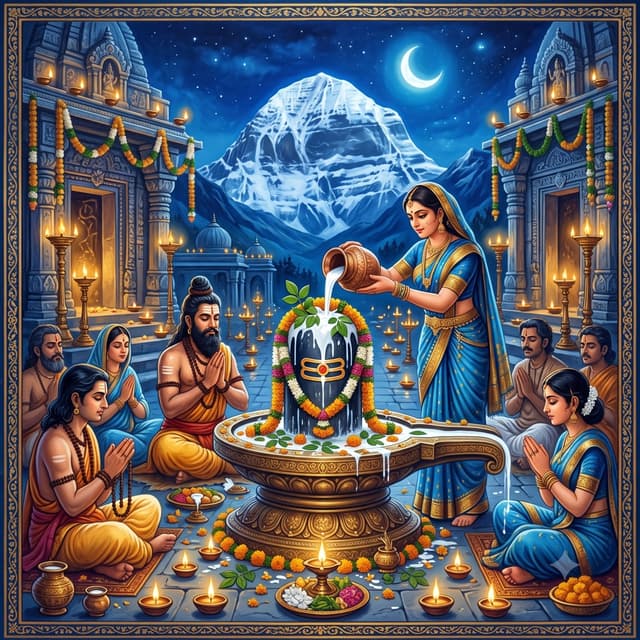
- Day puja: bathe the Shivling with Ganga-jal and offer 3-leaf bilvapatra, white flowers, dhatura
- Eat one phalahaar meal (sabudana, kuttu, milk, fruit) — no grain and no common salt; sendha namak (rock salt) is allowed
- Four-prahar night abhishek — divide the night from sunset to sunrise into four equal quarters (about 2 hours 40–45 minutes each on 11–12 Aug, not three hours): Prahar 1 milk, Prahar 2 curd, Prahar 3 ghee, Prahar 4 honey — plain water after each
- Nishita Kaal is the most powerful muhurta of the night — it is centred on the exact midpoint of the night, so it straddles the end of the second prahar and the start of the third: 108 jaap of the Mahamrityunjaya Mantra
- Keep night jagran with 'Om Namah Shivaya', Shiv Chalisa, Rudrashtakam and Shiv Tandava Stotram
- Break the fast next morning at sunrise, after the Chaturdashi tithi has ended, with bilvapatra-touched water
- 11 अगस्त सूर्योदय पर व्रत आरम्भ; सात्विक दिन और रात्रि जागरण का संकल्प
- स्नान कर श्वेत या केसरी सूती वस्त्र; त्रिपुण्ड्र (तीन-रेखा भस्म + चंदन तिलक)
- दिन-पूजा: शिवलिंग पर गंगाजल से अभिषेक, 3-पत्ती बेलपत्र, श्वेत पुष्प, धतूरा अर्पण
- एक फलाहार भोजन (साबूदाना, कुट्टू, दूध, फल) — अन्न और सामान्य नमक वर्जित; सेंधा नमक की अनुमति है
- चार-प्रहर रात्रि अभिषेक — सूर्यास्त से सूर्योदय तक की रात्रि को चार समान भागों में बाँटें (11–12 अगस्त को लगभग 2 घंटे 40–45 मिनट प्रत्येक, तीन घंटे नहीं): प्रहर 1 दूध, प्रहर 2 दही, प्रहर 3 घी, प्रहर 4 शहद — प्रत्येक के बाद शुद्ध जल
- निशीथ काल रात्रि का सर्वाधिक शक्तिशाली मुहूर्त है — यह रात्रि के ठीक मध्यबिंदु पर केंद्रित होता है, अतः दूसरे प्रहर के अंत और तीसरे प्रहर के आरम्भ पर फैला रहता है: महामृत्युंजय मंत्र का 108 जप
- 'ॐ नमः शिवाय', शिव चालीसा, रुद्राष्टकम् और शिव तांडव स्तोत्रम् के साथ रात्रि जागरण
- अगले प्रातः सूर्योदय पर, चतुर्दशी तिथि समाप्त हो जाने के बाद, बेलपत्र-स्पर्श जल से पारण
Do's
- Use unbroken 3-leaf bilvapatra and cold water for abhishek
- Stay awake at least through Nishita Kaal (your city's, not the clock's midnight)
- Offer Ganga-jal — Sawan's defining offering to Shiva
- Use chandan or bhasma in place of any coloured powder
- Donate white cloth, til or ghee to a Shiva temple
Don'ts
- Do not offer Tulsi to Shiva — she belongs to Vishnu (the Jalandhar–Vrinda legend); nor turmeric, kumkum/sindoor or ketaki flower
- Do not use conch (shankh) water or coconut water for the abhishek
- Avoid non-veg, alcohol and onion-garlic during the fast
- Do not sleep through Nishita Kaal — it is the most powerful muhurta of the night
- Do not confuse this with Maha Shivratri (Phalguna/Feb)
क्या करें
- अखंड 3-पत्ती बेलपत्र और अभिषेक के लिए ठंडा जल
- कम से कम निशीथ काल तक जागरण (अपने नगर का, घड़ी की मध्यरात्रि नहीं)
- गंगाजल अर्पित करें — सावन का शिव को प्रमुख अर्पण
- किसी भी रंगीन चूर्ण के स्थान पर चंदन या भस्म का प्रयोग
- शिव मंदिर में श्वेत वस्त्र, तिल या घी का दान
क्या न करें
- शिव को तुलसी न चढ़ाएँ — वह विष्णु की हैं (जलंधर-वृंदा कथा); हल्दी, कुमकुम/सिंदूर या केतकी पुष्प भी नहीं
- अभिषेक में शंख का जल अथवा नारियल पानी प्रयोग न करें
- व्रत में मांसाहार, मद्य और प्याज-लहसुन वर्जित
- निशीथ काल में निद्रा न करें — यह रात्रि का सर्वाधिक शक्तिशाली मुहूर्त है
- इसे महाशिवरात्रि (फाल्गुन/फरवरी) से न मिलाएँ
Mantrasमंत्र
ॐ नमः शिवाय ॥
Om Namaḥ Śivāya
Salutations to Lord Shiva — the five-syllable Panchakshari mantra. (Yajur Veda, Shri Rudram)
भगवान शिव को नमन — पाँच-अक्षरी पंचाक्षरी मंत्र। (यजुर्वेद, श्री रुद्रम्)
↻ 108 times each prahar
ॐ त्र्यम्बकं यजामहे सुगन्धिं पुष्टिवर्धनम् । उर्वारुकमिव बन्धनान् मृत्योर्मुक्षीय मामृतात् ॥
Om Tryambakaṁ Yajāmahe Sugandhiṁ Puṣṭi-vardhanam, Urvārukamiva Bandhanān Mṛtyor Mukṣīya Māmṛtāt
We worship the three-eyed Lord who nourishes all; as a ripe cucumber is freed from its stem, may He free us from death — not from immortality. (Rig Veda 7.59.12 — Mahamrityunjaya)
हम त्र्यम्बक (त्रिनेत्र) की पूजा करते हैं जो सबका पोषण करते हैं; जैसे पका खीरा डंठल से मुक्त होता है, वैसे ही वे हमें मृत्यु से मुक्त करें, अमरत्व से नहीं। (ऋग्वेद 7.59.12 — महामृत्युंजय)
↻ 108 times at Nishita Kaal
Purnimanta vs Amanta — Which Night Is Yoursपूर्णिमान्त बनाम अमान्त — आपकी रात्रि कौन-सी है
- North India (Purnimanta — UP, Bihar, Uttarakhand, Haryana, Punjab, MP, Rajasthan): Shravan runs 30 Jul – 28 Aug 2026, so Sawan Shivratri is the night of 11–12 August 2026
- Maharashtra, Gujarat, Karnataka, Andhra, Telangana, Tamil Nadu, Kerala (Amanta): Shravan runs 13 Aug – 11 Sep 2026, so their Shravan Shivratri is the night of 9–10 September 2026
- It is the same tithi (Krishna Chaturdashi) in both systems — only the month it is counted under differs, which is why the two dates sit about a month apart
- Kanwar states (Bihar, Jharkhand, UP, Uttarakhand): pilgrims carry Ganga-jal from Sultanganj to Baidyanath Dham and from Haridwar/Gaumukh, timing the jal-arpan to this night
- Nepal (Pashupatinath) follows the Purnimanta reckoning and observes it with North India
- At the 12 Jyotirlingas the night is kept with continuous four-prahar abhishek and Rudrabhishek — expect long queues from the evening of 11 August
- उत्तर भारत (पूर्णिमान्त — उ.प्र., बिहार, उत्तराखंड, हरियाणा, पंजाब, म.प्र., राजस्थान): श्रावण 30 जुलाई – 28 अगस्त 2026, अतः सावन शिवरात्रि 11–12 अगस्त 2026 की रात्रि
- महाराष्ट्र, गुजरात, कर्नाटक, आंध्र, तेलंगाना, तमिलनाडु, केरल (अमान्त): श्रावण 13 अगस्त – 11 सितंबर 2026, अतः वहाँ श्रावण शिवरात्रि 9–10 सितंबर 2026 की रात्रि
- दोनों पद्धतियों में तिथि एक ही है (कृष्ण चतुर्दशी) — केवल मास-गणना भिन्न है, इसीलिए दोनों तिथियाँ लगभग एक मास के अंतर पर पड़ती हैं
- कांवड़ क्षेत्र (बिहार, झारखंड, उ.प्र., उत्तराखंड): श्रद्धालु सुल्तानगंज से बैद्यनाथ धाम तथा हरिद्वार/गौमुख से गंगाजल लाकर इसी रात्रि जल-अर्पण करते हैं
- नेपाल (पशुपतिनाथ) पूर्णिमान्त गणना मानता है और उत्तर भारत के साथ ही मनाता है
- 12 ज्योतिर्लिंगों पर यह रात्रि निरंतर चार-प्रहर अभिषेक और रुद्राभिषेक के साथ मनाई जाती है — 11 अगस्त सायं से लंबी कतारें रहती हैं
Why a Shivratri Inside Sawan Mattersसावन के भीतर की शिवरात्रि का महत्व
The Shiva Purana records that during the Samudra Manthan the deadly Halahala poison arose; Shiva drank it to save creation and held it in his throat, becoming Neelkanth. Devotional tradition places this episode in Shravana and holds that the devas poured cooling water over him — which is why Shravana is remembered as the month of jal-abhishek and Shiva's most beloved month.
Every month's Krishna Chaturdashi is a Masik Shivratri, but the one falling in Shravan inherits the whole month's grace. Falling between the Sawan Somvars and just before Hariyali Amavasya, Sawan Shivratri is when night jagran, the four-prahar abhishek and Kanwar jal-abhishek reach their seasonal peak — second only to Maha Shivratri itself.
शिव पुराण में वर्णित है कि समुद्र-मंथन में घातक हलाहल विष प्रकट हुआ; शिव ने सृष्टि की रक्षा हेतु उसे पीकर कण्ठ में धारण किया और नीलकंठ कहलाए। भक्ति-परम्परा इस प्रसंग को श्रावण मास से जोड़ती है और मानती है कि देवताओं ने उन पर शीतल जल बहाया — इसी कारण श्रावण जल-अभिषेक का मास और शिव का सर्वप्रिय मास माना जाता है।
प्रत्येक मास की कृष्ण चतुर्दशी मासिक शिवरात्रि है, परन्तु जो श्रावण में पड़ती है वह पूरे मास की कृपा प्राप्त करती है। सावन सोमवारों के बीच और हरियाली अमावस्या से ठीक पहले पड़ने वाली सावन शिवरात्रि वह रात्रि है जब रात्रि जागरण, चार-प्रहर अभिषेक और कांवड़ जल-अभिषेक अपने ऋतु-शिखर पर पहुँचते हैं — केवल महाशिवरात्रि से न्यून।
Frequently Asked Questionsअक्सर पूछे जाने वाले प्रश्न
When is Sawan Shivratri in 2026?
In North India (Purnimanta) Sawan Shivratri 2026 is on 11 August (Tuesday), with the main puja at Nishita Kaal on the night of 11–12 August. In Amanta regions (Maharashtra, Gujarat, South India) the Shravan Shivratri falls on the night of 9–10 September 2026 — about a month later, because Amanta Shravan begins on 13 August.
2026 में सावन शिवरात्रि कब है?
उत्तर भारत (पूर्णिमान्त) में सावन शिवरात्रि 2026 — 11 अगस्त (मंगलवार), मुख्य पूजा 11–12 अगस्त की रात्रि निशीथ काल में। अमान्त क्षेत्रों (महाराष्ट्र, गुजरात, दक्षिण भारत) में श्रावण शिवरात्रि 9–10 सितंबर 2026 की रात्रि को आती है — लगभग एक मास बाद, क्योंकि अमान्त श्रावण 13 अगस्त से आरम्भ होता है।
How is Sawan Shivratri different from Maha Shivratri?
Maha Shivratri is the single greatest Shiva night of the year, in Phalguna (February). Sawan Shivratri is the Masik (monthly) Shivratri that happens to fall in Shravan — lesser than Maha Shivratri but elevated above an ordinary monthly Shivratri because it lands in Shiva's favourite month.
सावन शिवरात्रि महाशिवरात्रि से कैसे भिन्न है?
महाशिवरात्रि वर्ष की सबसे बड़ी शिव रात्रि है, फाल्गुन (फरवरी) में। सावन शिवरात्रि वह मासिक शिवरात्रि है जो श्रावण में पड़ती है — महाशिवरात्रि से न्यून, परन्तु शिव के प्रिय मास में पड़ने के कारण सामान्य मासिक शिवरात्रि से श्रेष्ठ।
What is the night puja vidhi of Sawan Shivratri?
Keep a day fast, then perform the four-prahar night abhishek — milk, curd, ghee and honey in the four equal quarters of the night (about 2 hours 40–45 minutes each on the night of 11–12 August), with plain water after each. Nishita Kaal is the most powerful muhurta of the night — centred on the exact midpoint of the night, straddling the end of the second prahar and the start of the third; do 108 jaap of the Mahamrityunjaya Mantra and keep jagran with Om Namah Shivaya.
सावन शिवरात्रि की रात्रि पूजा विधि क्या है?
दिन भर व्रत रखें, फिर चार-प्रहर रात्रि अभिषेक करें — रात्रि के चार समान भागों में (11–12 अगस्त की रात्रि को लगभग 2 घंटे 40–45 मिनट प्रत्येक) दूध, दही, घी और शहद, प्रत्येक के बाद शुद्ध जल। निशीथ काल रात्रि का सर्वाधिक शक्तिशाली मुहूर्त है — रात्रि के ठीक मध्यबिंदु पर केंद्रित, दूसरे प्रहर के अंत और तीसरे प्रहर के आरम्भ पर फैला; महामृत्युंजय मंत्र का 108 जप करें और 'ॐ नमः शिवाय' के साथ जागरण रखें।
What time is Nishita Kaal in my city?
Nishita Kaal is the eighth of the night's fifteen muhurtas, so it is derived from your own sunset and sunrise — it is not one national clock time. On the night of 11–12 August 2026 it runs approximately 12:05 AM – 12:48 AM at Delhi, 11:42 PM – 12:25 AM at Varanasi, 11:33 PM – 12:17 AM at Patna and 11:27 PM – 12:10 AM at Deoghar and Sultanganj. In the east it therefore begins before midnight, still on 11 August. Use your city's window, not Delhi's.
मेरे नगर में निशीथ काल का समय क्या है?
निशीथ काल रात्रि के पंद्रह मुहूर्तों में आठवाँ है, अतः यह आपके अपने सूर्यास्त और सूर्योदय से निकलता है — यह कोई एक राष्ट्रीय समय नहीं है। 11–12 अगस्त 2026 की रात्रि को यह लगभग दिल्ली में 12:05 AM – 12:48 AM, वाराणसी में 11:42 PM – 12:25 AM, पटना में 11:33 PM – 12:17 AM तथा देवघर और सुल्तानगंज में 11:27 PM – 12:10 AM रहता है। अतः पूर्व में यह मध्यरात्रि से पूर्व, 11 अगस्त को ही आरम्भ हो जाता है। दिल्ली का नहीं, अपने नगर का समय लें।
Can I do the abhishek at home without a Shivling?
Yes. Where there is no Shivling, tradition accepts a clean supari (betel nut), a smooth river stone or a small mound of clay shaped by hand as the Shiva-pratik, placed on a plate that lets the water drain away. A photograph may be used for the aarti and jaap, but abhishek needs a form water can actually be poured over. Ganga-jal is ideal; where it is unavailable, clean drinking water offered with 'Om Namah Shivaya' carries the same bhava — the sankalp matters more than the vessel.
क्या मैं शिवलिंग के बिना घर पर अभिषेक कर सकता हूँ?
हाँ। जहाँ शिवलिंग न हो, वहाँ परम्परा स्वच्छ सुपारी, चिकने नदी-पाषाण अथवा हाथ से बनाए मिट्टी के छोटे टीले को शिव-प्रतीक मानती है — ऐसी थाली पर रखें जिससे जल बह सके। आरती और जप के लिए चित्र भी चल सकता है, परन्तु अभिषेक हेतु ऐसा स्वरूप चाहिए जिस पर वास्तव में जल चढ़ सके। गंगाजल श्रेष्ठ है; उपलब्ध न हो तो 'ॐ नमः शिवाय' के साथ अर्पित स्वच्छ पेयजल भी वही भाव रखता है — पात्र से अधिक संकल्प का महत्व है।
What if I cannot stay awake the whole night?
The night jagran is a discipline, not a test. If you cannot keep all four prahars, keep the one that matters: stay awake through your city's Nishita Kaal, do the abhishek and the 108 Mahamrityunjaya jaap there, and then rest. Many households divide the prahars between family members so the abhishek continues while each person sleeps in turn. Sleeping after Nishita does not void the vrat; abandoning the sankalp casually does.
यदि मैं पूरी रात जाग न सकूँ तो क्या करें?
रात्रि जागरण एक साधना है, परीक्षा नहीं। यदि चारों प्रहर सम्भव न हों तो वह प्रहर रखें जो सर्वाधिक महत्व का है: अपने नगर के निशीथ काल तक जागें, वहीं अभिषेक और महामृत्युंजय मंत्र का 108 जप करें, फिर विश्राम करें। बहुत से परिवार प्रहरों को आपस में बाँट लेते हैं जिससे अभिषेक चलता रहे और सब बारी-बारी विश्राम कर सकें। निशीथ के बाद सो जाने से व्रत भंग नहीं होता; संकल्प को यूँ ही छोड़ देने से होता है।