
Shiv Chalisa
Significance & Importance
The Shiv Chalisa is a profound devotional composition that celebrates Lord Shiva as the ultimate refuge for those seeking spiritual liberation, protection from adversity, and inner transformation. Written by the saint-poet Ayodhyadas, this forty-verse hymn presents Shiva not merely as a destroyer but as the most compassionate deity who responds to the sincere cry of every devotee.
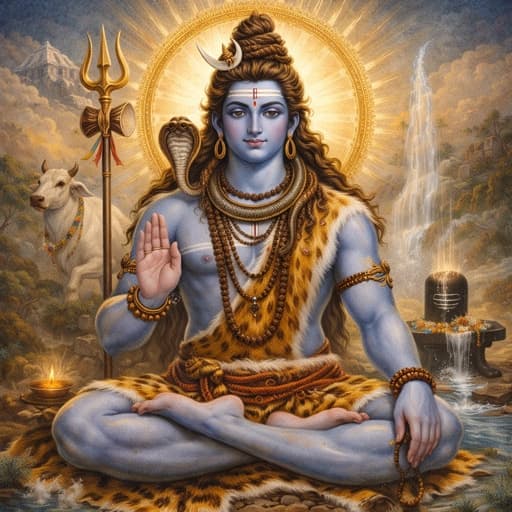
The Chalisa opens with an invocation to Ganesha — following the ancient tradition that Shiva's son must be honored before any sacred recitation — and then unfolds a comprehensive portrait of Shiva's divine glory. It describes his beautiful yet awe-inspiring form: the crescent moon on his forehead, serpent earrings, ash-covered body, tiger-skin garment, and the sacred Ganga flowing from his matted locks. Each element carries philosophical significance — the crescent moon represents time's cyclical nature, the ash symbolizes the transient nature of the material world, and the Ganga represents the purifying flow of spiritual knowledge.
Key mythological episodes narrated include Shiva's role in the Samudra Manthan (churning of the ocean), where he selflessly consumed the deadly Halahala poison to save creation, earning the name Neelkanth (blue-throated one). The Chalisa also describes Lord Rama's worship of Shiva before the battle of Lanka and Lord Shiva's testing of Rama's devotion with the episode of the thousand lotuses — demonstrating that even divine avatars honor Mahadeva.
The concluding verses transform from praise to personal petition, with the devotee laying bare their vulnerabilities — persecution by adversaries, abandonment by family in times of need, and worldly suffering. The promise is clear: whoever recites this Chalisa with devotion receives Shambhu's (Shiva's) support, freedom from debt, fulfillment of desires, and ultimately passage to Shivpuri — Shiva's eternal abode.
English Transliteration
|| Doha ||
Jai Ganesh Girija Suvan,
Mangal Mool Sujaan.
Kahat Ayodhyadaas Tum,
Dehu Abhay Vardaan.

|| Chaupai ||
Jai Girija Pati Deen Dayaala.
Sada Karat Santan Pratipaala.

Bhaal Chandrama Sohat Neeke.
Kaanan Kundal Naagphani Ke.

Ang Gaur Shir Gang Bahaaye.
Mundmaal Tan Kshaar Lagaye.

Vastra Khaal Baaghambar Sohe.
Chhavi Ko Dekhi Naag Man Mohe.

Maina Maatu Ki Have Dulaari.
Baam Ang Sohat Chhavi Nyaari.

Kar Trishool Sohat Chhavi Bhaari.
Karat Sada Shatrun Kshaykaari.

Nandi Ganesh Sohai Tahan Kaise.
Saagar Madhya Kamal Hain Jaise.

Kartik Shyam Aur Ganraau.
Ya Chhavi Ko Kahi Jaat Na Kaau.

Devan Jabaheen Jaay Pukaara.
Tab Hi Dukh Prabhu Aap Nivaara.

Kiya Upadrav Taarak Bhaari.
Devan Sab Mili Tumheen Juhaari.

Turat Shadaanan Aap Pathayau.
Lavnimesh Mahan Maari Girayau.

Aap Jalandhar Asur Sanhaara.
Suyash Tumhaar Vidit Sansaara.

Tripuraasur San Yuddh Machaai.
Sabhin Kripa Kar Leen Bachaai.

Kiya Tapahin Bhagirath Bhaari.
Purab Pratigya Taasu Puraari.

Daanin Mahan Tum Sam Kou Naaheen.
Sevak Stuti Karat Sadaheen.

Ved Naam Mahima Tav Gaai.
Akath Anaadi Bhed Nahin Paai.

Prakati Udadhi Manthan Mein Jwaala.
Jarat Suraasur Bhaye Vihaala.

Keenhi Daya Tahan Kari Sahaai.
Neelkanth Tab Naam Kahaai.

Poojan Ramchandra Jab Keenha.
Jeet Ke Lanka Vibheeshan Deenha.

Sahas Kamal Mein Ho Rahe Dhaari.
Keenha Pareeksha Tabhin Puraari.

Ek Kamal Prabhu Rakheu Joi.
Kamal Nayan Poojan Chahan Soi.

Kathin Bhakti Dekhi Prabhu Shankar.
Bhaye Prasann Diye Icchhit Var.

Jai Jai Jai Anant Avinaashi.
Karat Kripa Sab Ke Ghatvaasi.

Dusht Sakal Nit Mohi Sataavai.
Bhramat Rahau Mohi Chain Na Aavai.

Traahi Traahi Main Naath Pukaaro.
Yehi Avasar Mohi Aan Ubaaro.

Lai Trishool Shatrun Ko Maaro.
Sankat Se Mohi Aan Ubaaro.

Maat-Pita Bhraata Sab Hoi.
Sankat Mein Poochhat Nahin Koi.

Swami Ek Hai Aas Tumhaari.
Aay Harahu Mam Sankat Bhaari.

Dhan Nirdhan Ko Det Sada Heen.
Jo Koi Jaanche So Phal Paaheen.

Astuti Kehi Vidhi Karain Tumhaari.
Kshamahu Naath Ab Chook Hamaari.

Shankar Ho Sankat Ke Naashan.
Mangal Kaaran Vighn Vinaashan.

Yogi Yati Muni Dhyaan Lagaavain.
Shaarad Naarad Sheesh Navaavain.

Namo Namo Jai Namah Shivaay.
Sur Brahmaadik Paar Na Paay.

Jo Yah Paath Kare Man Laai.
Ta Par Hot Hai Shambhu Sahaai.

Riniyan Jo Koi Ho Adhikaari.
Paath Kare So Paavan Haari.

Putra Heen Kar Icchha Joi.
Nishchay Shiv Prasaad Tehi Hoi.

Pandit Trayodashi Ko Laave.
Dhyaan Poorvak Hom Karaave.

Trayodashi Vrat Karai Hamesha.
Taake Tan Naheen Rahai Kalesha.

Dhoop Deep Naivedya Chadhaave.
Shankar Sammukh Paath Sunaave.

Janm Janm Ke Paap Nasaave.
Ant Dhaam Shivpur Mein Paave.

Kahain Ayodhyadaas Aas Tumhaari.
Jaani Sakal Dukh Harahu Hamaari.

|| Doha ||
Nitt Nem Kar Praatah Hi,
Paath Karau Chaleesa.
Tum Meri Manokaamna,
Pooran Karo Jagdeesh.

Magsar Chhathi Hemant Ritu,
Samvat Chausath Jaan.
Astuti Chaleesa Shivahi,
Pooran Keen Kalyaan.
Verse-by-Verse Meaning
Tap “Show meaning” under any line to read its bhāvārth.
Jai Ganesh Girija Suvan, Mangal Mool Sujaan. Kahat Ayodhyadaas Tum, Dehu Abhay Vardaan.
Show meaningHide meaning
Victory to Ganesha, dear son of Girija (Parvati), the wise root of all auspiciousness! The poet Ayodhyadas prays: O Lord, grant me the boon of fearlessness, so that I may complete this hymn to Shiva without hindrance.
Jai Girija Pati Deen Dayaala. Sada Karat Santan Pratipaala.
Show meaningHide meaning
Victory to the Lord of Girija (Parvati), compassionate toward the humble; he ever nurtures and protects his devoted saints.
Bhaal Chandrama Sohat Neeke. Kaanan Kundal Naagphani Ke.
Show meaningHide meaning
The crescent moon shines beautifully upon his forehead, and in his ears gleam earrings fashioned from serpent hoods.
Ang Gaur Shir Gang Bahaaye. Mundmaal Tan Kshaar Lagaye.
Show meaningHide meaning
His fair form bears the river Ganga flowing from his matted locks; he wears a garland of skulls and smears his body with sacred ash.
Vastra Khaal Baaghambar Sohe. Chhavi Ko Dekhi Naag Man Mohe.
Show meaningHide meaning
He is clothed in a magnificent tiger-skin garment; beholding his radiant form, even the serpents coiled about him are enchanted.
Maina Maatu Ki Have Dulaari. Baam Ang Sohat Chhavi Nyaari.
Show meaningHide meaning
Parvati, the beloved darling daughter of Mother Maina, shines in unique splendor seated upon his left side, the united Ardhanarishvara form of Shiva and Shakti.
Kar Trishool Sohat Chhavi Bhaari. Karat Sada Shatrun Kshaykaari.
Show meaningHide meaning
The trident in his hand presents a majestic sight; it forever destroys the wicked.
Nandi Ganesh Sohai Tahan Kaise. Saagar Madhya Kamal Hain Jaise.
Show meaningHide meaning
There Nandi and Ganesha shine forth like a lotus blooming in the midst of the ocean.
Kartik Shyam Aur Ganraau. Ya Chhavi Ko Kahi Jaat Na Kaau.
Show meaningHide meaning
The dark-hued Kartikeya and Ganaraj, lord of Shiva's hosts, complete this divine family scene, a beauty no one can ever fully describe.
Devan Jabaheen Jaay Pukaara. Tab Hi Dukh Prabhu Aap Nivaara.
Show meaningHide meaning
Whenever the gods went and cried out to him, the Lord himself removed their sorrow at once.
Kiya Upadrav Taarak Bhaari. Devan Sab Mili Tumheen Juhaari.
Show meaningHide meaning
When the demon Tarakasura wrought terrible havoc, all the gods together came and bowed before you seeking refuge.
Turat Shadaanan Aap Pathayau. Lavnimesh Mahan Maari Girayau.
Show meaningHide meaning
You at once dispatched the six-faced Kartikeya, Shadanana, who slew and felled that demon in the blink of an eye.
Aap Jalandhar Asur Sanhaara. Suyash Tumhaar Vidit Sansaara.
Show meaningHide meaning
You yourself destroyed the demon Jalandhara; your glorious fame is renowned throughout the world.
Tripuraasur San Yuddh Machaai. Sabhin Kripa Kar Leen Bachaai.
Show meaningHide meaning
You waged a great battle against the demon Tripurasura, and by your grace you saved everyone from his tyranny.
Kiya Tapahin Bhagirath Bhaari. Purab Pratigya Taasu Puraari.
Show meaningHide meaning
King Bhagiratha performed intense penance; O Purari, destroyer of Tripura, you fulfilled his vow by bearing the Ganga in your matted locks and releasing her to the earth.
Daanin Mahan Tum Sam Kou Naaheen. Sevak Stuti Karat Sadaheen.
Show meaningHide meaning
Among the generous, none equals you; your devoted servants sing your praises constantly.
Ved Naam Mahima Tav Gaai. Akath Anaadi Bhed Nahin Paai.
Show meaningHide meaning
Even the Vedas have sung the glory of your name, yet your ineffable, beginningless mystery has never been fathomed.
Prakati Udadhi Manthan Mein Jwaala. Jarat Suraasur Bhaye Vihaala.
Show meaningHide meaning
When the ocean was churned in the Samudra Manthan, a terrible fire, the deadly Halahala poison, arose; both gods and demons were scorched and thrown into distress.
Keenhi Daya Tahan Kari Sahaai. Neelkanth Tab Naam Kahaai.
Show meaningHide meaning
You showed compassion and came to their aid there by holding that poison in your throat; from then on you came to be known as Nilkantha, the blue-throated one.
Poojan Ramchandra Jab Keenha. Jeet Ke Lanka Vibheeshan Deenha.
Show meaningHide meaning
When Lord Ramachandra worshipped you, after his victory in the war he installed Vibhishana as ruler of Lanka, through your blessing.
Sahas Kamal Mein Ho Rahe Dhaari. Keenha Pareeksha Tabhin Puraari.
Show meaningHide meaning
He was offering worship with a thousand lotus blossoms; Purari, Lord Shiva, then resolved to test his devotion.
Ek Kamal Prabhu Rakheu Joi. Kamal Nayan Poojan Chahan Soi.
Show meaningHide meaning
The Lord withheld one lotus from the count; the lotus-eyed Rama wished to complete the worship with that very flower, only to find it missing.
Kathin Bhakti Dekhi Prabhu Shankar. Bhaye Prasann Diye Icchhit Var.
Show meaningHide meaning
Seeing his unwavering devotion, when Rama resolved to offer his own lotus-like eye in place of the missing flower, Lord Shankar was greatly pleased and granted him his heart's desired boon.
Jai Jai Jai Anant Avinaashi. Karat Kripa Sab Ke Ghatvaasi.
Show meaningHide meaning
Victory, victory, victory to the infinite, imperishable Lord, who dwells within every heart and showers his grace upon all.
Dusht Sakal Nit Mohi Sataavai. Bhramat Rahau Mohi Chain Na Aavai.
Show meaningHide meaning
All manner of wicked forces torment me constantly; I wander about restlessly, finding no peace anywhere.
Traahi Traahi Main Naath Pukaaro. Yehi Avasar Mohi Aan Ubaaro.
Show meaningHide meaning
"Save me, save me, O Lord!" I cry out; at this very moment, come and rescue me.
Lai Trishool Shatrun Ko Maaro. Sankat Se Mohi Aan Ubaaro.
Show meaningHide meaning
Take up your trident and destroy my enemies; come and deliver me from this crisis.
Maat-Pita Bhraata Sab Hoi. Sankat Mein Poochhat Nahin Koi.
Show meaningHide meaning
Though one has mother, father, and brothers, none of them truly stands by in a time of dire trouble; you alone are the real refuge.
Swami Ek Hai Aas Tumhaari. Aay Harahu Mam Sankat Bhaari.
Show meaningHide meaning
O Lord, you alone are my hope; come and take away my heavy affliction.
Dhan Nirdhan Ko Det Sada Heen. Jo Koi Jaanche So Phal Paaheen.
Show meaningHide meaning
You forever grant wealth to the poor; whoever petitions you receives the fruit of their desire.
Astuti Kehi Vidhi Karain Tumhaari. Kshamahu Naath Ab Chook Hamaari.
Show meaningHide meaning
In what manner shall I offer you praise? O Lord, forgive whatever shortcomings are mine now.
Shankar Ho Sankat Ke Naashan. Mangal Kaaran Vighn Vinaashan.
Show meaningHide meaning
O Shankar, you are the destroyer of calamities, the source of auspiciousness, and the remover of obstacles.
Yogi Yati Muni Dhyaan Lagaavain. Shaarad Naarad Sheesh Navaavain.
Show meaningHide meaning
Yogis, ascetics, and sages fix their meditation upon you; even Sharada, goddess of learning, and sage Narada bow their heads before you.
Namo Namo Jai Namah Shivaay. Sur Brahmaadik Paar Na Paay.
Show meaningHide meaning
Salutations again and again, victory to you, "Namah Shivaya"; even the gods headed by Brahma cannot fathom your limit.
Jo Yah Paath Kare Man Laai. Ta Par Hot Hai Shambhu Sahaai.
Show meaningHide meaning
Whoever recites this text with a focused mind receives the constant help of Shambhu, Lord Shiva.
Riniyan Jo Koi Ho Adhikaari. Paath Kare So Paavan Haari.
Show meaningHide meaning
Whoever is burdened by debts becomes freed and purified of that burden by reciting this hymn.
Putra Heen Kar Icchha Joi. Nishchay Shiv Prasaad Tehi Hoi.
Show meaningHide meaning
One without a child who desires offspring will surely be blessed with one through Shiva's grace.
Pandit Trayodashi Ko Laave. Dhyaan Poorvak Hom Karaave.
Show meaningHide meaning
On the Trayodashi, the thirteenth lunar day sacred to Shiva, a learned priest should be invited to perform a fire-oblation with focused devotion.
Trayodashi Vrat Karai Hamesha. Taake Tan Naheen Rahai Kalesha.
Show meaningHide meaning
One who always observes the Trayodashi fast will never suffer bodily affliction.
Dhoop Deep Naivedya Chadhaave. Shankar Sammukh Paath Sunaave.
Show meaningHide meaning
Offer incense, a lamp, and food offerings, and recite this hymn before Lord Shankar.
Janm Janm Ke Paap Nasaave. Ant Dhaam Shivpur Mein Paave.
Show meaningHide meaning
The sins of countless lifetimes are destroyed thereby, and at the end one attains the eternal abode of Shivpur, Kailasha.
Kahain Ayodhyadaas Aas Tumhaari. Jaani Sakal Dukh Harahu Hamaari.
Show meaningHide meaning
Ayodhyadas says: my hope rests on you alone, O Lord; knowing all my sorrows, please take them away.
Nitt Nem Kar Praatah Hi, Paath Karau Chaleesa. Tum Meri Manokaamna, Pooran Karo Jagdeesh.
Show meaningHide meaning
Every morning, as a regular discipline, I recite this Chalisa; O Jagdish, Lord of the universe, please fulfill my heartfelt wish.
Magsar Chhathi Hemant Ritu, Samvat Chausath Jaan. Astuti Chaleesa Shivahi, Pooran Keen Kalyaan.
Show meaningHide meaning
On the sixth day of the month of Margashirsha, during the Hemant, or early winter, season, in Samvat sixty-four, the sixty-fourth year of the era, this auspicious hymn of praise, the Shiv Chalisa, was completed for the welfare of all devotees.
Frequently Asked Questions
When should the Shiv Chalisa be recited?
The Shiv Chalisa is traditionally recited during the morning or evening worship of Lord Shiva, and especially on the deity's sacred days. Reciting it daily — or for forty days — is a common devotional practice.
How many verses are there in a Chalisa?
A chalisa is a devotional hymn of forty (chālīs) chaupai verses, usually framed by opening and closing doha couplets, composed here in praise of Lord Shiva.
What are the benefits of reciting the Shiv Chalisa?
Reciting the Shiv Chalisa with faith is traditionally believed to invoke the grace of Lord Shiva, steady the mind, and bring courage and inner peace. It is offered as an act of bhakti (devotion), not as a guarantee of any specific material result.