Bhagwan Ganesha
गणेश जी

About
Quick Facts
Iconography & Symbolism
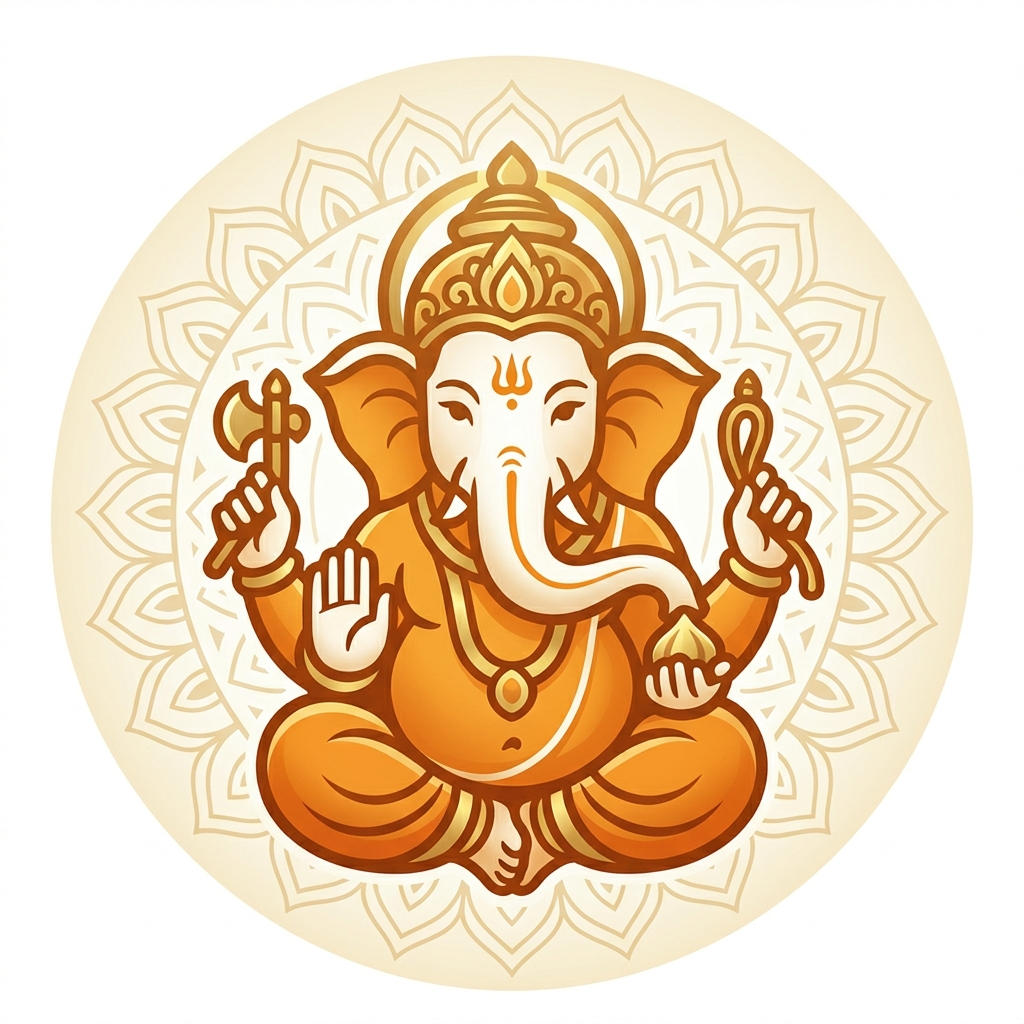
- Elephant head symbolizing wisdom, understanding, and a discriminating intellect
- Large belly representing the ability to digest all experiences of life
- Broken tusk — used to write the Mahabharata as dictated by Vyasa
- Holds modak (sweet), axe (parashu), rope (pasha), and lotus
- Mouse (Mushaka) as vehicle — symbolizing mastery over desire
Significance
Linked with wisdom, communication, and successful beginnings under Lord Ganesha's blessings.
Worship & Practice
Begin important tasks with Ganesh remembrance and chant for clarity and guidance.
Prayers & Mantras
Sankashti Chaturthi Vrat
Monthly fast observed on the fourth day after every full moon. Devotees fast the entire day and break the fast after moonrise with Ganesha puja.
How to observe (Vidhi):
- Fast from sunrise and avoid grains and non-vegetarian food.
- Perform Ganesha puja in the evening with modak, durva grass, and red flowers.
- Recite Ganesh Atharvashirsha or Ganesh Chalisa.
- Observe the moon at night and break the fast after moonrise.
Prasad: Modak (sweet dumplings), laddoo, and durva grass.
Famous Temples
Festivals
Ten-day festival celebrating Ganesha's birthday with elaborate pandals and idol immersion.
Sankashti Chaturthi
Monthly fasting day dedicated to Ganesha, observed on the fourth day after full moon.
Astrological Significance
Wednesday is the day of Budha (Mercury) — the planet of intellect, communication, and commerce. Ganesha is closely associated with Mercury energy, governing wisdom and eloquence. Worshipping Ganesha on Wednesdays pacifies Mercury-related issues and boosts clarity of thought and business success.
Planet: Mercury (Budha)
Remedies:
- Worship Ganesha on Wednesdays.
- Offer green Durva grass and modak.
- Chant Ganesha Atharvashirsha for mental clarity.
- Donate green items or books on Wednesdays.
- Wear Emerald (Panna) after consulting a jyotishi.
Frequently Asked Questions
Why does Ganesha have an elephant head?
Lord Shiva accidentally beheaded young Ganesha when he was guarding Parvati's bath. To revive him, Shiva replaced his head with that of the first creature found — an elephant. This symbolises wisdom, strength, and the ability to overcome any obstacle.
Why is Ganesha always worshipped first?
Lord Shiva granted Ganesha the boon that he would always be worshipped first before any other deity. As the remover of obstacles, invoking Ganesha at the start ensures the success of any auspicious endeavour.
What is the significance of Ganesha's modak?
The modak (a sweet dumpling) is Ganesha's favourite offering and is deeply symbolic: its round shape represents the universe, and the sweet filling within symbolises the hidden bliss of spiritual knowledge. Offering modak to Ganesha is a beloved part of his worship, especially during Ganesh Chaturthi.