Bhagwan Shiva
भगवान शिव

About & Sacred Story
Quick Facts
Prayers, Aartis & Mantras
Significance
Dedicated to Lord Shiva for inner peace, purification, and emotional balance. He is worshipped as Mahadeva (Great God), Neelkanth (blue-throated one who drank poison), and Adiyogi (first yogi).
Worship & Practice
Shiva puja, jalabhishek (water offering to Shivling), and chanting with calm intention are common practices.
Iconography & Symbolism
- Third eye on forehead symbolizing wisdom and the power to destroy evil
- Crescent moon (Chandrama) adorning matted hair (jata)
- River Ganga flowing from his locks
- Snake (Vasuki) coiled around the neck
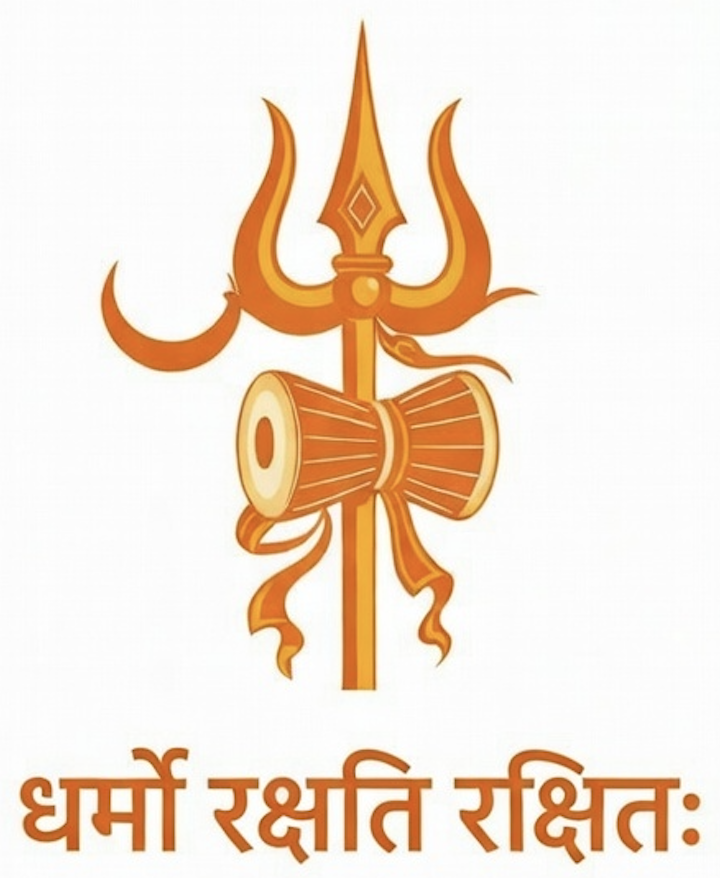
- Trident (Trishul) and damaru (drum) in hands
- Ash-smeared body (bhasma) representing renunciation
Ekadasha Rudra — The 11 Forms of Lord Shiva
In the Brihadaranyaka Upanishad (3.9.4) and Shiva Purana, the Ekadasha Rudras represent the ten vital life-breaths (Pranas) in the human body plus the inner mind/soul (Atman), as well as the eleven cosmic protectors of the gods.
1. Kapali Rudra (कपाली रुद्र)
Lord of cosmic space & ascetic renunciation; holds Trishula and Kapala, dissolving attachment and ego.
ॐ ह्रीं कपालिने रुद्राय नमः
2. Pingala Rudra (पिंगल रुद्र)
Golden-tawny hued Rudra governing the solar pranic channel (Pingala Nadi), vitality, and inner fire.
ॐ ह्रीं पिंगलाय रुद्राय नमः
3. Bhima Rudra (भीम रुद्र)
Formidable, awe-inspiring protector who destroys fear, adharma, and subtle negative forces.
ॐ ह्रीं भीमाय रुद्राय नमः
4. Virupaksha Rudra (विरूपाक्ष रुद्र)
The three-eyed all-seeing witness of the three worlds whose third eye burns away illusion (Maya).
ॐ ह्रीं विरूपाक्षाय रुद्राय नमः
5. Vilohita Rudra (विलोहित रुद्र)
Deep crimson-hued Rudra of the rising sun and sacred Agni, circulating life-force throughout creation.
ॐ ह्रीं विलोहिताय रुद्राय नमः
6. Shashtha Rudra (शास्ता रुद्र)
Supreme teacher and ordainer of cosmic law (Rita & Dharma) who guides seekers on the path of discipline.
ॐ ह्रीं शास्त्रे रुद्राय नमः
7. Ajapada (Ekapada) Rudra (अजपाद (एकपाद) रुद्र)
The unmanifest, one-footed Axis Mundi (Stambha) of the universe supporting all realms in stillness.
ॐ ह्रीं अजपादाय रुद्राय नमः
8. Ahirbudhnya Rudra (अहिर्बुध्न्य रुद्र)
Lord of the deep foundational waters and awakened Kundalini Shakti resting at the base of consciousness.
ॐ ह्रीं अहिर्बुध्न्याय रुद्राय नमः
9. Shambhu Rudra (शम्भु रुद्र)
Abode of pure auspiciousness ("Sham Bhavayati Iti Shambhuh"), inner peace, and healing Vaidyanatha grace.
ॐ ह्रीं शम्भवे रुद्राय नमः
10. Chanda Rudra (चण्ड रुद्र)
Fierce, unstoppable energy that burns away deep-rooted karmic impurities, sloth, and spiritual obstacles.
ॐ ह्रीं चण्डाय रुद्राय नमः
11. Bhava Rudra (11th Rudra) (भव रुद्र (एकादश रुद्र))
Source of pure existence and devotion across all worlds; in Puranic and Ramayana tradition, Hanuman Ji is worshipped as the 11th Rudra incarnation.
ॐ ह्रीं भवाय रुद्राय नमः · ॐ श्री हनुमते नमः
Avatars of Shiva
Rudra
The fierce, howling form representing storms and destructive power.
Nataraja
The cosmic dancer performing the Tandava, symbolizing the cycle of creation and destruction.
Dakshinamurthy
The supreme teacher who taught through silence and meditation.
Ardhanarishvara
Half-male, half-female form symbolizing the unity of Shiva and Shakti.
Somvar Vrat (Monday Fast)
A 16-Monday fast observed for health, inner peace, and blessings from Lord Shiva. Devotees fast from sunrise to sunset and break the fast after evening Shiva puja.
How to observe (Vidhi):
- Wake before sunrise and take a bath.
- Visit a Shiva temple or set up Shivling at home with water, milk, and bael leaves.
- Perform Jalabhishek (pour water and milk over Shivling).
- Offer bael (bilva) leaves, white flowers, dhatura, and bhasma.
- Recite Om Namah Shivaya 108 times or chant Mahamrityunjaya Mantra.
- Eat one meal after sunset — fruits, milk, sabudana, or kheer.
Prasad: Bael leaves, white sweets, panchamrit (mix of milk, curd, honey, ghee, sugar), and thandai.
Famous Temples
Festivals
Maha Shivaratri
The great night of Shiva — devotees fast, stay awake, and worship Shiva all night.
Shravan Month
The entire month of Shravan is dedicated to Shiva worship, especially Mondays.
Astrological Significance
Monday is Somvar — the day of the Moon (Chandra). Shiva is worshipped to calm the mind, reduce anxiety, and balance lunar energies. People with afflicted Moon in their horoscope (Chandra Dosha) find relief through Shiva worship.
Planet: Moon (Chandra)
Remedies:
- Perform Jalabhishek on Monday at a Shiva temple.
- Recite Mahamrityunjaya Mantra 108 times daily.
- Wear a Rudraksha mala for calming lunar energies.
- Fast on Mondays for 16 weeks (Solah Somvar Vrat).
Frequently Asked Questions
Why does Shiva wear a snake around his neck?
The snake Vasuki around Shiva's neck symbolises his mastery over fear and death, and his control over the most dangerous forces of nature.
What does the third eye of Shiva represent?
Shiva's third eye represents wisdom, insight, and the power of destruction — when opened, it can burn anything to ashes, symbolising the ability to see beyond illusion (Maya).
What are the twelve Jyotirlinga shrines of Shiva?
The twelve Jyotirlingas are the most sacred Shiva shrines in India: Somnath (Gujarat), Mallikarjuna (Andhra Pradesh), Mahakaleshwar (Ujjain), Omkareshwar (Madhya Pradesh), Kedarnath (Uttarakhand), Bhimashankar (Maharashtra), Kashi Vishwanath (Varanasi), Trimbakeshwar (Maharashtra), Vaidyanath (Jharkhand), Nageshwar (Gujarat), Ramanathaswamy (Rameswaram), and Grishneshwar (Maharashtra).