Bhagwan Brahma
ब्रह्मा जी
About
Quick Facts
Iconography & Symbolism
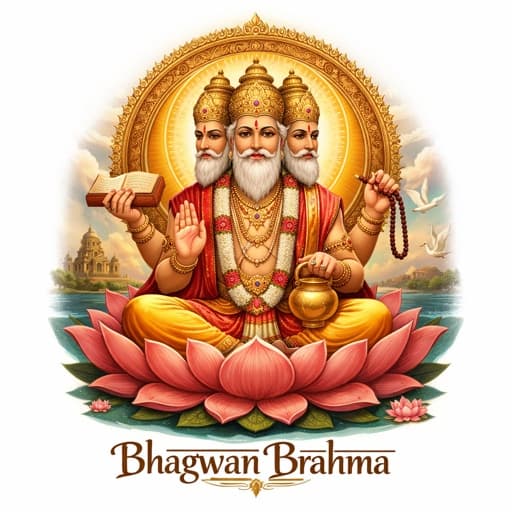
- Four faces facing the four directions, representing the four Vedas
- Seated on a lotus emerging from Vishnu's navel
- Holds Vedas scriptures, a water pot (kamandalu), prayer beads (mala), and a lotus
- White beard symbolizing wisdom and eternal nature
Significance
Brahma is the first deity of the Hindu Trimurti. He created the universe, the Vedas, and the passage of time. Brahma Muhurta (pre-dawn hours) is named after him as the most auspicious time for spiritual practice.
Worship & Practice
Meditate during Brahma Muhurta, recite Vedic hymns, and practice creative and scholarly pursuits as devotion to the Creator.
Prayers & Mantras
Famous Temples
Festivals
Kartik Purnima
Annual fair at Pushkar's Brahma Temple on Kartik Purnima.
Frequently Asked Questions
Why is Brahma not widely worshipped?
According to legends, Brahma was cursed by Shiva for his pride and, in the Pushkar tradition, by his consort Savitri. Hence there are very few Brahma temples, the most famous being in Pushkar, Rajasthan.
What is Brahma Muhurta?
Brahma Muhurta is the auspicious period roughly 1.5 hours before sunrise, considered ideal for meditation, prayer, and study.
What is the vehicle (vahana) of Brahma and what does it signify?
Brahma's vahana is the Hamsa (swan). The swan is traditionally believed to have the ability to separate milk from water — a symbol of wisdom and discrimination (Viveka), reflecting the Creator's discernment between the real and unreal.