Maa Parvati
माँ पार्वती
About
Quick Facts
Iconography & Symbolism
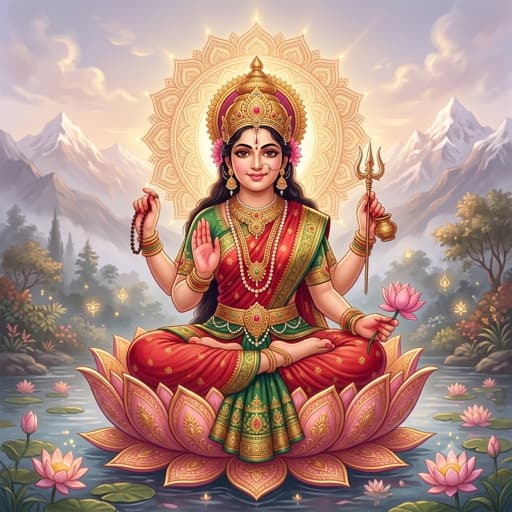
- Gentle, beautiful form holding a lotus or trident
- Green or red saree symbolizing fertility and auspiciousness
- Often depicted beside Shiva with children Ganesha and Kartikeya
- Two or four arms, sometimes holding a rosary and mirror
Significance
Goddess of love, fertility, and devotion. Parvati embodies compassion and family strength, and manifests as Durga and Kali when protective power is needed.
Worship & Practice
Offer prayers, observe vrat (fasts) and recite Parvati/Durga stotras for strength, harmony and protection.
Prayers & Mantras
Famous Temples
Festivals
Teej
Women observe fasts and celebrate Parvati's reunion with Shiva.
Gauri Tritiya
Worship of Parvati as Gauri for marital harmony and family blessings.
Frequently Asked Questions
What is the relationship between Parvati, Durga, and Kali?
Parvati is the gentle form of the Divine Mother. When she manifests her fierce protective power, she becomes Durga. Kali is the most intense form — the destroyer of ego and evil.
Who are the children of Parvati and Shiva?
Ganesha and Kartikeya (also known as Skanda or Murugan) are the two sons of Parvati and Shiva. Ganesha is revered as the remover of obstacles, while Kartikeya is the warrior god of the heavens.
What is the Teej festival dedicated to Parvati?
Teej is celebrated by married and unmarried women in honour of Parvati and Shiva. Women fast and pray for the wellbeing of their husbands and for a good spouse, traditionally believing that Parvati herself exemplified unshakeable devotion to Shiva.