Maa Kali
माँ काली
About
Quick Facts
Iconography & Symbolism
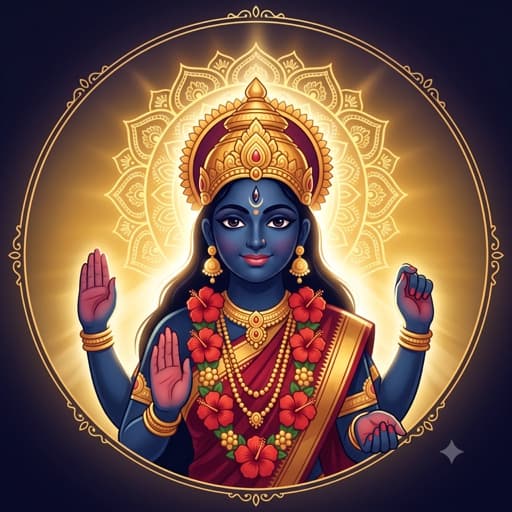
- Dark blue or black skin representing the void beyond creation
- Garland of skulls (Mundamala) symbolizing liberation from ego
- Tongue protruding — depicting the moment she realized she was standing on Shiva
- Four arms: sword, severed head, blessing gesture (abhaya), and boon gesture (varada)
- Disheveled hair representing freedom from social norms
Significance
Kali represents the fierce transformative power that removes ignorance and ego. Devotees seek her blessings for spiritual breakthrough and protection.
Worship & Practice
Devotees chant Kali mantras with devotion, practice inner discipline, and seek courage and clarity. Worship is done with respect and sattvic intention.
Prayers & Mantras
Famous Temples
Festivals
Kali Puja
Celebrated on Diwali night in Bengal and eastern India with tantric rituals and devotion.
Frequently Asked Questions
Why does Kali have a fearsome appearance?
Kali's appearance symbolises the destruction of evil and ego. Her dark skin represents the primordial void, her garland of skulls shows liberation from the cycle of birth and death, and her protruding tongue represents the realization that emerges from spiritual awakening.
What is the main festival of Maa Kali?
Kali Puja is the main festival of Maa Kali, celebrated on the night of Diwali (Kartik Amavasya), especially in Bengal and eastern India. Devotees worship her with devotion through the night.
Where are the most famous Kali temples in India?
The most revered Kali temples include Kalighat Temple and Dakshineswar Kali Temple, both in Kolkata, and Tarapith Temple in Birbhum, West Bengal. Kalighat is one of the 51 Shakti Peethas.