← Stotram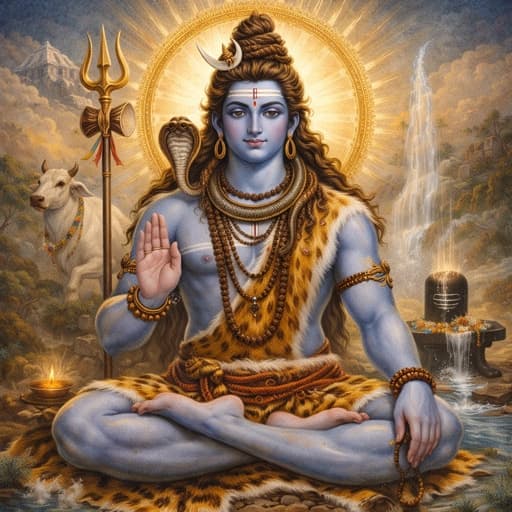
Shiva Sahasranama — 108 Sacred Names
Last updated: 14 June 2026
The Shiva Purana and Linga Purana contain 1000 names of Shiva. Here are the 108 most-chanted names — ideal for Monday Vrat, Maha Shivratri, and daily recitation.
| # | Name (Sanskrit) | IAST | Meaning |
|---|---|---|---|
| 1 | शिव | Śiva | The Auspicious One |
| 2 | महेश्वर | Maheśvara | The Great Lord |
| 3 | शम्भु | Śambhu | The Abode of Joy |
| 4 | पिनाकी | Pinākī | Wielder of the Pinaka bow |
| 5 | शशिशेखर | Śaśiśekhara | Who bears the Moon as crown |
| 6 | वामदेव | Vāmadeva | The Gracious God |
| 7 | विरूपाक्ष | Virūpākṣa | Of three eyes |
| 8 | कपर्दी | Kapardī | With matted hair |
| 9 | नीललोहित | Nīlalohita | Blue and red — throat/form |
| 10 | शंकर | Śaṃkara | Giver of happiness |
| 11 | शूलपाणि | Śūlapāṇi | Trident in hand |
| 12 | खटवांगी | Khaṭvāṃgī | Bearer of a bed-leg club |
| 13 | विष्णुवल्लभ | Viṣṇuvallabha | Beloved of Vishnu |
| 14 | शिपिविष्ट | Śipiviṣṭa | Pervading all light |
| 15 | अम्बिकानाथ | Ambikānātha | Lord of Ambika (Parvati) |
| 16 | श्रीकण्ठ | Śrīkaṇṭha | With beautiful throat |
| 17 | भक्तवत्सल | Bhaktavatsala | Loving toward devotees |
| 18 | भव | Bhava | The Existence itself |
| 19 | शर्व | Śarva | Destroyer of evil |
| 20 | त्रिलोकेश | Trilokīśa | Lord of three worlds |
| 21 | शितिकण्ठ | Śitikaṇṭha | Blue-throated |
| 22 | शिवाप्रिय | Śivāpriya | Beloved of Shiva (Parvati) |
| 23 | उग्र | Ugra | The Fierce |
| 24 | कपाली | Kapālī | Bearer of the skull |
| 25 | कामारी | Kāmārī | Enemy of Kama (desire) |
| 26 | अन्धकासुरसूदन | Andhakāsurasūdana | Slayer of demon Andhaka |
| 27 | गंगाधर | Gaṃgādhara | Bearer of the Ganga |
| 28 | ललाटाक्ष | Lalāṭākṣa | With eye on the forehead |
| 29 | कालकाल | Kālakāla | Death of Death itself |
| 30 | कृपानिधि | Kṛpānidhi | Ocean of Compassion |
| 31 | भीम | Bhīma | The Terrible, the Mighty |
| 32 | परशुहस्त | Paraśuhasta | With axe in hand |
| 33 | मृगपाणि | Mṛgapāṇi | With deer in hand |
| 34 | जटाधर | Jaṭādhara | With matted locks |
| 35 | कैलाशवासी | Kailāsavāsī | Dweller of Kailash |
| 36 | कवची | Kavacī | Armoured in light |
| 37 | कठोर | Kaṭhora | The Firm and Hard |
| 38 | त्रिपुरान्तक | Tripurāntaka | Destroyer of the three cities |
| 39 | वृषांक | Vṛṣāṃka | With bull as emblem |
| 40 | वृषभारूढ | Vṛṣabhārūḍha | Seated on the bull Nandi |
| 41 | भस्मोद्धूलितविग्रह | Bhasmoddh ūlitavigraha | Body smeared with sacred ash |
| 42 | सामप्रिय | Sāmapriya | Lover of Sama Veda chants |
| 43 | स्वरमयी | Svaramayī | Made of musical notes |
| 44 | त्रयीमूर्ति | Trayīmūrti | Form of the three Vedas |
| 45 | अनीश्वर | Anīśvara | Having no superior |
| 46 | सर्वज्ञ | Sarvajña | All-knowing |
| 47 | परमात्मा | Paramātmā | The Supreme Soul |
| 48 | सोमसूर्याग्निलोचन | Somasūryāgnilochana | Eyes are Moon, Sun & Fire |
| 49 | हवि | Havi | The Oblation (fire offering) |
| 50 | यज्ञमय | Yajñamaya | Embodiment of Yajna |
| 51 | सोम | Soma | The Moon, the nectar |
| 52 | पञ्चवक्त्र | Pañcavaktra | With five faces |
| 53 | सदाशिव | Sadāśiva | Eternally auspicious |
| 54 | विश्वेश्वर | Viśveśvara | Lord of the Universe |
| 55 | वीरभद्र | Vīrabhadra | The auspicious hero |
| 56 | गणनाथ | Gaṇanātha | Lord of the Ganas |
| 57 | प्रजापति | Prajāpati | Lord of all beings |
| 58 | हिरण्यरेत | Hiraṇyareta | Golden seed — creative power |
| 59 | दुर्धर्ष | Durdharṣa | The unconquerable |
| 60 | गिरीश | Girīśa | Lord of mountains |
| 61 | गिरिश | Giriśa | Who resides in mountains |
| 62 | अनघ | Anagha | Sinless and pure |
| 63 | भुजंगभूषण | Bhujaṃgabhūṣaṇa | Adorned with serpents |
| 64 | भर्ग | Bharga | Destroyer of sins |
| 65 | गिरिधन्वा | Giridhanvā | Whose bow is the Meru mountain |
| 66 | गिरिप्रिय | Giripriya | Lover of mountains |
| 67 | कृत्तिवासा | Kṛttivāsā | Wearing animal hide |
| 68 | पुरारति | Purārati | Enemy of the demon citadels |
| 69 | भगवान् | Bhagavān | The Blessed Lord |
| 70 | प्रमथाधिप | Pramathādhipa | Lord of the Pramatha spirits |
| 71 | मृत्युंजय | Mṛtyuṃjaya | Victor over death |
| 72 | सूक्ष्मतनु | Sūkṣmatanu | With subtle body |
| 73 | जगद्व्यापी | Jagadvyāpī | Pervading the universe |
| 74 | जगद्गुरु | Jagadguru | Preceptor of the universe |
| 75 | व्योमकेश | Vyomakeśa | Sky is whose hair |
| 76 | महासेनजनक | Mahāsenajānaka | Father of Skanda / Kartikeya |
| 77 | चारुविक्रम | Cāravikrama | Of beautiful stride |
| 78 | रुद्र | Rudra | The Roarer, the terrifier |
| 79 | भूतपति | Bhūtapati | Lord of all beings/spirits |
| 80 | स्थाणु | Sthāṇu | The immovable pillar |
| 81 | अहिर्बुध्न्य | Ahirbudhnya | The serpent of the deep |
| 82 | दिगम्बर | Digambara | Sky-clad, wearing space as garment |
| 83 | अष्टमूर्ति | Aṣṭamūrti | Eight-formed (earth, water, fire, air, ether, sun, moon, soul) |
| 84 | अनेकात्मा | Anekātmā | Of many forms of self |
| 85 | सात्विक | Sātvika | Of pure nature |
| 86 | शुद्धविग्रह | Śuddhavigraha | Of pure form |
| 87 | शाश्वत | Śāśvata | The eternal |
| 88 | खण्डपरशु | Khaṇḍaparaśu | With the battle-axe |
| 89 | अज | Aja | The Unborn |
| 90 | पाशविमोचन | Pāśavimocana | Liberator from the noose (of ego) |
| 91 | मृड | Mṛḍa | The Merciful |
| 92 | पशुपति | Paśupati | Lord of all souls/animals |
| 93 | देव | Deva | The Divine, the Resplendent |
| 94 | महादेव | Mahādeva | The Greatest God |
| 95 | अव्यय | Avyaya | The Imperishable |
| 96 | हर | Hara | The Remover of sins |
| 97 | पूषदन्तभित् | Pūṣadantabhit | Who broke the teeth of Pusha |
| 98 | अव्यग्र | Avyagra | Unperturbed, steady |
| 99 | सहस्राक्ष | Sahasrākṣa | Thousand-eyed |
| 100 | सहस्रपाद | Sahasrapāda | Thousand-footed |
| 101 | अपवर्गप्रद | Apavargaprada | Bestower of liberation |
| 102 | अनन्त | Ananta | The Infinite |
| 103 | तारक | Tāraka | The Deliverer |
| 104 | परमेश्वर | Parameśvara | The Supreme Ruler |
| 105 | ओम्कार | Oṃkāra | The sound OM |
| 106 | नमस्कार | Namaskāra | He to whom all bow |
| 107 | पञ्चाक्षर | Pañcākṣara | The five syllables (Na-Ma-Śi-Vā-Ya) |
| 108 | शिवोम् | Śivoṃ | I am Shiva — the final identity |
Related Stotrams