Krishna Janmashtami — Birthday of Lord Krishna
4 September 2026 · Friday
Tithi
Bhadrapada Krishna Ashtami (Purnimanta) = Shravana Krishna Ashtami (Amanta) + Rohini Nakshatra
Auspicious Muhurat · IST
Nishita Kaal (birth puja): 11:54 PM 4 Sep – 12:39 AM 5 Sep IST
Tithi Duration…
Abhijit Muhurat…
Sunrise / Sunset…
Source: Vedic Panchang, IST — Nishita computed for Mathura; check your local nishita outside north India
All timings shown for:…
Festival dates follow the India (IST) Vedic calendar.
Quick Info
Birthday of Lord Krishna — midnight celebrations, dahi handi, fasting, and devotional singing.
कृष्ण जन्माष्टमी — मध्यरात्रि उत्सव, दही हाँडी, व्रत और भक्ति गायन।
About this festival
Krishna Janmashtami (4 Sep 2026) celebrates the appearance of Lord Krishna — Vishnu's eighth avatar, born at midnight in Mathura's prison to Vasudeva and Devaki. The fast (Janmashtami Vrat) is among the most rigorous Vaishnava observances: 24-hour fast broken only after the midnight birth-puja. The Bhagavata Purana, Skandha 10, narrates the full birth story.
कृष्ण जन्माष्टमी (4 सितंबर 2026) भगवान कृष्ण के प्राकट्य का उत्सव है — विष्णु का आठवाँ अवतार, मथुरा कारागार में मध्यरात्रि को वसुदेव और देवकी से जन्म। जन्माष्टमी व्रत वैष्णव अनुष्ठानों में सबसे कठोर है: 24-घंटे का व्रत, केवल मध्यरात्रि जन्म-पूजा के बाद पारण। भागवत पुराण, स्कंध 10, में पूर्ण कथा है।
Krishna Janmashtami 2026 outside India — local timings for USA, UK, Canada, Australia, Singapore & UAEकृष्ण जन्माष्टमी 2026 भारत के बाहर — अमेरिका, ब्रिटेन, कनाडा, ऑस्ट्रेलिया, सिंगापुर और यूएई में स्थानीय समय
A tithi begins and ends at the same instant everywhere on Earth — only your local clock reading differs. That is why the same tithi can fall on the previous or the next calendar day where you live, even though the festival date on this page follows the Vedic Panchang, IST.
Classical observance windows — sunrise, midday, afternoon, evening and midnight — are defined by your own sunrise and sunset, not by India's. The table below gives those local values for the major diaspora cities.
तिथि पृथ्वी पर हर स्थान पर एक ही क्षण आरम्भ और समाप्त होती है — केवल आपकी स्थानीय घड़ी का समय भिन्न होता है। इसीलिए वही तिथि आपके यहाँ पिछले या अगले कैलेंडर दिन पड़ सकती है, जबकि इस पृष्ठ की तिथि वैदिक पंचांग (IST) के अनुसार है।
सूर्योदय, मध्याह्न, अपराह्न, प्रदोष और निशीथ जैसे शास्त्रीय काल आपके अपने सूर्योदय-सूर्यास्त से निर्धारित होते हैं, भारत के नहीं। नीचे प्रमुख प्रवासी नगरों के स्थानीय मान दिए गए हैं।
| City | Sunrise | Sunset | Krishna Ashtami (local time) |
|---|---|---|---|
| Ujjain, India | 6:09 AM | 6:41 PM | Sep 4, 2:26 AM → Sep 5, 12:14 AM |
| New York, USA | 6:26 AM | 7:23 PM | Sep 3, 4:56 PM → Sep 4, 2:44 PM |
| Chicago, USA | 6:19 AM | 7:18 PM | Sep 3, 3:56 PM → Sep 4, 1:44 PM |
| San Jose (Bay Area), USA | 6:40 AM | 7:31 PM | Sep 3, 1:56 PM → Sep 4, 11:44 AM |
| Toronto, Canada | 6:44 AM | 7:47 PM | Sep 3, 4:56 PM → Sep 4, 2:44 PM |
| London, UK | 6:17 AM | 7:40 PM | Sep 3, 9:56 PM → Sep 4, 7:44 PM |
| Dubai, UAE | 6:00 AM | 6:34 PM | Sep 4, 12:56 AM → Sep 4, 10:44 PM |
| Singapore | 6:59 AM | 7:07 PM | Sep 4, 4:56 AM → Sep 5, 2:44 AM |
| Sydney, Australia | 6:10 AM | 5:39 PM | Sep 4, 6:56 AM → Sep 5, 4:44 AM |
Overseas communities differ: some follow the India Panchang date, others observe on the local day the tithi prevails. Confirm the observance day with your local temple or community.
विदेश में समुदायों की परम्परा भिन्न है: कुछ भारत के पंचांग की तिथि मानते हैं, कुछ उस स्थानीय दिन पर व्रत रखते हैं जब तिथि व्याप्त हो। अपने स्थानीय मन्दिर या समुदाय से व्रत का दिन अवश्य सुनिश्चित करें।
Quick Facts
- Date 2026: 4 Sep, Friday (Bhadrapada Krishna Ashtami)
- Patron deity: Lord Krishna (8th Vishnu avatar)
- Birth tithi: Ashtami + Rohini Nakshatra + Midnight
- Fast duration: ~24 hours (sunrise to midnight parana)
- Scriptural source: Bhagavata Purana, Skandha 10, Chapter 3
Krishna Janmashtami Vrat Vidhiकृष्ण जन्माष्टमी व्रत विधि
- Wake before sunrise; bathe with til (sesame) water; wear yellow or blue cotton
- Sankalp: 'I undertake Janmashtami Vrat for the welfare of family and dharma'
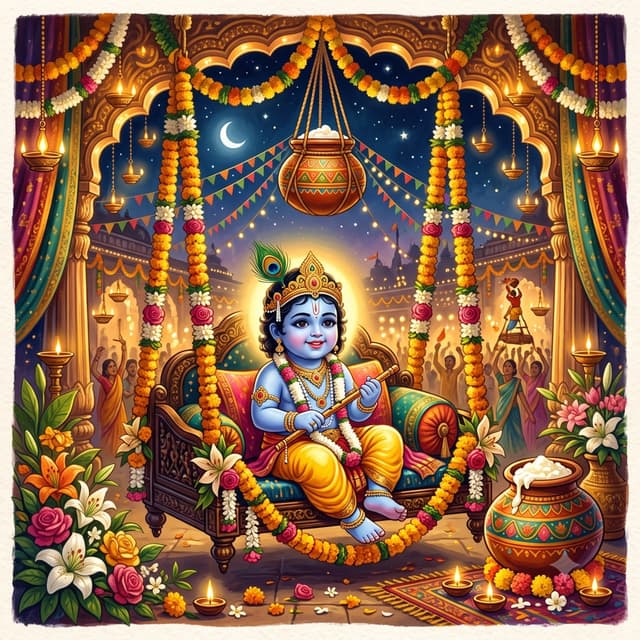
- Decorate a small jhula (cradle) for Bal Gopal; set up his murti with peacock-feather, flute, butter (makhan)
- Throughout day: fast — no grain, no salt; recite Bhagavata Purana Skandha 10, Chapters 1–5 (the birth narrative)
- Chant 'Hare Krishna Hare Krishna, Krishna Krishna Hare Hare' 108 times each prahar
- 11:55 PM: Begin Nishita Puja — abhishek of Bal Gopal with panchamrit (milk, curd, ghee, honey, sugar), then water
- 12:00 AM (midnight): Apply chandan tilak; offer 56 bhog items (chappan bhog) if possible; minimum: butter, makhana, sweets
- Sing Krishna janam aarti and bhajans; rock the jhula
- Break fast (Parana) after midnight birth-puja with phalahaar; full meal next morning
- सूर्योदय से पहले जागें; तिल जल से स्नान; पीला या नीला सूती वस्त्र
- संकल्प: 'परिवार और धर्म के कल्याण हेतु जन्माष्टमी व्रत संकल्प'
- बाल गोपाल के लिए छोटा झूला सजाएँ; मूर्ति — मोरपंख, बाँसुरी, माखन सहित
- दिनभर: निराहार — अन्न, नमक वर्जित; भागवत पुराण स्कंध 10, अध्याय 1–5 (जन्म कथा) पाठ
- प्रत्येक प्रहर 108 बार 'हरे कृष्ण हरे कृष्ण, कृष्ण कृष्ण हरे हरे' जप
- रात्रि 11:55 PM: निशीथ पूजा प्रारम्भ — बाल गोपाल का पंचामृत (दूध, दही, घी, शहद, शक्कर) फिर जल अभिषेक
- मध्यरात्रि 12:00 AM: चंदन तिलक; यथासम्भव छप्पन भोग; न्यूनतम — माखन, मखाना, मिठाई
- कृष्ण जन्म आरती और भजन; झूला झुलाएँ
- मध्यरात्रि जन्म-पूजा के बाद फलाहार से पारण; अगले प्रातः पूर्ण भोजन
Do's
- Fast strictly — no grain, salt, or onion-garlic; phalahaar only if needed
- Stay awake until midnight birth-puja — the main observance
- Read or hear Bhagavata Purana, Skandha 10, Chapter 3 (the birth narrative)
- Decorate a jhula for Bal Gopal and rock it during birth aarti
Don'ts
- Do not break fast before Nishita Kaal puja
- Do not consume non-veg, alcohol, or tobacco
- Do not sleep during the night until birth-puja is done
- Avoid worldly arguments — keep the day in Krishna-bhava
क्या करें
- कठोर व्रत — अन्न, नमक, प्याज-लहसुन वर्जित; आवश्यक हो तो फलाहार
- मध्यरात्रि जन्म-पूजा तक जागरण — मुख्य अनुष्ठान
- भागवत पुराण, स्कंध 10, अध्याय 3 (जन्म कथा) पाठ या श्रवण
- बाल गोपाल के झूले को सजाएँ और जन्म आरती में झुलाएँ
क्या न करें
- निशीथ काल पूजा से पहले पारण न करें
- मांसाहार, मद्य, तम्बाकू वर्जित
- जन्म-पूजा होने तक रात्रि निद्रा वर्जित
- सांसारिक विवाद से बचें — कृष्ण-भाव में रहें
Mantrasमंत्र
ॐ कृष्णाय वासुदेवाय हरये परमात्मने । प्रणतक्लेशनाशाय गोविन्दाय नमो नमः ॥
Om Kṛṣṇāya Vāsudevāya Haraye Paramātmane, Praṇata-kleśa-nāśāya Govindāya Namo Namaḥ
Salutations again and again to Krishna, son of Vasudeva, Hari, the supreme Self, destroyer of devotees' sorrows, Govinda. (Bhagavata Purana 10.73.16)
वासुदेव-पुत्र कृष्ण, हरि, परमात्मा, प्रणत-शोक नाशक, गोविन्द को बारम्बार नमन। (भागवत पुराण 10.73.16)
↻ 108 times at Nishita Kaal
हरे कृष्ण हरे कृष्ण कृष्ण कृष्ण हरे हरे । हरे राम हरे राम राम राम हरे हरे ॥
Hare Kṛṣṇa Hare Kṛṣṇa Kṛṣṇa Kṛṣṇa Hare Hare, Hare Rāma Hare Rāma Rāma Rāma Hare Hare
The 16-name Maha Mantra — invokes the energy of Hari (Krishna and Rama) for purification of consciousness in Kali Yuga. (Kali-santarana Upanishad)
16-नाम महा मंत्र — कलियुग में चेतना-शुद्धि हेतु हरि (कृष्ण और राम) की ऊर्जा का आवाहन। (कलि-संतरण उपनिषद)
↻ 108 times each prahar
Twelve Names of Krishna (opening of the Ashtottara-Shatanama)
These are the first twelve of the traditional one hundred and eight names of Lord Krishna. They are recited in this order at the start of the 108-name stotra, so they also serve as a short opening when the full recitation is not possible.
- 1.Krishna — The dark-hued one who draws every heart to himself
- 2.Kamalanatha — Lord of Kamala — consort of Shri Lakshmi
- 3.Vasudeva — He who dwells within all beings, and is the son of Vasudeva
- 4.Sanatana — The eternal one, without beginning or end
- 5.Vasudevatmaja — The beloved son born to Vasudeva in Kamsa's prison
- 6.Punya — Purity itself — whose very remembrance sanctifies
- 7.Lila-manusha-vigraha — He who takes a human form purely as divine play
- 8.Shrivatsa-kaustubha-dhara — Bearer of the Shrivatsa mark and the Kaustubha gem
- 9.Yashoda-vatsala — He who is bound by Mother Yashoda's tender love
- 10.Hari — The remover — who takes away sorrow, sin and bondage
- 11.Chaturbhuja — The four-armed form shown to Devaki and Vasudeva at the moment of birth, bearing discus, mace, conch and lotus
- 12.Devaki-nandana — The joy of Devaki — the eighth child foretold by the Akashvani
How Janmashtami Is Observed Across Indiaभारत भर में जन्माष्टमी की क्षेत्रीय परम्पराएँ
- Braj (Mathura & Vrindavan) — The birthplace itself: abhishek at Krishna Janmabhoomi, night-long jhanki and Raslila, and Vrindavan's Banke Bihari temple keeping its Mangala Aarti darshan for this one night of the year. Nandgaon celebrates Nandotsav the next morning.
- Maharashtra — Gokulashtami and, the next day, Dahi Handi: Govinda pathaks build human pyramids to break a curd pot strung high across the street. The prasad is Gopalkala — beaten rice, curd, cucumber and ghee mixed together.
- Gujarat — Called Shravan Vad Aatham. Grandest at Dwarkadhish (Dwarka) and Ranchhodrai (Dakor), with a midnight Gomti Ghat snan at Dwarka and 'Govinda' matki-phod teams in every town.
- Rajasthan — Shrinathji at Nathdwara and Govind Dev Ji at Jaipur hold special jhanki darshan; the Pushtimarg tradition offers elaborate sringaar and chappan bhog.
- Bengal — Observed as Gopal Puja; ISKCON Mayapur and Nabadwip draw the largest gatherings, Nandotsav follows the next day, and taler bora (palm-fruit fritters) is the traditional offering.
- Odisha — Recitation of the tenth Skandha of the Bhagavata in village Bhagavata Tungis through the night, and the Krushna Janma niti observed at the Jagannath temple, Puri.
- Assam — Namghars hold Naam-Prasanga through the night, and Satras stage Bhaona — the Ankiya Naat dramas of Srimanta Sankardeva enacting Krishna-leela episodes.
- Tamil Nadu — Gokulashtami / Sri Jayanti: tiny rice-flour footprints are drawn from the doorway to the puja room to welcome the infant Krishna, with seedai, murukku and appam offered as neivedyam.
- Kerala — Ashtami Rohini: Guruvayur's Sree Krishna temple is the centre, children process as Krishna and gopikas in Shobha Yatra, and Uriyadi pot-breaking follows.
- Karnataka (Udupi) — Sri Krishna Matha observes Krishna Janmashtami with Arghya at midnight, and Vittal Pindi / Mosaru Kudike curd-pot breaking with a chariot procession the next day.
- Manipur — Manipuri Vaishnavas gather at the Shree Govindajee temple in Imphal, where the birth is celebrated with the classical Ras Leela dance tradition.
- ब्रज (मथुरा और वृन्दावन) — जन्मस्थली स्वयं: कृष्ण जन्मभूमि पर अभिषेक, रातभर झाँकी और रासलीला, तथा वृन्दावन का बाँके बिहारी मंदिर वर्ष में केवल इसी रात मंगला आरती दर्शन देता है। अगली प्रातः नन्दगाँव में नन्दोत्सव।
- महाराष्ट्र — गोकुलाष्टमी और अगले दिन दही हांडी: गोविंदा पथक मानव-पिरामिड बनाकर ऊँची बँधी मटकी फोड़ते हैं। प्रसाद होता है गोपालकाला — पोहा, दही, ककड़ी और घी का मिश्रण।
- गुजरात — इसे श्रावण वद आठम कहते हैं। द्वारकाधीश (द्वारका) और रणछोड़राय (डाकोर) में सर्वाधिक भव्य; द्वारका में मध्यरात्रि गोमती घाट स्नान और हर नगर में 'गोविंदा' मटकी-फोड़ दल।
- राजस्थान — नाथद्वारा के श्रीनाथजी और जयपुर के गोविंद देव जी में विशेष झाँकी दर्शन; पुष्टिमार्ग परम्परा में विस्तृत श्रृंगार और छप्पन भोग।
- बंगाल — गोपाल पूजा के रूप में; इस्कॉन मायापुर और नवद्वीप में सबसे बड़ा समागम, अगले दिन नन्दोत्सव, और ताड़ के फल से बना 'तालेर बड़ा' पारम्परिक भोग।
- ओडिशा — गाँव-गाँव की भागवत टुंगी में रातभर भागवत के दशम स्कन्ध का पाठ, और पुरी जगन्नाथ मंदिर में कृष्ण जन्म नीति।
- असम — नामघरों में रातभर नाम-प्रसंग, और सत्रों में भाओना — श्रीमन्त शंकरदेव के अंकिया नाट, जिनमें कृष्ण-लीला के प्रसंग अभिनीत होते हैं।
- तमिल नाडु — गोकुलाष्टमी / श्री जयन्ती: बाल कृष्ण के स्वागत हेतु द्वार से पूजा-गृह तक चावल-आटे के नन्हे चरण-चिह्न बनाए जाते हैं; सीडै, मुरुक्कू और अप्पम का नैवेद्य।
- केरल — अष्टमी रोहिणी: गुरुवायूर का श्री कृष्ण मंदिर केंद्र है, बच्चे कृष्ण और गोपिका बनकर शोभा यात्रा निकालते हैं, फिर उरियाडि मटकी-फोड़।
- कर्नाटक (उडुपी) — श्री कृष्ण मठ में मध्यरात्रि अर्घ्य, और अगले दिन विट्ठल पिंडी / मोसरु कुडिके दही-मटकी फोड़ के साथ रथ यात्रा।
- मणिपुर — मणिपुरी वैष्णव इम्फाल के श्री गोविंदजी मंदिर में एकत्र होते हैं, जहाँ जन्मोत्सव शास्त्रीय रास लीला नृत्य परम्परा के साथ मनाया जाता है।
The Birth Narrative (Bhagavata Purana)जन्म कथा (भागवत पुराण)
Per Bhagavata Purana (Skandha 10, Chapter 3), Lord Krishna was born at midnight on Bhadrapada Krishna Ashtami under Rohini Nakshatra to Vasudeva and Devaki in Kamsa's prison. Akashvani (divine voice) had warned Kamsa that Devaki's eighth child would slay him, so all locks broke at Krishna's birth and Vasudeva carried him across the flooded Yamuna to Yashoda's home in Gokul.
Krishna spent his childhood in Gokul and Vrindavan playing with cows and gopis; later he killed Kamsa, established Dwarka, and delivered the Bhagavad Gita to Arjuna at Kurukshetra. Janmashtami celebrates not just his birth but his entire avatar-mission: re-establishing dharma when adharma rises (Gita 4.7-8).
भागवत पुराण (स्कंध 10, अध्याय 3) के अनुसार भगवान कृष्ण भाद्रपद कृष्ण अष्टमी की मध्यरात्रि को रोहिणी नक्षत्र में, कंस की कारागार में, वसुदेव और देवकी से जन्मे। आकाशवाणी ने कंस को चेताया था कि देवकी का आठवाँ पुत्र उसका वध करेगा — अतः कृष्ण के जन्म पर सभी ताले टूट गए और वसुदेव उन्हें यमुना पार गोकुल में यशोदा के घर ले गए।
कृष्ण ने बचपन गोकुल और वृन्दावन में गायों और गोपियों के साथ बिताया; बाद में कंस-वध, द्वारका स्थापना और कुरुक्षेत्र में अर्जुन को भगवद्गीता का उपदेश दिया। जन्माष्टमी केवल उनके जन्म का नहीं — उनके सम्पूर्ण अवतार-कार्य का उत्सव है: अधर्म बढ़ने पर धर्म-संस्थापन (गीता 4.7-8)।
→ See the full step-by-step puja vidhi
Frequently Asked Questionsअक्सर पूछे जाने वाले प्रश्न
Why is Krishna worshipped specifically at midnight on Janmashtami?
According to Bhagavata Purana (Skandha 10, Chapter 3), Krishna was born at midnight on Bhadrapada Krishna Ashtami under Rohini Nakshatra in Mathura's prison. The Nishita Kaal puja replicates this exact birth moment — breaking the fast and performing abhishek at midnight is therefore the heart of the observance.
जन्माष्टमी पर कृष्ण की पूजा मध्यरात्रि में ही क्यों होती है?
भागवत पुराण (स्कंध 10, अध्याय 3) के अनुसार भगवान कृष्ण भाद्रपद कृष्ण अष्टमी की मध्यरात्रि को रोहिणी नक्षत्र में मथुरा कारागार में जन्मे थे। निशीथ काल की पूजा उसी जन्म-क्षण का अनुकरण है — इसीलिए व्रत-पारण और अभिषेक मध्यरात्रि में करना अनुष्ठान का सार है।
What is the significance of the jhula (cradle) ritual on Janmashtami?
Devotees decorate a small cradle for Bal Gopal — the infant Krishna — with peacock feathers, a flute, and offerings of butter. Rocking the jhula while singing the birth aarti at midnight replicates the joy of Yashoda's home in Gokul, immersing the devotee in Krishna's childhood leela.
जन्माष्टमी पर झूले की क्या विशेषता है?
भक्त बाल गोपाल के लिए मोरपंख, बाँसुरी और माखन सहित एक छोटा झूला सजाते हैं। मध्यरात्रि में जन्म-आरती गाते हुए झूला झुलाना गोकुल में यशोदा के घर की प्रसन्नता का अनुकरण है और भक्त को कृष्ण की बाल-लीला में लीन करता है।
Can elderly or unwell people observe a modified Janmashtami fast?
Yes. The full 24-hour nirjala vrat is prescribed for the able-bodied. Those who are elderly, ill, pregnant, or on medication may observe a phalahaar (fruit-only) fast throughout the day and break it after the midnight birth-puja with tulsi-jal. The devotional sankalp is what matters most.
क्या बुजुर्ग या अस्वस्थ लोग जन्माष्टमी व्रत को संशोधित रूप में कर सकते हैं?
हाँ। पूर्ण 24-घंटे का निर्जला व्रत स्वस्थ व्यक्तियों के लिए है। वृद्ध, रोगी, गर्भवती, या दवा लेने वाले लोग दिनभर फलाहार करके मध्यरात्रि जन्म-पूजा के बाद तुलसी-जल से पारण कर सकते हैं। भक्ति-संकल्प सर्वाधिक महत्वपूर्ण है।
What are the 56 bhog (Chappan Bhog) items offered to Krishna?
Chappan Bhog is a traditional offering of 56 food items to Lord Krishna, rooted in the Govardhan leela. Mother Yashoda fed the child eight times a day; through the seven days he held the hill aloft he ate nothing at all, so afterwards Braj offered 8 × 7 = 56 dishes to make up every missed meal. Items include butter, makhana, sweets, seasonal fruits, milk preparations and savouries — all sattvic.
कृष्ण को अर्पित छप्पन भोग क्या है?
छप्पन भोग भगवान कृष्ण को अर्पित 56 वस्तुओं का भोग है। गोवर्धन लीला के अनुसार माता यशोदा उन्हें दिन में आठ बार भोजन कराती थीं; जिन सात दिनों तक उन्होंने पर्वत धारण किया, उन्होंने कुछ भी ग्रहण नहीं किया — इसलिए बाद में ब्रज ने हर छूटे भोजन की पूर्ति हेतु 8 × 7 = 56 व्यंजन अर्पित किए। इसमें माखन, मखाना, मिठाइयाँ, मौसमी फल, दुग्ध-पदार्थ और नमकीन — सभी सात्विक — सम्मिलित हैं।
How does Dahi Handi connect to the birth story of Krishna?
Dahi Handi celebrates the young Krishna's playful theft of butter and curd from pots hung high to keep them away from him. Teams form human pyramids to break a clay pot of curd. It is most elaborately observed in Maharashtra and Mathura, enacting the mischievous Makhan-chor episode.
दही हांडी का कृष्ण जन्म कथा से क्या संबंध है?
दही हांडी बालकृष्ण की माखन-चोरी की लीला का उत्सव है — माखन-दही को ऊँचे बर्तनों में छुपाने पर भी कृष्ण उन्हें चुरा लेते थे। दल मानव-पिरामिड बनाकर मटकी तोड़ते हैं। यह महाराष्ट्र और मथुरा में विशेष रूप से मनाया जाने वाला माखन-चोर का अभिनय है।