Karwa Chauth — Wives' Day-Long Vrat for Husband's Longevity
29 October 2026 · Thursday
Tithi
Kartika Krishna Chaturthi
Auspicious Muhurat · IST
Sargi: 4:30 AM (before sunrise); Puja: 5:45 PM – 7:00 PM; Moonrise: 8:18 PM IST (Delhi)
Tithi Duration…
Abhijit Muhurat…
Sunrise / Sunset…
Source: Vedic Panchang, IST
All timings shown for:…
Festival dates follow the India (IST) Vedic calendar.
Quick Info
Karwa Chauth — married women fast from sunrise to moonrise for the long life of their husbands.
करवा चौथ — विवाहित महिलाएँ पतिदेव की दीर्घायु के लिए सूर्योदय से चंद्रोदय तक व्रत रखती हैं।
About this festival
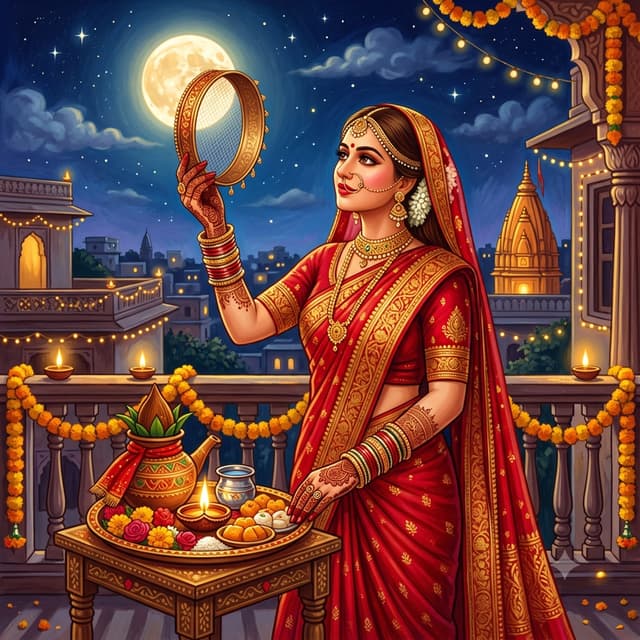
Karwa Chauth (29 Oct 2026) is observed on Kartika Krishna Chaturthi — a day-long nirjala fast by married Hindu women from sunrise to moonrise for their husbands' long life. Sargi (pre-dawn meal from mother-in-law), full sringar, henna, and the unique 'sieve-moon-darshan' ritual define this North Indian women's festival. The Mahabharata, Veer Veervati Katha, and Karwa Lok-katha are the three traditional stories.
करवा चौथ (29 अक्टूबर 2026) कार्तिक कृष्ण चतुर्थी को विवाहित हिंदू स्त्रियों द्वारा सूर्योदय से चन्द्रोदय तक का निर्जला व्रत है — पति की दीर्घायु हेतु। सरगी (सासू से पूर्व-अरुणोदय भोजन), पूर्ण श्रृंगार, मेहंदी और अद्वितीय 'छलनी-चन्द्र-दर्शन' विधि इस उत्तर भारतीय स्त्री-पर्व की पहचान हैं। महाभारत, वीर वीरवती कथा और करवा लोक-कथा — तीन परम्परागत कहानियाँ हैं।
Karwa Chauth 2026 outside India — local timings for USA, UK, Canada, Australia, Singapore & UAEकरवा चौथ 2026 भारत के बाहर — अमेरिका, ब्रिटेन, कनाडा, ऑस्ट्रेलिया, सिंगापुर और यूएई में स्थानीय समय
A tithi begins and ends at the same instant everywhere on Earth — only your local clock reading differs. That is why the same tithi can fall on the previous or the next calendar day where you live, even though the festival date on this page follows the Vedic Panchang, IST.
Classical observance windows — sunrise, midday, afternoon, evening and midnight — are defined by your own sunrise and sunset, not by India's. The table below gives those local values for the major diaspora cities.
तिथि पृथ्वी पर हर स्थान पर एक ही क्षण आरम्भ और समाप्त होती है — केवल आपकी स्थानीय घड़ी का समय भिन्न होता है। इसीलिए वही तिथि आपके यहाँ पिछले या अगले कैलेंडर दिन पड़ सकती है, जबकि इस पृष्ठ की तिथि वैदिक पंचांग (IST) के अनुसार है।
सूर्योदय, मध्याह्न, अपराह्न, प्रदोष और निशीथ जैसे शास्त्रीय काल आपके अपने सूर्योदय-सूर्यास्त से निर्धारित होते हैं, भारत के नहीं। नीचे प्रमुख प्रवासी नगरों के स्थानीय मान दिए गए हैं।
| City | Sunrise | Sunset | Krishna Chaturthi (local time) |
|---|---|---|---|
| Ujjain, India | 6:30 AM | 5:50 PM | Oct 29, 1:07 AM → Oct 29, 10:11 PM |
| New York, USA | 7:22 AM | 5:55 PM | Oct 28, 3:37 PM → Oct 29, 12:41 PM |
| Chicago, USA | 7:19 AM | 5:48 PM | Oct 28, 2:37 PM → Oct 29, 11:41 AM |
| San Jose (Bay Area), USA | 7:29 AM | 6:12 PM | Oct 28, 12:37 PM → Oct 29, 9:41 AM |
| Toronto, Canada | 7:49 AM | 6:12 PM | Oct 28, 3:37 PM → Oct 29, 12:41 PM |
| London, UK | 6:48 AM | 4:39 PM | Oct 28, 7:37 PM → Oct 29, 4:41 PM |
| Dubai, UAE | 6:24 AM | 5:40 PM | Oct 28, 11:37 PM → Oct 29, 8:41 PM |
| Singapore | 6:46 AM | 6:50 PM | Oct 29, 3:37 AM → Oct 30, 12:41 AM |
| Sydney, Australia | 5:58 AM | 7:20 PM | Oct 29, 6:37 AM → Oct 30, 3:41 AM |
Overseas communities differ: some follow the India Panchang date, others observe on the local day the tithi prevails. Confirm the observance day with your local temple or community.
विदेश में समुदायों की परम्परा भिन्न है: कुछ भारत के पंचांग की तिथि मानते हैं, कुछ उस स्थानीय दिन पर व्रत रखते हैं जब तिथि व्याप्त हो। अपने स्थानीय मन्दिर या समुदाय से व्रत का दिन अवश्य सुनिश्चित करें।
Quick Facts
- Date 2026: 29 Oct (Kartika Krishna Chaturthi)
- Patron deities: Goddess Parvati, Shiva, Karthikeya, Ganesh, Moon (Chandra)
- Fast: Nirjala (no food or water) from sunrise to moonrise — ~14 hours
- Sargi: pre-dawn meal from mother-in-law (fruit, sweets, paratha, kheer)
- Moonrise time varies by city — confirm local panchang on the day
Karwa Chauth Vrat Vidhi (Step-by-Step)करवा चौथ व्रत विधि
- Sargi (4:00–5:00 AM): Eat the platter sent by mother-in-law — phaeniya, paratha, fruit, sweets, no garlic/onion
- Apply mehndi (henna) the previous night — deep colour = strong marital bond (folk belief)
- Wear red/maroon bridal saari or lehenga with full 16 sringar (red bangles, sindoor, mangalsutra, payal, kajal)
- Day-long Nirjala fast — no water, no food; meditate on husband's wellbeing
- Evening (5:45 PM): Gather women in a circle; place Karwa (clay pot) + diya + roli + akshat + sweets in centre
- Recite Karwa Chauth Vrat Katha 7 times — pass the thali around the circle each time ('Phera')
- Worship Shiva-Parvati, Karthikeya, Ganesha — offer water, akshat, flowers, sweets
- After moonrise: View moon through a chalni (sieve) first, then husband's face through the same sieve
- Husband offers water and first morsel of food to break the wife's fast; she touches his feet
- सरगी (प्रातः 4:00 AM–5:00 AM): सासू से प्राप्त थाली — फेनिया, पराठा, फल, मिठाई; प्याज/लहसुन वर्जित
- पूर्व रात्रि मेहंदी लगाएँ — गहरा रंग = प्रबल दाम्पत्य-बंधन (लोकविश्वास)
- लाल/मरून दुल्हन साड़ी या लहंगा + सोलह श्रृंगार (लाल चूड़ी, सिंदूर, मंगलसूत्र, पायल, काजल)
- दिवसभर निर्जला व्रत — जल, भोजन वर्जित; पति के कल्याण का ध्यान
- संध्या (5:45 PM): स्त्रियों का गोला; मध्य में करवा (मिट्टी पात्र) + दीप + रोली + अक्षत + मिठाई
- करवा चौथ व्रत कथा 7 बार पाठ — प्रत्येक बार थाली गोले में घुमाएँ ('फेरा')
- शिव-पार्वती, कार्तिकेय, गणेश पूजन — जल, अक्षत, फूल, मिठाई
- चन्द्रोदय पर: पहले छलनी से चन्द्र दर्शन, फिर उसी छलनी से पति का मुख-दर्शन
- पति जल और भोजन का पहला कौर पत्नी को देकर व्रत खुलवाए; वह पति के चरण-स्पर्श करे
Do's
- Eat sargi between 4–5 AM and finish before sunrise
- Maintain Nirjala — no water, no food, no medicine (consult doctor if ill)
- Apply deepest mehndi possible — symbol of mother-in-law's love (folk)
- Tell the Karwa katha to a younger woman to pass on the tradition
Don'ts
- Do not break fast before moonrise + sieve-darshan ritual
- Do not argue with husband, MIL, or anyone — disrupts vrat bhava
- Do not wear black or white — only red/maroon/pink
- Pregnant/ill women: phalahaar permitted, but Nirjala discouraged
क्या करें
- सरगी प्रातः 4:00–5:00 AM; सूर्योदय से पहले समाप्त
- निर्जला बनाए रखें — जल, भोजन, औषधि वर्जित (रोग हो तो चिकित्सक से परामर्श)
- गहरी से गहरी मेहंदी — सासू के प्रेम का प्रतीक (लोकविश्वास)
- करवा कथा छोटी स्त्री को सुनाएँ — परम्परा का संचरण
क्या न करें
- चन्द्रोदय + छलनी-दर्शन से पहले पारण न करें
- पति, सासू, किसी से विवाद नहीं — व्रत-भाव बिगड़ता है
- काला या सफेद वर्जित — केवल लाल/मरून/गुलाबी
- गर्भवती/रोगी: फलाहार स्वीकार्य, निर्जला निरुत्साहित
Mantrasमंत्र
ॐ शिवायै नमः । ॐ नमः शिवाय । ॐ षण्मुखाय नमः । ॐ गणेशाय नमः ॥
Om Śivāyai Namaḥ. Om Namaḥ Śivāya. Om Ṣaṇmukhāya Namaḥ. Om Gaṇeśāya Namaḥ
Salutations to Parvati, Shiva, Karthikeya (six-faced), and Ganesha — the four-deity Karwa Chauth invocation. (Traditional puja mantra)
पार्वती, शिव, षण्मुख कार्तिकेय और गणेश को नमन — करवा चौथ का चार-देव आवाहन मंत्र। (परम्परागत पूजा मंत्र)
↻ Once each at evening puja
करकेन शुभेनैव ददस्व पतिमोदकम् । करिष्ये व्रतमेतत्तु मम पतिः जीवतु शतायुषम् ॥
Karakena Śubhenaiva Dadasva Pati-modakam, Kariṣye Vratam-etat tu Mama Patiḥ Jīvatu Śatāyuṣam
With this auspicious karva pot, I offer modak to my husband. I undertake this vrat — may my husband live a hundred years. (Karwa Chauth Vrat Sankalp, Traditional)
इस शुभ करवे से मैं अपने पति को मोदक अर्पित करती हूँ। मैं यह व्रत करती हूँ — मेरे पति शतायु हों। (करवा चौथ व्रत संकल्प, परम्परागत)
↻ Sankalp at sunrise
The Veervati Katha — Why Sieve-Darshanवीरवती कथा — छलनी-दर्शन क्यों
Per traditional Karwa Chauth katha, Veervati was the only sister among 7 brothers. On her first Karwa Chauth post-marriage, she could not bear the day-long thirst. Her loving brothers, distressed, lit a lamp behind a peepal tree and called her to 'view the moon' through a sieve — fake moonrise.
Veervati broke her fast — moments later her husband died. Realising her error (the moon hadn't actually risen), she observed strict Karwa Chauth every year. After 12 years of unbroken vrat, Goddess Parvati restored her husband to life. The sieve-darshan ritual today is the inverse — modern wives use the sieve to authenticate the REAL moonrise before breaking fast.
परम्परागत करवा चौथ कथा के अनुसार वीरवती 7 भाइयों की एकमात्र बहन थी। विवाह के बाद पहली करवा चौथ पर वह दिवसभर की प्यास सहन नहीं कर सकी। प्रेमी भाइयों ने व्यथित होकर पीपल वृक्ष के पीछे दीपक जलाया और उसे छलनी से 'चन्द्र-दर्शन' करने को कहा — झूठा चन्द्रोदय।
वीरवती ने व्रत खोला — क्षण भर बाद ही उसके पति की मृत्यु हो गई। अपनी भूल समझकर (चन्द्र वास्तव में उदित नहीं हुआ था), उसने प्रतिवर्ष कठोर करवा चौथ रखा। 12 वर्ष के अखंड व्रत के बाद माँ पार्वती ने उसके पति को पुनर्जीवित किया। आज की छलनी-दर्शन विधि उल्टी है — आधुनिक पत्नियाँ छलनी से वास्तविक चन्द्रोदय का प्रमाण लेकर ही व्रत खोलती हैं।
Frequently Asked Questionsअक्सर पूछे जाने वाले प्रश्न
On which tithi does Karwa Chauth fall and who observes the fast?
Karwa Chauth falls on Kartika Krishna Chaturthi. It is observed by married Hindu women as a day-long nirjala fast — no food and no water — from sunrise to moonrise, for their husbands' long life. Widows traditionally do not observe it; betrothed women may do so in some North Indian communities.
करवा चौथ किस तिथि को पड़ता है और व्रत कौन रखता है?
करवा चौथ कार्तिक कृष्ण चतुर्थी को पड़ता है। यह विवाहित हिंदू स्त्रियों द्वारा सूर्योदय से चन्द्रोदय तक — पति की दीर्घायु हेतु — निर्जला व्रत के रूप में रखा जाता है। विधवाएँ परम्परागत रूप से यह व्रत नहीं रखतीं; कुछ उत्तर भारतीय समुदायों में सगाई-शुदा स्त्रियाँ भी रख सकती हैं।
What is 'sargi' and what is typically included in it?
Sargi is a pre-dawn meal sent by the mother-in-law to the daughter-in-law before sunrise on Karwa Chauth — typically between 4–5 AM, before the fast begins. It usually includes phaeniya (vermicelli sweet), paratha, fruit, kheer, and sweets. No onion or garlic is included. After finishing sargi before sunrise, the wife begins her nirjala fast.
'सरगी' क्या है और इसमें सामान्यतः क्या होता है?
सरगी करवा चौथ पर सूर्योदय से पहले — सामान्यतः प्रातः 4:00–5:00 AM — सासू द्वारा बहू को दिया जाने वाला पूर्व-अरुणोदय भोजन है। इसमें सामान्यतः फेनिया, पराठा, फल, खीर और मिठाइयाँ होती हैं। प्याज-लहसुन नहीं होता। सूर्योदय से पहले सरगी समाप्त करने के बाद निर्जला व्रत प्रारम्भ होता है।
Why do women view the moon through a sieve (chalni) rather than directly?
The chalni-darshan ritual originates from the Veervati katha: Veervati's brothers deceived her with a fake moonrise using a lamp behind a peepal tree. She broke her fast and her husband died. After twelve years of strict vrat, Parvati restored him. The sieve-viewing is now the device wives use to authenticate the real moonrise before breaking the fast.
स्त्रियाँ चाँद को सीधे देखने की बजाय छलनी से क्यों देखती हैं?
छलनी-दर्शन विधि वीरवती कथा से उत्पन्न है: वीरवती के भाइयों ने पीपल के पीछे दीपक जलाकर नकली चन्द्रोदय का भ्रम दिया। उसने व्रत तोड़ा और पति की मृत्यु हो गई। 12 वर्ष के कठोर व्रत के बाद पार्वती ने उसे जीवित किया। अब छलनी-दर्शन असली चन्द्रोदय की प्रमाणिकता जाँचने का उपाय है।
Which deities are worshipped during Karwa Chauth evening puja?
The primary deities are Goddess Parvati, Lord Shiva, Karthikeya (Shanmukha), and Ganesha — collectively representing marital auspiciousness and family protection. The moon (Chandra) is also invoked at moonrise. The clay karwa pot filled with water is the central offering, symbolising the wish for the husband's nourishment and long life.
करवा चौथ की संध्या पूजा में किन देवताओं की पूजा होती है?
प्रमुख देव हैं देवी पार्वती, भगवान शिव, कार्तिकेय (षण्मुख) और गणेश — जो सामूहिक रूप से दाम्पत्य मंगल और परिवार-रक्षा के प्रतीक हैं। चन्द्रोदय पर चन्द्रमा का भी आवाहन होता है। जल से भरा मिट्टी का करवा पात्र केंद्रीय अर्पण है — पति के पोषण और दीर्घायु की कामना का प्रतीक।