

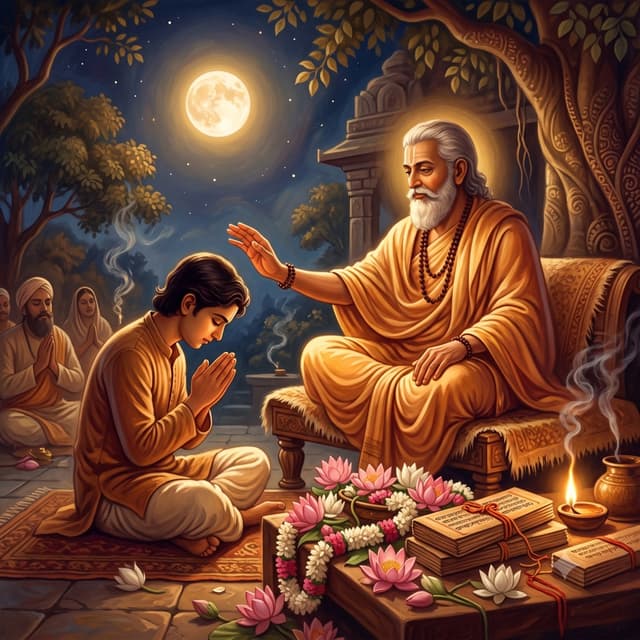
Guru Purnima — Honouring the Sacred Teacher (Vyasa Purnima)
29 July 2026 · Wednesday
Tithi
Ashadha Shukla Purnima
Auspicious Muhurat · IST
Pujan Muhurat: 4:30 AM – 10:00 AM IST (Brahma + morning)
Tithi Duration…
Abhijit Muhurat…
Sunrise / Sunset…
Source: Vedic Panchang, IST
All timings shown for:…
Festival dates follow the India (IST) Vedic calendar.
Quick Info
Guru Purnima — honour your Guru (spiritual teacher). Recite Guru Mantra and seek blessings.
गुरु पूर्णिमा — अपने गुरु का सम्मान करें। गुरु मंत्र जाप और आशीर्वाद प्राप्ति।
About this festival
Guru Purnima (29 Jul 2026) — also called Vyasa Purnima — falls on Ashadha Shukla Purnima, the day Sage Veda Vyasa was born and the day he completed the four Vedas. Per Skanda Purana, every disciple offers gratitude to their guru (spiritual + academic teacher) today. The 4-month Chaturmas Vyasa Puja begins at all mathas (monastic centres); Buddhist tradition observes it as the day Buddha gave his first sermon at Sarnath.
गुरु पूर्णिमा (29 जुलाई 2026) — व्यास पूर्णिमा भी — आषाढ़ शुक्ल पूर्णिमा को है, जिस दिन महर्षि वेद व्यास का जन्म हुआ और उन्होंने चारों वेदों का संकलन पूर्ण किया। स्कंद पुराण के अनुसार प्रत्येक शिष्य आज अपने गुरु (आध्यात्मिक + शैक्षणिक शिक्षक) को कृतज्ञता अर्पित करता है। सभी मठों में 4-मास चातुर्मास व्यास पूजा आरम्भ होती है; बौद्ध परम्परा इसे सारनाथ में बुद्ध के प्रथम उपदेश का दिवस मानती है।
Guru Purnima 2026 outside India — local timings for USA, UK, Canada, Australia, Singapore & UAEगुरु पूर्णिमा 2026 भारत के बाहर — अमेरिका, ब्रिटेन, कनाडा, ऑस्ट्रेलिया, सिंगापुर और यूएई में स्थानीय समय
A tithi begins and ends at the same instant everywhere on Earth — only your local clock reading differs. That is why the same tithi can fall on the previous or the next calendar day where you live, even though the festival date on this page follows the Vedic Panchang, IST.
Classical observance windows — sunrise, midday, afternoon, evening and midnight — are defined by your own sunrise and sunset, not by India's. The table below gives those local values for the major diaspora cities.
तिथि पृथ्वी पर हर स्थान पर एक ही क्षण आरम्भ और समाप्त होती है — केवल आपकी स्थानीय घड़ी का समय भिन्न होता है। इसीलिए वही तिथि आपके यहाँ पिछले या अगले कैलेंडर दिन पड़ सकती है, जबकि इस पृष्ठ की तिथि वैदिक पंचांग (IST) के अनुसार है।
सूर्योदय, मध्याह्न, अपराह्न, प्रदोष और निशीथ जैसे शास्त्रीय काल आपके अपने सूर्योदय-सूर्यास्त से निर्धारित होते हैं, भारत के नहीं। नीचे प्रमुख प्रवासी नगरों के स्थानीय मान दिए गए हैं।
| City | Sunrise | Sunset | Purnima (local time) |
|---|---|---|---|
| Ujjain, India | 5:56 AM | 7:10 PM | Jul 28, 6:19 PM → Jul 29, 8:05 PM |
| New York, USA | 5:49 AM | 8:14 PM | Jul 28, 8:49 AM → Jul 29, 10:35 AM |
| Chicago, USA | 5:41 AM | 8:11 PM | Jul 28, 7:49 AM → Jul 29, 9:35 AM |
| San Jose (Bay Area), USA | 6:09 AM | 8:17 PM | Jul 28, 5:49 AM → Jul 29, 7:35 AM |
| Toronto, Canada | 6:03 AM | 8:43 PM | Jul 28, 8:49 AM → Jul 29, 10:35 AM |
| London, UK | 5:19 AM | 8:53 PM | Jul 28, 1:49 PM → Jul 29, 3:35 PM |
| Dubai, UAE | 5:44 AM | 7:05 PM | Jul 28, 4:49 PM → Jul 29, 6:35 PM |
| Singapore | 7:05 AM | 7:16 PM | Jul 28, 8:49 PM → Jul 29, 10:35 PM |
| Sydney, Australia | 6:50 AM | 5:13 PM | Jul 28, 10:49 PM → Jul 30, 12:35 AM |
Overseas communities differ: some follow the India Panchang date, others observe on the local day the tithi prevails. Confirm the observance day with your local temple or community.
विदेश में समुदायों की परम्परा भिन्न है: कुछ भारत के पंचांग की तिथि मानते हैं, कुछ उस स्थानीय दिन पर व्रत रखते हैं जब तिथि व्याप्त हो। अपने स्थानीय मन्दिर या समुदाय से व्रत का दिन अवश्य सुनिश्चित करें।
Quick Facts
- Date 2026: 29 Jul (Ashadha Shukla Purnima, Wednesday)
- Patron: Sage Veda Vyasa (compiler of Vedas + Mahabharata + 18 Puranas)
- Falls 4 days after Devshayani Ekadashi — Chaturmas already begun
- Best practice: visit your guru OR your ishta-devta murti + offer dakshina (gift, not money in cash) + take a renewed vow
Guru Purnima Vidhiगुरु पूर्णिमा विधि
- Wake before sunrise; bathe; wear yellow or white cotton; apply chandan tilak
- Set up Vyasa murti / Guru Paduka / your living guru's photograph on a yellow cloth
- Offer yellow flowers, tulsi, panchamrit, fresh fruits, mishti
- Recite Guru Stotram ('Gurur Brahma Gurur Vishnu Gurur Devo Maheshwarah...')
- Sankalp: 'For deepening of guru-bhakti and committing to spiritual discipline'
- Chant 'Om Gurave Namah' 108 times — bow at each repetition mentally
- If alive guru reachable: visit in person, touch feet, offer dakshina (shawl, sweets, gift — NOT cash by ancient tradition)
- If guru is departed: light a ghee-lamp at their photograph; offer tulsi-jal
- If no formal guru: revere your ishta-devta as guru; mountain-sized resolve to take initiation when ready
- Read or hear at least 1 chapter of Bhagavad Gita (Krishna teaching Arjuna)
- Donate to a Vedic patashala, gurukula, or religious teacher
- सूर्योदय से पहले जागें; स्नान; पीला या श्वेत सूती वस्त्र; चंदन तिलक
- पीले वस्त्र पर व्यास मूर्ति / गुरु पादुका / जीवित गुरु के चित्र की स्थापना
- पीले फूल, तुलसी, पंचामृत, ताज़े फल, मिठाई अर्पण
- गुरु स्तोत्रम् पाठ ('गुरुर्ब्रह्मा गुरुर्विष्णुर्गुरुर्देवो महेश्वरः...')
- संकल्प: 'गुरु-भक्ति गहराने और आध्यात्मिक अनुशासन के लिए'
- 'ॐ गुरवे नमः' 108 बार — प्रत्येक पुनरावृत्ति पर मानसिक प्रणाम
- जीवित गुरु पहुँच में हों: चरण-स्पर्श, दक्षिणा (शाल, मिठाई, उपहार — परम्परा अनुसार नगद नहीं)
- गुरु दिवंगत हों: चित्र के समक्ष घी-दीप; तुलसी-जल अर्पण
- औपचारिक गुरु न हों: इष्ट-देवता को गुरु मानें; तैयार होने पर दीक्षा का दृढ़ संकल्प
- भगवद् गीता का कम से कम 1 अध्याय (कृष्ण का अर्जुन को उपदेश) सुनें/पढ़ें
- वैदिक पाठशाला, गुरुकुल, या धर्म-शिक्षक को दान
Mantrasमंत्र
गुरुर्ब्रह्मा गुरुर्विष्णुः गुरुर्देवो महेश्वरः । गुरुस्साक्षात् परब्रह्म तस्मै श्री गुरवे नमः ॥
Gurur-brahmā Gurur-viṣṇuḥ Gurur-devo Maheśvaraḥ, Gurus-sākṣāt Parabrahma Tasmai Śrī Gurave Namaḥ
The Guru is Brahma, Vishnu, the great Lord (Shiva); the Guru is verily the Para-Brahman. To that revered Guru I bow. (Guru Gita, Skanda Purana)
गुरु ब्रह्मा हैं, विष्णु हैं, महेश्वर हैं; गुरु साक्षात् परब्रह्म हैं। उस श्रीगुरु को मेरा नमस्कार। (गुरु गीता, स्कंद पुराण)
↻ 11 or 21 times
ॐ गुरवे नमः ॥
Om Gurave Namaḥ
Salutations to the Guru — the simplest Guru-mantra. (Guru Gita)
गुरु को नमन — सरलतम गुरु-मंत्र। (गुरु गीता)
↻ 108 times
Sage Veda Vyasa — Compiler of the Vedasमहर्षि वेद व्यास — वेदों के संकलक
Per Mahabharata and Skandha 12 of Bhagavata Purana, Sage Krishna Dvaipayana — born to Maharishi Parashara and Satyavati on Ashadha Shukla Purnima — divided the single original Veda into four (Rig, Yajur, Sama, Atharva) for systematic preservation. He thus earned the title 'Veda-Vyasa' (one who organised the Vedas).
Vyasa also composed the Mahabharata (1,00,000 verses — the longest poem in human history), the 18 Mahapuranas, and the Brahma Sutras (foundation text of Vedanta). His birthday is therefore observed as the universal Guru-Purnima — honouring the Adi-Guru who made all subsequent Hindu learning possible. Buddhist tradition independently celebrates the same Purnima as the day Buddha gave his first sermon at Sarnath — both teachings honour the spiritual-teacher principle.
महाभारत और भागवत पुराण स्कंध 12 के अनुसार ऋषि कृष्ण द्वैपायन — महर्षि पराशर और सत्यवती से आषाढ़ शुक्ल पूर्णिमा को जन्मे — ने मूल एक वेद को व्यवस्थित संरक्षण हेतु चार (ऋग्, यजुर्, साम, अथर्व) में विभाजित किया। इसी से उन्हें 'वेद-व्यास' (वेदों के संकलक) उपाधि मिली।
व्यास ने महाभारत (1,00,000 श्लोक — मानव इतिहास का सबसे लम्बा काव्य), 18 महापुराण और ब्रह्म सूत्र (वेदान्त का मूल ग्रंथ) भी रचे। अतः उनकी जन्म-तिथि सार्वत्रिक गुरु-पूर्णिमा के रूप में मनाई जाती है — उन आदि-गुरु का सम्मान जिन्होंने समस्त परवर्ती हिंदू ज्ञान को सम्भव बनाया। बौद्ध परम्परा स्वतंत्र रूप से इसी पूर्णिमा को सारनाथ में बुद्ध के प्रथम उपदेश दिवस के रूप में मनाती है — दोनों परम्पराएँ आध्यात्मिक-शिक्षक सिद्धांत का सम्मान करती हैं।
Frequently Asked Questionsअक्सर पूछे जाने वाले प्रश्न
Why is Guru Purnima also called Vyasa Purnima?
Sage Krishna Dvaipayana — born on Ashadha Shukla Purnima — divided the original single Veda into four (Rig, Yajur, Sama, Atharva) for systematic preservation, earning the title 'Veda Vyasa'. He also composed the Mahabharata and 18 Puranas. His birth anniversary is therefore universally observed as Guru Purnima.
गुरु पूर्णिमा को व्यास पूर्णिमा क्यों कहते हैं?
आषाढ़ शुक्ल पूर्णिमा को जन्मे ऋषि कृष्ण द्वैपायन ने मूल एक वेद को व्यवस्थित संरक्षण हेतु चार (ऋग्, यजुर्, साम, अथर्व) में विभाजित कर 'वेद-व्यास' उपाधि पाई। उन्होंने महाभारत और 18 पुराण भी रचे। अतः उनकी जन्म-तिथि सार्वत्रिक गुरु-पूर्णिमा के रूप में मनाई जाती है।
How should one honour a guru who is no longer living on Guru Purnima?
Light a ghee-lamp before the departed guru's photograph; offer tulsi-jal; chant 'Om Gurave Namah' 108 times. Read at least one chapter of Bhagavad Gita — Krishna as Adi-Guru. Donate to a Vedic patashala or gurukula in the guru's name as a living memorial.
दिवंगत गुरु को गुरु पूर्णिमा पर कैसे सम्मान दें?
गुरु के चित्र के समक्ष घी-दीप जलाएँ; तुलसी-जल अर्पित करें; 'ॐ गुरवे नमः' 108 बार जपें। भगवद् गीता का कम से कम एक अध्याय पढ़ें — कृष्ण आदि-गुरु के रूप में। गुरु के नाम पर किसी वैदिक पाठशाला या गुरुकुल में दान एक जीवित स्मारक है।
Why does Guru Purnima fall during Chaturmas when Vishnu is sleeping?
It falls four days after Devshayani Ekadashi — Chaturmas has just begun. This is intentional: sadhus and monks observe Chaturmas-tapasya at one place. The Vyasa Puja ceremony at mathas marks the formal start of their 4-month stay. Guru-bhakti is the prescribed inner spiritual practice when outer rituals are reduced.
गुरु पूर्णिमा चातुर्मास में क्यों पड़ती है जब विष्णु सो रहे होते हैं?
यह देवशयनी एकादशी के 4 दिन बाद पड़ती है — चातुर्मास अभी-अभी प्रारम्भ हुआ होता है। यह जानबूझकर है: साधु और संन्यासी एक स्थान पर चातुर्मास-तपस्या करते हैं। मठों में व्यास-पूजा उनके 4-मासी प्रवास का औपचारिक आरंभ है। जब बाहरी अनुष्ठान घटते हैं, गुरु-भक्ति निर्धारित आंतरिक साधना है।
What is the traditional form of dakshina on Guru Purnima — is cash appropriate?
Ancient tradition prescribes a shawl, sweets, or a meaningful gift — not cash. Guru Gita (Skanda Purana) describes dakshina as an offering of devotion and personal effort, not monetary transaction. Modern custom sometimes uses an envelope, but the traditional spirit values a heartfelt, non-transactional gesture.
गुरु पूर्णिमा पर दक्षिणा का परम्परागत रूप क्या है — नकद उचित है?
प्राचीन परम्परा शाल, मिठाई या सार्थक उपहार — नगद नहीं — बताती है। गुरु गीता (स्कंद पुराण) दक्षिणा को भक्ति और व्यक्तिगत प्रयास का अर्पण कहती है, न कि मौद्रिक लेन-देन। आधुनिक प्रथा कभी-कभी लिफाफा प्रयोग करती है, किन्तु परम्परागत भावना हार्दिक, अव्यावसायिक भाव को महत्व देती है।