Maa Sita
माँ सीता
About
Quick Facts
Iconography & Symbolism
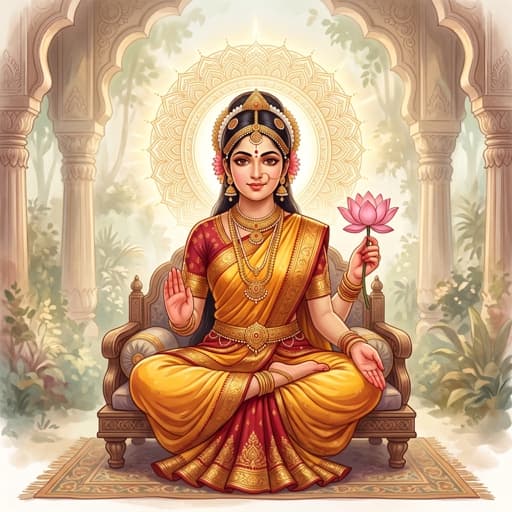
- Golden-complexioned, wearing a saree with simple elegance
- Often depicted alongside Rama, Lakshmana, and Hanuman
- Holds a lotus, symbolizing purity rising from worldly trials
- Gentle, serene expression reflecting inner strength
Significance
The epitome of female purity and virtue; consort of Rama. Sita represents dharma, steadfastness and ideal womanhood.
Worship & Practice
Recite Sita stotras, observe vrata and honor the ideals of dharma and resilience exemplified in her life.
Prayers & Mantras
Famous Temples
Festivals
Sita Navami
Celebrates the birthday of Sita, observed on the ninth day of Vaishakh Shukla Paksha.
Frequently Asked Questions
Why is Sita called Janaki?
Sita was the adopted daughter of King Janaka of Mithila, who found her while ploughing the earth. Hence she is called Janaki (daughter of Janaka).
What is Sita Navami and when is it celebrated?
Sita Navami (also called Janaki Navami) celebrates the birthday of Maa Sita. It is observed on the ninth day (Navami) of the bright fortnight of Vaishakh month. Devotees fast, recite the Ramayana, and offer prayers for marital harmony and virtue.
What does Sita symbolise in Hindu tradition?
Sita symbolises purity, patience, unwavering devotion, and dharmic strength. She is revered as an ideal of womanhood — one who faced great adversity with grace and never lost her inner resolve or righteousness.