Maa Radha
माँ राधा
About
Quick Facts
Iconography & Symbolism
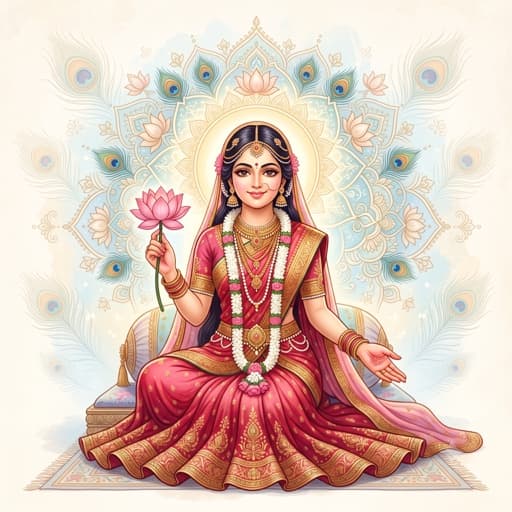
- Golden-complexioned, wearing a blue/golden saree
- Always depicted alongside Krishna in loving union
- Holding a lotus or flute
- Adorned with flower garlands and jewellery
Significance
Radha symbolizes highest devotion (bhakti) and the soul's loving relationship with the divine. She is central to Krishna bhakti traditions.
Worship & Practice
Devotees remember Radha-Krishna with love, chant the divine names, and cultivate humility, kindness, and devotion.
Prayers & Mantras
Famous Temples
Festivals
Birthday celebration of Radha, observed 15 days after Janmashtami.
Holi
Festival of colours deeply connected to Radha-Krishna love stories from Braj.
Frequently Asked Questions
Why is Radha not mentioned in the Bhagavad Gita?
The Bhagavad Gita focuses on Krishna's philosophical teachings to Arjuna. Radha's stories come from later Puranic literature, especially the Brahma Vaivarta Purana and Gita Govinda by Jayadeva.
What is Radha Ashtami and when is it celebrated?
Radha Ashtami is the birthday celebration of Maa Radha, observed on the eighth day (Ashtami) of the bright fortnight (Shukla Paksha) of the Bhadrapada month — fifteen days after Janmashtami. It is joyfully celebrated in Barsana and Vrindavan.
What does "Radhe Radhe" mean as a greeting?
"Radhe Radhe" is a traditional greeting used among devotees in the Braj region, especially in Vrindavan and Mathura. It is an invocation of Maa Radha's name and expresses devotion to the divine love of Radha and Krishna.