Maa Ganga
माँ गंगा
About
Quick Facts
Iconography & Symbolism
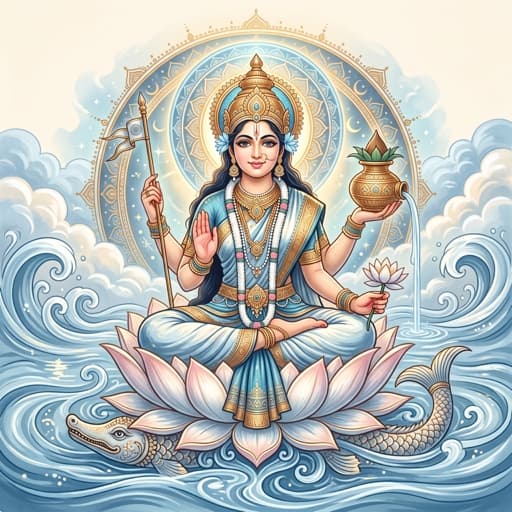
- White-complexioned goddess seated on a crocodile (Makara)
- Holds a water pot (kalasha) symbolizing the flow of life
- Crown with crescent moon and flowing water motifs
- Often depicted descending from Shiva's matted hair
Significance
Ganga is the most sacred river-goddess of Hinduism — revered as a purifier of sins and a giver of liberation (moksha). She descended from the heavens to earth and was held in Lord Shiva's matted locks, so she carries his blessings. A holy dip in her waters, especially at Haridwar, Prayagraj and Varanasi, is among the most cherished acts of Hindu devotion.
Worship & Practice
Pilgrims perform rituals, offer water/flowers and take sacred baths in her waters for cleansing and merit.
Prayers & Mantras
Famous Temples
Festivals
Ganga Dussehra
Celebrates the descent of Ganga from heaven to earth, observed in the month of Jyeshtha.
Ganga Aarti at Dashashwamedh Ghat
Daily evening aarti ceremony at Varanasi's Dashashwamedh Ghat, one of the most iconic rituals in Hinduism.
Frequently Asked Questions
How did Ganga come to earth?
King Bhagiratha performed intense penance to bring Ganga from heaven. Shiva caught her mighty flow in his matted locks to prevent the earth from being destroyed. This is why Ganga is also called Bhagirathi.
Why is the Ganga considered so sacred?
Hindus believe the Ganga purifies sins and grants liberation (moksha). Her waters are said to flow from the feet of Lord Vishnu and through the matted locks of Lord Shiva, making them spiritually pure. Bathing in the Ganga and offering her waters to ancestors are acts of great merit.
When is Maa Ganga specially worshipped?
Ganga Dussehra, in the month of Jyeshtha, celebrates her descent to earth and is her most important festival. The daily evening Ganga Aarti at the ghats of Varanasi, Haridwar and Prayagraj is among the most revered rituals in Hinduism.