Gangotri Dham — Temple of Goddess Ganga
Location
Gangotri, on the Bhagirathi River, Uttarkashi district
City
Gangotri, Uttarakhand
Deity
Goddess Ganga (Maa Ganga — the river goddess of descent)
Temple Type
Chota Char Dham Shrine — Source-Seat of the Ganga on the Bhagirathi
Source-seat of the Ganga (called Bhagirathi here); white-granite Gorkha-era temple; Bhagirath Shila penance rock; natural submerged Shivling visible in early winter; road-connected with no trek to the temple; Mukhba winter seat near Harsil; Gaumukh glacier source ~18 km upstream
Significance
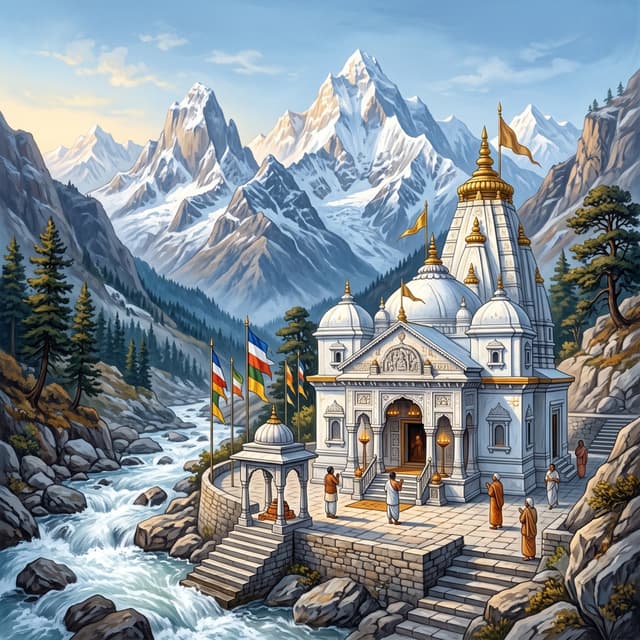
Gangotri Dham is the sacred source-seat of the Ganga and the second shrine of the Uttarakhand Chota Char Dham. At about 3,100 metres in Uttarkashi district, the white-granite temple — built by the Gorkha general Amar Singh Thapa in the early nineteenth century and later restored under the patronage of the Jaipur royal house — stands beside the Bhagirathi, the name the Ganga bears here until she joins the Alaknanda at Devprayag to become the Ganga proper. This is the spot where, by tradition, the celestial river first touched the earth in answer to King Bhagirath's penance. Beside the temple lies the Bhagirath Shila, the rock on which the king is said to have meditated, and in the river a natural Shivling emerges in early winter — marking where Lord Shiva received Ganga's descent in his matted locks. Unlike the other Himalayan dhams, Gangotri is reached directly by road, with no compulsory trek to the temple. The glacier snout Gaumukh, the physical origin of the Bhagirathi, lies about 18 km further upstream on a high-altitude trek.
Legend & History
The legend of Gangotri is the story of Ganga's descent (Gangavataran). The sixty thousand sons of King Sagara were reduced to ashes by the wrath of the sage Kapila, and their souls could find no release. Generations later his descendant King Bhagirath undertook a tremendous penance in these heights to bring the heavenly Ganga down to earth, so that her waters might sanctify the ashes and liberate his ancestors. Ganga agreed to descend, but her fall would have shattered the earth — so Lord Shiva caught her in his matted locks and released her gently to the plains. In honour of Bhagirath's devotion the river is called the Bhagirathi at her source. Each autumn, after the closing rites on Annakut (the day after Diwali), the goddess's idol is carried down by palanquin to the temple at Mukhba village near Harsil for the winter, returning to Gangotri when the doors reopen on Akshaya Tritiya.
Open from Akshaya Tritiya (late April/early May) to Annakut/Govardhan Puja (the day after Diwali, late October/November); May–June and September–October are ideal. Closed through winter, when worship shifts to Mukhba near Harsil.
By road from Rishikesh (~250 km) or Haridwar via Narendranagar, Chamba, Uttarkashi and Bhatwari — the Gangotri temple town is directly motorable, with no compulsory trek to the shrine. Nearest railheads: Rishikesh and Haridwar; nearest airport: Jolly Grant, Dehradun (~250 km). The glacial source Gaumukh is a separate ~18 km trek upstream through Gangotri National Park (entry permit required).
Frequently Asked Questionsअक्सर पूछे जाने वाले प्रश्न
Where is Gangotri Dham — Temple of Goddess Ganga located?
Gangotri Dham — Temple of Goddess Ganga (गंगोत्री धाम — देवी गंगा का मंदिर) is located at Gangotri, on the Bhagirathi River, Uttarkashi district, in Uttarakhand, India. It is a revered Hindu temple.
गंगोत्री धाम — देवी गंगा का मंदिर कहाँ स्थित है?
गंगोत्री धाम — देवी गंगा का मंदिर Gangotri, on the Bhagirathi River, Uttarkashi district, उत्तराखंड (भारत) में स्थित है। यह एक पूजनीय हिंदू मंदिर है।
Which deity is worshipped at Gangotri Dham — Temple of Goddess Ganga?
The principal deity worshipped at Gangotri Dham — Temple of Goddess Ganga is Goddess Ganga (Maa Ganga — the river goddess of descent).
गंगोत्री धाम — देवी गंगा का मंदिर में किस देवता की पूजा होती है?
गंगोत्री धाम — देवी गंगा का मंदिर में मुख्य रूप से देवी गंगा (माँ गंगा — अवतरण की नदी-देवी) की पूजा होती है।
What is the significance of Gangotri Dham — Temple of Goddess Ganga?
Gangotri Dham is the sacred source-seat of the Ganga and the second shrine of the Uttarakhand Chota Char Dham. At about 3,100 metres in Uttarkashi district, the white-granite temple — built by the Gorkha general Amar Singh Thapa in the early nineteenth century and later restored under the patronage of the Jaipur royal house — stands beside the Bhagirathi, the name the Ganga bears here until she joins the Alaknanda at Devprayag to become the Ganga proper. This is the spot where, by tradition, the celestial river first touched the earth in answer to King Bhagirath's penance. Beside the temple lies the Bhagirath Shila, the rock on which the king is said to have meditated, and in the river a natural Shivling emerges in early winter — marking where Lord Shiva received Ganga's descent in his matted locks. Unlike the other Himalayan dhams, Gangotri is reached directly by road, with no compulsory trek to the temple. The glacier snout Gaumukh, the physical origin of the Bhagirathi, lies about 18 km further upstream on a high-altitude trek.
गंगोत्री धाम — देवी गंगा का मंदिर का क्या महत्व है?
गंगोत्री धाम गंगा का पवित्र उद्गम-धाम और उत्तराखंड के छोटा चार धाम का द्वितीय धाम है। उत्तरकाशी जिले में लगभग 3,100 मीटर की ऊँचाई पर स्थित यह श्वेत-ग्रेनाइट मंदिर — गोरखा सेनापति अमर सिंह थापा द्वारा उन्नीसवीं सदी के आरंभ में निर्मित और बाद में जयपुर राजघराने के संरक्षण में पुनर्निर्मित — भागीरथी के तट पर है। गंगा यहाँ इसी नाम से बहती है, और देवप्रयाग में अलकनंदा से मिलकर ही 'गंगा' कहलाती है। मान्यता है कि यही वह स्थान है जहाँ राजा भगीरथ की तपस्या से प्रसन्न होकर स्वर्ग की गंगा ने सर्वप्रथम पृथ्वी का स्पर्श किया। मंदिर के समीप भगीरथ शिला है, जिस पर राजा ने तप किया था, और नदी में शीतकाल के आरंभ में एक प्राकृतिक शिवलिंग प्रकट होता है — वह स्थान जहाँ भगवान शिव ने अपनी जटाओं में गंगा के अवतरण को धारण किया। अन्य हिमालयी धामों के विपरीत गंगोत्री सड़क मार्ग से सीधे पहुँचा जा सकता है, मंदिर तक कोई अनिवार्य पदयात्रा नहीं। भागीरथी का वास्तविक हिमनद उद्गम — गोमुख — यहाँ से लगभग 18 किमी ऊपर एक उच्च-हिमालयी पदयात्रा पर स्थित है।
What is the best time to visit Gangotri Dham — Temple of Goddess Ganga?
The best time to visit Gangotri Dham — Temple of Goddess Ganga is Open from Akshaya Tritiya (late April/early May) to Annakut/Govardhan Puja (the day after Diwali, late October/November); May–June and September–October are ideal. Closed through winter, when worship shifts to Mukhba near Harsil..
गंगोत्री धाम — देवी गंगा का मंदिर जाने का सबसे अच्छा समय कौन-सा है?
गंगोत्री धाम — देवी गंगा का मंदिर जाने का सबसे अच्छा समय Open from Akshaya Tritiya (late April/early May) to Annakut/Govardhan Puja (the day after Diwali, late October/November); May–June and September–October are ideal. Closed through winter, when worship shifts to Mukhba near Harsil. है।
How do I reach Gangotri Dham — Temple of Goddess Ganga?
By road from Rishikesh (~250 km) or Haridwar via Narendranagar, Chamba, Uttarkashi and Bhatwari — the Gangotri temple town is directly motorable, with no compulsory trek to the shrine. Nearest railheads: Rishikesh and Haridwar; nearest airport: Jolly Grant, Dehradun (~250 km). The glacial source Gaumukh is a separate ~18 km trek upstream through Gangotri National Park (entry permit required).
गंगोत्री धाम — देवी गंगा का मंदिर कैसे पहुँचें?
By road from Rishikesh (~250 km) or Haridwar via Narendranagar, Chamba, Uttarkashi and Bhatwari — the Gangotri temple town is directly motorable, with no compulsory trek to the shrine. Nearest railheads: Rishikesh and Haridwar; nearest airport: Jolly Grant, Dehradun (~250 km). The glacial source Gaumukh is a separate ~18 km trek upstream through Gangotri National Park (entry permit required).
Related Spiritual Reading
Gangotri Dham — Temple of Goddess Ganga
Location
Gangotri, on the Bhagirathi River, Uttarkashi district
City
Gangotri, Uttarakhand (उत्तराखंड)
Deity
Goddess Ganga (Maa Ganga — the river goddess of descent) (देवी गंगा (माँ गंगा — अवतरण की नदी-देवी))
Temple Type
Chota Char Dham Shrine — Source-Seat of the Ganga on the Bhagirathi (छोटा चार धाम — भागीरथी तट पर गंगा का उद्गम धाम)
Source-seat of the Ganga (called Bhagirathi here); white-granite Gorkha-era temple; Bhagirath Shila penance rock; natural submerged Shivling visible in early winter; road-connected with no trek to the temple; Mukhba winter seat near Harsil; Gaumukh glacier source ~18 km upstream
गंगा (यहाँ भागीरथी) का उद्गम धाम; गोरखाकालीन श्वेत-ग्रेनाइट मंदिर; भगीरथ शिला तपस्या स्थल; शीतकाल आरंभ में दृश्य प्राकृतिक शिवलिंग; सड़क से सीधे जुड़ा, मंदिर तक पदयात्रा नहीं; हर्षिल के निकट मुखबा शीतकालीन गद्दी; गोमुख ग्लेशियर उद्गम ~18 किमी ऊपर
Significance
Gangotri Dham is the sacred source-seat of the Ganga and the second shrine of the Uttarakhand Chota Char Dham. At about 3,100 metres in Uttarkashi district, the white-granite temple — built by the Gorkha general Amar Singh Thapa in the early nineteenth century and later restored under the patronage of the Jaipur royal house — stands beside the Bhagirathi, the name the Ganga bears here until she joins the Alaknanda at Devprayag to become the Ganga proper. This is the spot where, by tradition, the celestial river first touched the earth in answer to King Bhagirath's penance. Beside the temple lies the Bhagirath Shila, the rock on which the king is said to have meditated, and in the river a natural Shivling emerges in early winter — marking where Lord Shiva received Ganga's descent in his matted locks. Unlike the other Himalayan dhams, Gangotri is reached directly by road, with no compulsory trek to the temple. The glacier snout Gaumukh, the physical origin of the Bhagirathi, lies about 18 km further upstream on a high-altitude trek.
गंगोत्री धाम गंगा का पवित्र उद्गम-धाम और उत्तराखंड के छोटा चार धाम का द्वितीय धाम है। उत्तरकाशी जिले में लगभग 3,100 मीटर की ऊँचाई पर स्थित यह श्वेत-ग्रेनाइट मंदिर — गोरखा सेनापति अमर सिंह थापा द्वारा उन्नीसवीं सदी के आरंभ में निर्मित और बाद में जयपुर राजघराने के संरक्षण में पुनर्निर्मित — भागीरथी के तट पर है। गंगा यहाँ इसी नाम से बहती है, और देवप्रयाग में अलकनंदा से मिलकर ही 'गंगा' कहलाती है। मान्यता है कि यही वह स्थान है जहाँ राजा भगीरथ की तपस्या से प्रसन्न होकर स्वर्ग की गंगा ने सर्वप्रथम पृथ्वी का स्पर्श किया। मंदिर के समीप भगीरथ शिला है, जिस पर राजा ने तप किया था, और नदी में शीतकाल के आरंभ में एक प्राकृतिक शिवलिंग प्रकट होता है — वह स्थान जहाँ भगवान शिव ने अपनी जटाओं में गंगा के अवतरण को धारण किया। अन्य हिमालयी धामों के विपरीत गंगोत्री सड़क मार्ग से सीधे पहुँचा जा सकता है, मंदिर तक कोई अनिवार्य पदयात्रा नहीं। भागीरथी का वास्तविक हिमनद उद्गम — गोमुख — यहाँ से लगभग 18 किमी ऊपर एक उच्च-हिमालयी पदयात्रा पर स्थित है।
Legend & History
The legend of Gangotri is the story of Ganga's descent (Gangavataran). The sixty thousand sons of King Sagara were reduced to ashes by the wrath of the sage Kapila, and their souls could find no release. Generations later his descendant King Bhagirath undertook a tremendous penance in these heights to bring the heavenly Ganga down to earth, so that her waters might sanctify the ashes and liberate his ancestors. Ganga agreed to descend, but her fall would have shattered the earth — so Lord Shiva caught her in his matted locks and released her gently to the plains. In honour of Bhagirath's devotion the river is called the Bhagirathi at her source. Each autumn, after the closing rites on Annakut (the day after Diwali), the goddess's idol is carried down by palanquin to the temple at Mukhba village near Harsil for the winter, returning to Gangotri when the doors reopen on Akshaya Tritiya.
गंगोत्री की कथा गंगा-अवतरण की गाथा है। राजा सगर के साठ हज़ार पुत्र कपिल मुनि के क्रोध से भस्म हो गए थे और उनकी आत्माओं को मुक्ति नहीं मिल रही थी। कई पीढ़ियों बाद उनके वंशज राजा भगीरथ ने इन ऊँचाइयों पर घोर तपस्या की, ताकि स्वर्ग की गंगा को पृथ्वी पर लाकर उनके जल से पूर्वजों की भस्म पवित्र हो और उन्हें मुक्ति मिले। गंगा अवतरण को तैयार हुईं, किंतु उनका वेग पृथ्वी को विदीर्ण कर देता — अतः भगवान शिव ने उन्हें अपनी जटाओं में धारण कर धीरे-धीरे धरती पर प्रवाहित किया। भगीरथ की भक्ति के सम्मान में नदी अपने उद्गम पर भागीरथी कहलाती है। प्रत्येक शरद ऋतु में अन्नकूट (दीपावली के अगले दिन) के समापन अनुष्ठान के बाद देवी की मूर्ति को डोली में हर्षिल के निकट मुखबा गाँव के मंदिर में शीतकाल हेतु ले जाया जाता है, और अक्षय तृतीया पर कपाट खुलने पर पुनः गंगोत्री लौटती है।
Open from Akshaya Tritiya (late April/early May) to Annakut/Govardhan Puja (the day after Diwali, late October/November); May–June and September–October are ideal. Closed through winter, when worship shifts to Mukhba near Harsil.
By road from Rishikesh (~250 km) or Haridwar via Narendranagar, Chamba, Uttarkashi and Bhatwari — the Gangotri temple town is directly motorable, with no compulsory trek to the shrine. Nearest railheads: Rishikesh and Haridwar; nearest airport: Jolly Grant, Dehradun (~250 km). The glacial source Gaumukh is a separate ~18 km trek upstream through Gangotri National Park (entry permit required).
Frequently Asked Questionsअक्सर पूछे जाने वाले प्रश्न
Where is Gangotri Dham — Temple of Goddess Ganga located?
Gangotri Dham — Temple of Goddess Ganga (गंगोत्री धाम — देवी गंगा का मंदिर) is located at Gangotri, on the Bhagirathi River, Uttarkashi district, in Uttarakhand, India. It is a revered Hindu temple.
गंगोत्री धाम — देवी गंगा का मंदिर कहाँ स्थित है?
गंगोत्री धाम — देवी गंगा का मंदिर Gangotri, on the Bhagirathi River, Uttarkashi district, उत्तराखंड (भारत) में स्थित है। यह एक पूजनीय हिंदू मंदिर है।
Which deity is worshipped at Gangotri Dham — Temple of Goddess Ganga?
The principal deity worshipped at Gangotri Dham — Temple of Goddess Ganga is Goddess Ganga (Maa Ganga — the river goddess of descent).
गंगोत्री धाम — देवी गंगा का मंदिर में किस देवता की पूजा होती है?
गंगोत्री धाम — देवी गंगा का मंदिर में मुख्य रूप से देवी गंगा (माँ गंगा — अवतरण की नदी-देवी) की पूजा होती है।
What is the significance of Gangotri Dham — Temple of Goddess Ganga?
Gangotri Dham is the sacred source-seat of the Ganga and the second shrine of the Uttarakhand Chota Char Dham. At about 3,100 metres in Uttarkashi district, the white-granite temple — built by the Gorkha general Amar Singh Thapa in the early nineteenth century and later restored under the patronage of the Jaipur royal house — stands beside the Bhagirathi, the name the Ganga bears here until she joins the Alaknanda at Devprayag to become the Ganga proper. This is the spot where, by tradition, the celestial river first touched the earth in answer to King Bhagirath's penance. Beside the temple lies the Bhagirath Shila, the rock on which the king is said to have meditated, and in the river a natural Shivling emerges in early winter — marking where Lord Shiva received Ganga's descent in his matted locks. Unlike the other Himalayan dhams, Gangotri is reached directly by road, with no compulsory trek to the temple. The glacier snout Gaumukh, the physical origin of the Bhagirathi, lies about 18 km further upstream on a high-altitude trek.
गंगोत्री धाम — देवी गंगा का मंदिर का क्या महत्व है?
गंगोत्री धाम गंगा का पवित्र उद्गम-धाम और उत्तराखंड के छोटा चार धाम का द्वितीय धाम है। उत्तरकाशी जिले में लगभग 3,100 मीटर की ऊँचाई पर स्थित यह श्वेत-ग्रेनाइट मंदिर — गोरखा सेनापति अमर सिंह थापा द्वारा उन्नीसवीं सदी के आरंभ में निर्मित और बाद में जयपुर राजघराने के संरक्षण में पुनर्निर्मित — भागीरथी के तट पर है। गंगा यहाँ इसी नाम से बहती है, और देवप्रयाग में अलकनंदा से मिलकर ही 'गंगा' कहलाती है। मान्यता है कि यही वह स्थान है जहाँ राजा भगीरथ की तपस्या से प्रसन्न होकर स्वर्ग की गंगा ने सर्वप्रथम पृथ्वी का स्पर्श किया। मंदिर के समीप भगीरथ शिला है, जिस पर राजा ने तप किया था, और नदी में शीतकाल के आरंभ में एक प्राकृतिक शिवलिंग प्रकट होता है — वह स्थान जहाँ भगवान शिव ने अपनी जटाओं में गंगा के अवतरण को धारण किया। अन्य हिमालयी धामों के विपरीत गंगोत्री सड़क मार्ग से सीधे पहुँचा जा सकता है, मंदिर तक कोई अनिवार्य पदयात्रा नहीं। भागीरथी का वास्तविक हिमनद उद्गम — गोमुख — यहाँ से लगभग 18 किमी ऊपर एक उच्च-हिमालयी पदयात्रा पर स्थित है।
What is the best time to visit Gangotri Dham — Temple of Goddess Ganga?
The best time to visit Gangotri Dham — Temple of Goddess Ganga is Open from Akshaya Tritiya (late April/early May) to Annakut/Govardhan Puja (the day after Diwali, late October/November); May–June and September–October are ideal. Closed through winter, when worship shifts to Mukhba near Harsil..
गंगोत्री धाम — देवी गंगा का मंदिर जाने का सबसे अच्छा समय कौन-सा है?
गंगोत्री धाम — देवी गंगा का मंदिर जाने का सबसे अच्छा समय Open from Akshaya Tritiya (late April/early May) to Annakut/Govardhan Puja (the day after Diwali, late October/November); May–June and September–October are ideal. Closed through winter, when worship shifts to Mukhba near Harsil. है।
How do I reach Gangotri Dham — Temple of Goddess Ganga?
By road from Rishikesh (~250 km) or Haridwar via Narendranagar, Chamba, Uttarkashi and Bhatwari — the Gangotri temple town is directly motorable, with no compulsory trek to the shrine. Nearest railheads: Rishikesh and Haridwar; nearest airport: Jolly Grant, Dehradun (~250 km). The glacial source Gaumukh is a separate ~18 km trek upstream through Gangotri National Park (entry permit required).
गंगोत्री धाम — देवी गंगा का मंदिर कैसे पहुँचें?
By road from Rishikesh (~250 km) or Haridwar via Narendranagar, Chamba, Uttarkashi and Bhatwari — the Gangotri temple town is directly motorable, with no compulsory trek to the shrine. Nearest railheads: Rishikesh and Haridwar; nearest airport: Jolly Grant, Dehradun (~250 km). The glacial source Gaumukh is a separate ~18 km trek upstream through Gangotri National Park (entry permit required).