Holi — Festival of Colours & Krishna's Vraja Lila
4 March 2026 · Wednesday
Tithi
Chaitra Krishna Pratipada (Purnimanta reckoning) — the day after Phalguna Purnima / Holika Dahan
Auspicious Muhurat · IST
Colour-play: 6:30 AM – 12:30 PM IST (morning preferred); avoid afternoon Rahu Kaal (12:00 PM – 1:30 PM)
Tithi Duration…
Abhijit Muhurat…
Sunrise / Sunset…
Source: Vedic Panchang, IST
All timings shown for:…
Festival dates follow the India (IST) Vedic calendar.
Quick Info
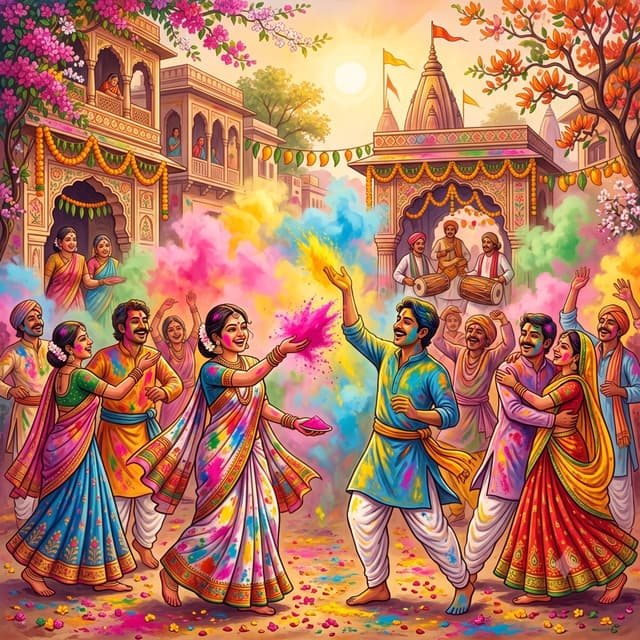
Holi — Festival of Colors. Celebrate with colors, water, sweets, and the joy of togetherness.
होली — रंगों का त्योहार। रंग, गुलाल, मिठाइयाँ और एकजुटता का आनंद।
About this festival
Holi (4 Mar 2026) — also called Rangwali Holi or Dhulendi — is celebrated on Chaitra Krishna Pratipada (Purnimanta), the day after Holika Dahan. It commemorates Lord Krishna's playful lila of throwing colours at Radha and the gopis in Vraja, and the dharma-victory celebration following the burning of Holika the previous night. The most spectacular Holi is at Barsana (Lath Mar Holi), Mathura, Vrindavan, and Nandgaon — Krishna's birthplace and playgrounds.
होली (4 मार्च 2026) — रंगवाली होली या धुलेंडी भी कहलाती है — चैत्र कृष्ण प्रतिपदा (पूर्णिमांत) को, होलिका दहन के अगले दिन मनाई जाती है। यह भगवान कृष्ण की व्रज में राधा और गोपियों पर रंग बरसाने की लीला और पिछली रात होलिका के दहन के बाद धर्म-विजय का उत्सव है। सबसे भव्य होली बरसाना (लठमार होली), मथुरा, वृन्दावन और नंदगाँव में — कृष्ण के जन्म-स्थल और बाल-क्रीडास्थल।
Holi 2026 outside India — local timings for USA, UK, Canada, Australia, Singapore & UAEहोली 2026 भारत के बाहर — अमेरिका, ब्रिटेन, कनाडा, ऑस्ट्रेलिया, सिंगापुर और यूएई में स्थानीय समय
A tithi begins and ends at the same instant everywhere on Earth — only your local clock reading differs. That is why the same tithi can fall on the previous or the next calendar day where you live, even though the festival date on this page follows the Vedic Panchang, IST.
Classical observance windows — sunrise, midday, afternoon, evening and midnight — are defined by your own sunrise and sunset, not by India's. The table below gives those local values for the major diaspora cities.
तिथि पृथ्वी पर हर स्थान पर एक ही क्षण आरम्भ और समाप्त होती है — केवल आपकी स्थानीय घड़ी का समय भिन्न होता है। इसीलिए वही तिथि आपके यहाँ पिछले या अगले कैलेंडर दिन पड़ सकती है, जबकि इस पृष्ठ की तिथि वैदिक पंचांग (IST) के अनुसार है।
सूर्योदय, मध्याह्न, अपराह्न, प्रदोष और निशीथ जैसे शास्त्रीय काल आपके अपने सूर्योदय-सूर्यास्त से निर्धारित होते हैं, भारत के नहीं। नीचे प्रमुख प्रवासी नगरों के स्थानीय मान दिए गए हैं।
| City | Sunrise | Sunset | Krishna Pratipada (local time) |
|---|---|---|---|
| Ujjain, India | 6:46 AM | 6:31 PM | Mar 3, 5:08 PM → Mar 4, 4:49 PM |
| New York, USA | 6:25 AM | 5:50 PM | Mar 3, 6:38 AM → Mar 4, 6:19 AM |
| Chicago, USA | 6:20 AM | 5:44 PM | Mar 3, 5:38 AM → Mar 4, 5:19 AM |
| San Jose (Bay Area), USA | 6:34 AM | 6:04 PM | Mar 3, 3:38 AM → Mar 4, 3:19 AM |
| Toronto, Canada | 6:48 AM | 6:10 PM | Mar 3, 6:38 AM → Mar 4, 6:19 AM |
| London, UK | 6:39 AM | 5:45 PM | Mar 3, 11:38 AM → Mar 4, 11:19 AM |
| Dubai, UAE | 6:39 AM | 6:22 PM | Mar 3, 3:38 PM → Mar 4, 3:19 PM |
| Singapore | 7:13 AM | 7:19 PM | Mar 3, 7:38 PM → Mar 4, 7:19 PM |
| Sydney, Australia | 6:45 AM | 7:28 PM | Mar 3, 10:38 PM → Mar 4, 10:19 PM |
Overseas communities differ: some follow the India Panchang date, others observe on the local day the tithi prevails. Confirm the observance day with your local temple or community.
विदेश में समुदायों की परम्परा भिन्न है: कुछ भारत के पंचांग की तिथि मानते हैं, कुछ उस स्थानीय दिन पर व्रत रखते हैं जब तिथि व्याप्त हो। अपने स्थानीय मन्दिर या समुदाय से व्रत का दिन अवश्य सुनिश्चित करें।
Quick Facts
- Date 2026: 4 Mar (Chaitra Krishna Pratipada (Purnimanta), Wednesday)
- Eve: Holika Dahan (3 Mar — see id 15)
- Patron deity: Lord Krishna (Vraja lila form) + Lord Vishnu (Holika-Prahlad story)
- Iconic places: Barsana, Vrindavan, Mathura, Nandgaon (12-day Braj Holi sequence)
- Universal greeting: 'Holi hai!' / 'Buraa na maano, Holi hai!'
Holi Day Vidhiहोली दिवस विधि
- Sunrise: Apply oil to hair (protects from gulal); wear old white kurta-pyjama or saari (white shows colours best)
- Morning puja: Seek blessings from elders by touching feet; offer first gulal to Krishna/Vishnu murti at home altar
- Family colour-play: Apply gulal first to parents/elders (red on forehead = respect), then siblings and friends
- Eat traditional Holi sweets: gujhiya (stuffed pastry), thandai (cool milk drink with almonds/saffron), malpua, dahi-bhalla
- Visit relatives/friends; exchange greetings 'Holi mubarak' or 'Holi hai'
- Avoid Rahu Kaal (12:00 PM – 1:30 PM) — pause colour-play during this window
- Use ONLY natural/herbal gulal — synthetic chemical colours are harmful to skin/eyes and are NOT traditional
- Evening: Bathe thoroughly; visit a Krishna temple for darshan if possible
- Family meal: special Holi sadhya with seasonal vegetables, kheer, and prasad
- सूर्योदय: बालों में तेल लगाएँ (गुलाल से बचाव); पुराना सफेद कुर्ता-पायजामा या साड़ी (श्वेत पर रंग सबसे अच्छा दिखता है)
- प्रातः पूजा: बड़ों के चरण-स्पर्श कर आशीर्वाद; घर के देव-स्थान में कृष्ण/विष्णु मूर्ति को पहला गुलाल अर्पण
- पारिवारिक रंग-खेल: पहले माता-पिता/बड़ों को गुलाल (ललाट पर लाल = सम्मान), फिर भाई-बहन और मित्र
- परम्परागत होली मिठाई: गुजिया, ठंडाई (बादाम/केसर वाला शीतल दूध), मालपुआ, दही-भल्ला
- रिश्तेदारों/मित्रों के यहाँ जाएँ; 'होली मुबारक' या 'होली है' अभिवादन
- राहु काल (मध्याह्न 12:00 PM – 1:30 PM) से बचें — रंग-खेल रोकें
- केवल प्राकृतिक/हर्बल गुलाल — सिंथेटिक रसायन त्वचा/नेत्र को हानि पहुँचाते हैं और परम्परागत नहीं
- संध्या: अच्छी तरह स्नान; सम्भव हो तो कृष्ण मंदिर दर्शन
- पारिवारिक भोज: विशेष होली थाली — ऋतु-सब्जियाँ, खीर, प्रसाद
Do's
- Use natural/herbal gulal made from turmeric, henna, beetroot, neem, marigold
- Apply oil to skin and hair BEFORE colour-play (protects + makes washing easy)
- Seek elders' blessings first; play colours with consent (especially for women, children)
- Eat thandai/cool drinks — counters spring heat; share gujhiya with everyone
Don'ts
- Do NOT use synthetic chemical colours, oil-based paints, or alcohol-based dyes — harmful
- Do not force colour on anyone who declines (especially elders, infants, pregnant women)
- Avoid bhang/intoxicants — Holi's spiritual layer is bhakti, not nasha
- Do not play during Rahu Kaal (12:00 PM – 1:30 PM IST on 4 Mar 2026)
क्या करें
- प्राकृतिक/हर्बल गुलाल — हल्दी, मेहंदी, चुकंदर, नीम, गेंदा से बना
- रंग-खेल से पहले त्वचा और बालों पर तेल (बचाव + धुलाई सहज)
- पहले बड़ों का आशीर्वाद; सहमति से रंग खेलें (विशेषकर स्त्रियाँ, बच्चे)
- ठंडाई/शीतल पेय — वसंत-गर्मी का प्रतिकार; गुजिया सबके साथ बाँटें
क्या न करें
- सिंथेटिक रासायनिक रंग, तेल-आधारित पेंट, अल्कोहल-डाई वर्जित — हानिकारक
- जो मना करे उस पर रंग न लगाएँ (विशेषकर बड़े, शिशु, गर्भवती)
- भांग/मादक पदार्थ वर्जित — होली का आध्यात्मिक स्तर भक्ति है, नशा नहीं
- राहु काल (4 मार्च 2026, मध्याह्न 12:00 PM – 1:30 PM) में रंग न खेलें
Mantrasमंत्र
हरे कृष्ण हरे कृष्ण कृष्ण कृष्ण हरे हरे । हरे राम हरे राम राम राम हरे हरे ॥
Hare Kṛṣṇa Hare Kṛṣṇa Kṛṣṇa Kṛṣṇa Hare Hare, Hare Rāma Hare Rāma Rāma Rāma Hare Hare
The 16-name Maha Mantra — invoking Hari (Krishna's Vraja-lila energy). Especially powerful during Holi. (Kali-santarana Upanishad)
16-नाम महा मंत्र — हरि (कृष्ण की व्रज-लीला ऊर्जा) का आवाहन। होली के दौरान विशेष प्रबल। (कलि-संतरण उपनिषद)
↻ 108 times
Regional Holi Traditionsक्षेत्रीय होली परम्पराएँ
- Braj (Mathura/Vrindavan/Barsana/Nandgaon): 12-day Holi sequence; LATH MAR HOLI at Barsana (women playfully strike men with sticks); Phoolon ki Holi at Banke Bihari Mandir
- Punjab: Hola Mohalla — martial arts demonstrations the next day (Hindu nihangs); for Hindu households, gulal + traditional sweets
- Bengal: Dol Jatra / Dol Purnima — Radha-Krishna idols carried in palanquin processions; sung kirtans of Vaishnav Padavali
- Maharashtra/Gujarat: Rang Panchami (5 days later) is the main colour-play day; Holi is more subdued; Puran Poli is the iconic sweet
- South India: Less observed; Kerala-Karnataka Konkani Hindus celebrate as Manjal Kuli (turmeric bath festival)
- Bihar/UP: Phaag songs at the holika; Jogira ki Holi folk traditions
- ब्रज (मथुरा/वृन्दावन/बरसाना/नंदगाँव): 12-दिवसीय होली; बरसाना में लठमार होली (स्त्रियाँ पुरुषों को क्रीडापूर्वक डंडे से छूती हैं); बाँके बिहारी मंदिर में फूलों की होली
- पंजाब: होला महल्ला — अगले दिन शस्त्र-कला प्रदर्शन (हिंदू निहंग); हिंदू घरों में गुलाल + परम्परागत मिठाई
- बंगाल: दोल जात्रा / दोल पूर्णिमा — पालकी में राधा-कृष्ण मूर्तियाँ; वैष्णव पदावली कीर्तन
- महाराष्ट्र/गुजरात: रंग पंचमी (5 दिन बाद) मुख्य रंग-खेल दिवस; होली अधिक संयमित; पूरण पोली विशेष मिठाई
- दक्षिण भारत: कम पालन; केरल-कर्नाटक कोंकणी हिंदू मंजल कुली (हल्दी-स्नान पर्व) के रूप में मनाते हैं
- बिहार/उप्र: होलिका पर फाग गीत; जोगीरा की होली लोक-परम्पराएँ
Krishna's Holi — The Vraja Lilaकृष्ण की होली — व्रज लीला
Per Bhagavata Purana (Skandha 10) and Brahmavaivarta Purana, young Krishna in Vraja was dark-skinned (Shyam, neela-megha-varna) while Radha and the gopis were fair. Krishna once complained to his mother Yashoda about this difference. Yashoda playfully advised: 'Go colour Radha's face whatever colour you like!' Krishna and his cowherd friends then chased Radha and the gopis through Vrindavan with coloured powders and water.
This childish lila became Holi. The Phalguna Purnima eve commemorates dharma's victory (Holika burned, Prahlad saved); the next morning commemorates love's playfulness (Krishna's Vraja colour-play). Hence Holi has BOTH a serious-bhakti layer (Phalguna Purnima Satyanarayan Vrat morning + Holika at dusk) AND a joyous-leela layer (colours at sunrise next day).
भागवत पुराण (स्कंध 10) और ब्रह्मवैवर्त पुराण के अनुसार व्रज के बाल कृष्ण श्याम वर्ण (नील-मेघ-वर्ण) थे जबकि राधा और गोपियाँ गौर वर्ण। कृष्ण ने एक बार माता यशोदा से इस अंतर पर शिकायत की। यशोदा ने विनोद से कहा — 'जा, राधा का मुख जिस रंग का चाहो रंग दे!' कृष्ण और ग्वाल-मित्रों ने वृन्दावन में रंगों और जल से राधा-गोपियों का पीछा किया।
यही बाल-लीला होली बनी। फाल्गुन पूर्णिमा संध्या धर्म-विजय (होलिका दहन, प्रह्लाद रक्षा) का स्मरण; अगले प्रातः प्रेम-क्रीडा (कृष्ण की व्रज रंग-लीला) का स्मरण। अतः होली में दोनों स्तर हैं — गम्भीर-भक्ति (फाल्गुन पूर्णिमा सत्यनारायण व्रत + संध्या होलिका) और उल्लास-लीला (अगले सूर्योदय रंग)।
Frequently Asked Questionsअक्सर पूछे जाने वाले प्रश्न
What is the difference between Holika Dahan and Holi — are they the same festival?
They are two distinct observances of the same festival cycle. Holika Dahan on Phalguna Shukla Purnima is the solemn bonfire commemorating Prahlad's deliverance — serious and ritual in character. Holi (Rangwali Holi / Dhulendi) on Phalguna Shukla Pratipada is the joyous colour-play of Krishna's Vraja lila and dharma's victory.
होलिका दहन और होली में क्या अंतर है — क्या दोनों एक ही पर्व हैं?
दोनों एक ही पर्व-चक्र के दो अलग अनुष्ठान हैं। होलिका दहन फाल्गुन शुक्ल पूर्णिमा को प्रह्लाद-रक्षा का गंभीर और विधिपूर्ण अनुष्ठान है। होली (रंगवाली होली/धुलेंडी) फाल्गुन शुक्ल प्रतिपदा को कृष्ण की व्रज लीला और धर्म-विजय के उल्लास का रंगोत्सव है।
Why did Krishna play Holi with colours? What is the Bhagavata Purana story?
Per Bhagavata Purana (Skandha 10), dark-complexioned Krishna complained to Yashoda about his colour difference from fair Radha. Yashoda playfully said: 'Go colour Radha's face whatever shade you like!' Krishna then chased Radha and the gopis through Vrindavan with coloured powders and water — that divine lila became the Holi tradition.
श्री कृष्ण ने होली क्यों खेली? भागवत पुराण की कथा क्या है?
भागवत पुराण (स्कंध 10) के अनुसार श्याम वर्ण कृष्ण ने यशोदा से गौर वर्ण राधा से रंग-अंतर की शिकायत की। यशोदा ने विनोद से कहा, 'जा, राधा का मुख जो रंग चाहे रंग दे!' इसके बाद कृष्ण ने रंग-पाउडर और जल से वृन्दावन में राधा और गोपियों का पीछा किया — वही दिव्य लीला होली परम्परा बन गई।
Why are only natural/herbal colours recommended for Holi, and what materials are traditionally used?
Natural colours are a traditional mandate — Holi was originally played with gulal made from turmeric, henna, beetroot, neem, and marigold. Synthetic chemical dyes contain heavy metals and industrial solvents harmful to skin and eyes. Offering the first gulal to Krishna at home before playing outdoors is the prescribed opening ritual.
होली में केवल प्राकृतिक/हर्बल रंग क्यों उचित हैं, परम्परागत रूप से कौन से रंग प्रयुक्त होते हैं?
प्राकृतिक रंग परम्परागत विधान है — होली मूलतः हल्दी, मेहंदी, चुकंदर, नीम और गेंदे से बने गुलाल से खेली जाती थी। सिंथेटिक रंगों में भारी धातुएँ और औद्योगिक रसायन होते हैं जो त्वचा-नेत्र को हानि पहुँचाते हैं। घर से निकलने से पहले कृष्ण मूर्ति को पहला गुलाल अर्पित करना विहित प्रारंभिक अनुष्ठान है।
How is Holi celebrated differently in Braj (Mathura-Vrindavan) compared to other regions?
Braj follows a 12-day Holi sequence. Barsana hosts Lath Mar Holi where women playfully strike men with sticks. Vrindavan's Banke Bihari Mandir observes Phoolon ki Holi — flower petals showered on devotees. Bengal celebrates Dol Jatra with Radha-Krishna idols in palanquins. Maharashtra's main colour day is Rang Panchami, five days after main Holi.
ब्रज (मथुरा-वृन्दावन) में होली बाकी क्षेत्रों से अलग कैसे मनाई जाती है?
ब्रज में 12 दिनों का होली-क्रम होता है। बरसाना में लठमार होली में स्त्रियाँ पुरुषों को क्रीडापूर्वक डंडे से छूती हैं। वृन्दावन के बाँके बिहारी मंदिर में फूलों की होली होती है। बंगाल में दोल जात्रा में पालकी पर राधा-कृष्ण मूर्तियाँ निकलती हैं। महाराष्ट्र में मुख्य रंग-खेल होली से 5 दिन बाद रंग पंचमी को होता है।