What Is Hinduism? A Beginner's Guide to Sanatana Dharma
Hinduism is the world's oldest living religion and the spiritual home of more than a billion people. Its followers call it Sanatana Dharma — the "eternal way." It has no single founder and no single book, but a vast, shared family of beliefs and paths to the divine.
What Is Hinduism?
Hinduism is the major religious and spiritual tradition of the Indian subcontinent, followed today by over 1.2 billion people worldwide. It is widely regarded as the oldest religion still practised, with roots stretching back more than 4,000 years.
Unlike many world religions, Hinduism was not founded by a single prophet and is not built on a single book. It grew gradually from the ancient Vedic tradition and absorbed countless teachers, texts, and schools of thought over millennia.
Because of this, Hinduism is less a fixed creed and more a living family of related traditions. It holds room for many views of God, many paths of practice, and a great deal of personal freedom in how one seeks the truth.
The Meaning of Sanatana Dharma
Sanatana means "eternal" or "without beginning or end." Dharma is harder to translate — it carries the sense of righteous duty, natural law, and the order that holds the universe and society together. Sanatana Dharma is "the eternal way of right living."
Dharma is not a list of commandments handed down once. It is understood as the underlying order of reality — the same truth that governs the stars, the seasons, and the conscience within each person.
To live by dharma is to act in tune with that order: truthfully, responsibly, and according to one's stage and role in life. This quiet idea is the foundation beneath every Hindu belief and practice.
“Dharma, when protected, protects; when destroyed, it destroys. Therefore dharma must never be violated.”
The Core Beliefs of Hinduism
Across its many schools, Hinduism shares a handful of foundational ideas.
These ideas fit together into a single vision. The soul, bound by karma, passes through many lives. By living dharma and turning toward the divine, it eventually awakens to its true nature and is set free.
- Brahman — one ultimate, formless reality that is the source of everything that exists.
- Atman — the eternal soul or self within every being, ultimately one with Brahman.
- Karma — the moral law of cause and effect; every action shapes our future experience.
- Samsara — the cycle of birth, death, and rebirth through which the soul travels.
- Moksha — liberation from that cycle and union with the divine, the highest goal of life.
- Dharma — righteous duty and ethical living, which guide the soul toward moksha.
One Truth, Many Paths
One of Hinduism's most distinctive teachings is that the divine is one, even though it is worshipped in countless forms and called by countless names. This idea appears in the very oldest layer of Hindu scripture.
The single supreme reality, Brahman, can be approached as a personal God (Ishvara) or through the deities — Vishnu, Shiva, the Goddess, and others — who are understood as faces of that one reality, not as rival gods.
This is why Hindus can pray at different temples, follow different teachers, and still feel they worship the same ultimate truth. The destination is one; the roads to it are many.
“Truth is one; the wise call it by many names.”
God and the Major Deities
Newcomers often ask whether Hindus believe in one God or many. The honest answer is: both. There is one ultimate reality, and it expresses itself through many divine forms that devotees know, love, and worship.
Three great forms describe the cosmic cycle. Brahma is the creator, Vishnu the preserver, and Shiva the transformer. Together they are called the Trimurti — three functions of the one divine.
Vishnu descends into the world as avatars, most famously Rama and Krishna. Shiva is the great ascetic and lord of yoga. The Goddess — Durga, Lakshmi, Saraswati, Parvati — is worshipped as Shakti, the divine power and Mother.
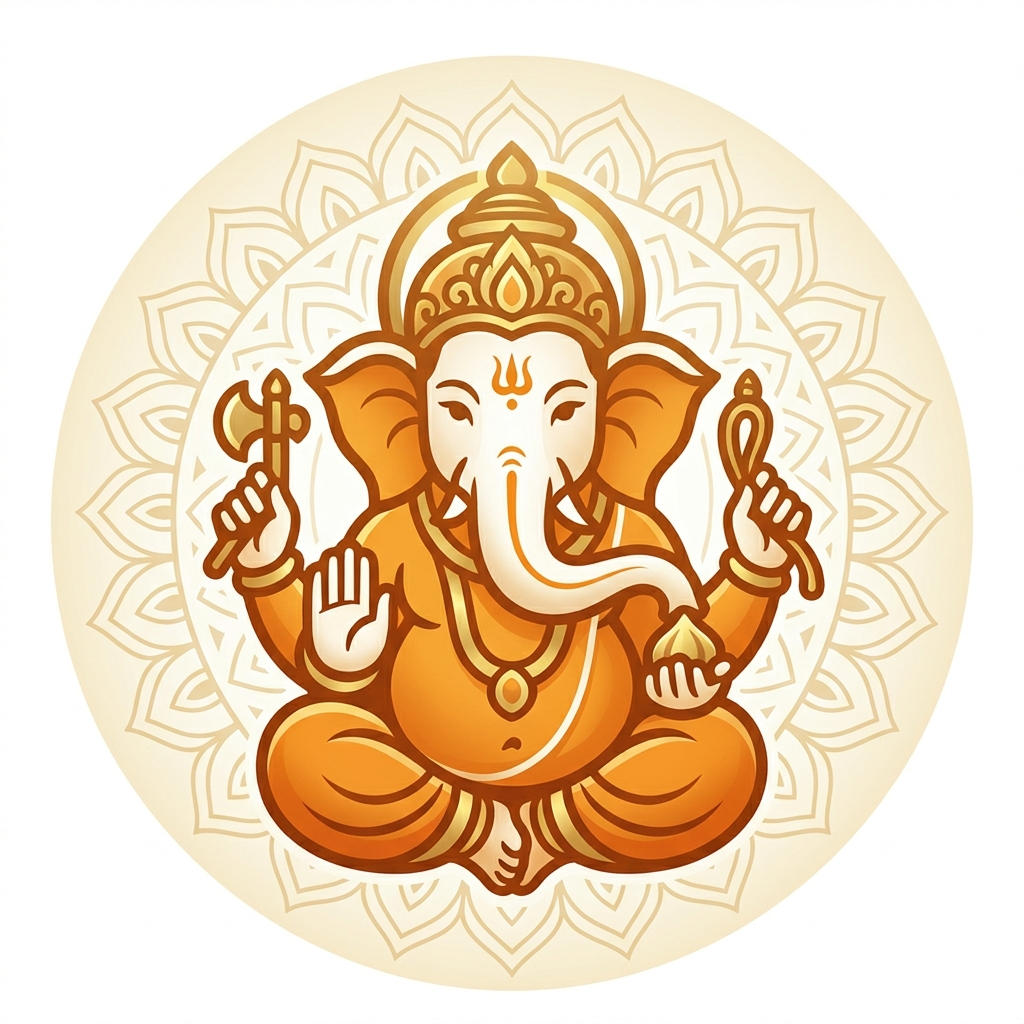
Beloved deities such as Ganesha, the remover of obstacles, and Hanuman, the model of devotion, are honoured in homes and temples across the world. Each form offers a different doorway to the same divine reality.
The Sacred Texts
Hindu scripture falls into two broad groups.
Shruti ("that which is heard") is the most authoritative. It includes the four Vedas and the Upanishads, the philosophical heart of Hindu thought. These are treated as timeless revelation, preserved with great care for thousands of years.
Smriti ("that which is remembered") includes the epics and teaching texts. Here belong the Ramayana, the Mahabharata — which contains the Bhagavad Gita — the Puranas, and the texts that guide daily duty and conduct.
- The Vedas — the oldest scriptures: hymns, prayers, and rituals revealed to ancient sages.
- The Upanishads — philosophical dialogues on Brahman, Atman, and liberation.
- The Bhagavad Gita — Krishna's teaching to Arjuna, the most widely read Hindu text.
- The Ramayana and Mahabharata — great epics that carry dharma through story.
- The Puranas — vast collections of mythology, devotion, and cosmology.
The Major Traditions
Most Hindus belong, loosely, to one of four broad streams.
These streams share scripture and core beliefs but differ in which form of the divine they hold supreme. The great teacher Adi Shankaracharya helped unite them around the worship of one underlying reality.
- Vaishnavism — devotion to Vishnu and his avatars, especially Rama and Krishna; the largest tradition.
- Shaivism — devotion to Shiva as the supreme reality and lord of yoga.
- Shaktism — devotion to the Goddess, the Divine Mother, as the supreme power.
- Smarta tradition — a philosophical path that worships several major deities as forms of one Brahman.
How Hinduism Is Practised
Hindu practice is woven into daily life rather than confined to one weekly service. Most homes keep a small shrine where the family offers puja — worship with light, incense, flowers, and food — each morning or evening.
Beyond the home, devotees visit temples, chant mantras, sing devotional songs, observe fasts, and celebrate a rich calendar of festivals. Pilgrimage to sacred rivers and shrines is a cherished part of the tradition.
Four classical paths suit different temperaments: karma yoga (selfless action), bhakti yoga (loving devotion), jnana yoga (knowledge), and raja yoga (meditation). All are understood to lead toward the same liberation.
Common Misconceptions
A few widespread misunderstandings are worth clearing up.
- "Hindus worship idols." Hindus worship the divine through a murti — a sacred image that focuses devotion, much as a photograph focuses love for a person. The reverence is for God, not the material.
- "Hinduism is pure polytheism." At its philosophical core, Hinduism teaches one ultimate reality expressed in many forms — closer to one God with many faces.
- "Hinduism is only mythology." Its stories carry deep philosophy, but Hindu thought also includes some of the world's most rigorous schools of logic, metaphysics, and meditation.
- "The cow is a god." The cow is honoured as a symbol of selfless giving and non-violence, not worshipped as a deity.
Continuing Your Journey at VedKosh
This guide is only a doorway. Hinduism rewards a lifetime of exploration, and the best way to understand it is to read its texts and meet its living practices for yourself.
A natural next step is the Bhagavad Gita, the most beloved summary of Hindu philosophy. From there you can explore karma and dharma in depth, the philosophy of yoga, and the festivals and home practices that bring the tradition to life.
Frequently Asked Questions
Is Hinduism monotheistic or polytheistic?
Both labels fall short. Hinduism teaches one ultimate reality, Brahman, worshipped in many forms and names. Philosophically it is closest to "one God with many faces" — sometimes described as henotheism or monism rather than simple polytheism.
Who founded Hinduism?
No single person founded Hinduism. It developed gradually over thousands of years from the Vedic tradition, shaped by countless sages, teachers, and schools rather than by one prophet or one moment of revelation.
What is the main goal of Hinduism?
The highest goal is moksha — liberation from the cycle of birth and rebirth, and union with the divine. Along the way Hindus also pursue dharma (duty), artha (honest prosperity), and kama (wholesome desire).
What is the difference between Hinduism and Sanatana Dharma?
They refer to the same tradition. "Hinduism" is the modern English name, while "Sanatana Dharma," meaning the eternal way, is the name the tradition has long used for itself.
What are the holy books of Hinduism?
The Vedas and Upanishads are the most authoritative (Shruti). The Bhagavad Gita, Ramayana, Mahabharata, and Puranas are deeply loved teaching texts (Smriti). The Bhagavad Gita is the most widely read of all.
Can anyone practise Hinduism?
Hinduism has no formal conversion requirement and welcomes sincere seekers. Anyone may study its texts, worship, meditate, and follow its paths. The tradition has always valued practice and inner realisation over membership.
How many gods does Hinduism have?
Tradition poetically speaks of 330 million deities, but this expresses the infinite forms of one divine reality rather than a literal count. Every form is understood as an expression of the single Brahman.