Vaishno Devi Chalisa
Significance & Importance
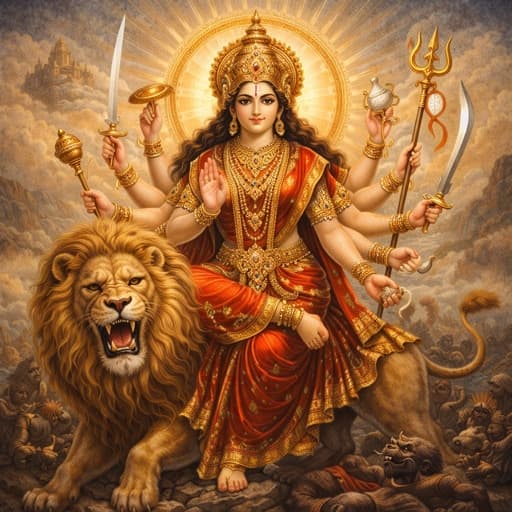
The Vaishno Devi Chalisa is dedicated to one of the most revered and most-visited Hindu pilgrimage destinations in the world — the holy shrine of Maa Vaishno Devi nestled in the Trikuta Mountains of Jammu & Kashmir at an altitude of 5,200 feet. Drawing over 10 million pilgrims annually, the cave shrine houses three natural rock pindis representing the unified Trishakti — Mahakali (energy of destruction of evil), Mahalakshmi (energy of prosperity and preservation), and Mahasaraswati (energy of wisdom and creation).
According to sacred tradition, Maa Vaishno Devi was born as Vaishnavi from the combined energies of the three principal goddesses to fulfill Lord Vishnu's wish to incarnate at the appropriate time. She lived as a young girl performing intense austerities, and when pursued by Bhairon Nath who failed to recognize her divine nature, she eventually beheaded him at Bhairon Ghati. Repentant in his final moment, Bhairon was granted the boon that no pilgrimage to Vaishno Devi would be considered complete without also visiting his shrine. The journey from Katra base to the Bhavan covers approximately 13 kilometers, passing through Banganga, Charan Paduka, Adhkuwari (the sacred garbh-joon cave where Mata meditated for nine months), and finally to the holy cave where the three Pindis manifest.
Devotees recite the Vaishno Devi Chalisa daily, but especially during the two annual Navratri festivals (when the temple sees its largest gatherings), on Tuesdays and Fridays (Mata's special days), and as a vrat before or after completing the yatra. The Chalisa is also recited by devotees who cannot physically undertake the pilgrimage, in the firm belief that Mata accepts sincere devotion regardless of physical distance. The hymn promises Maa Vaishno Devi's grace for safe pilgrimage, fulfillment of cherished wishes, protection of family, success in righteous endeavors, and ultimately spiritual liberation — for she is among the foremost Shakti Peethas in Hindu tradition and the eternal Mother who never turns away a sincere devotee.
English Transliteration
|| Doha ||

Gaaye Yashohi Mahima Tihari, Maa Vaishno Daatri.
Kripa Karau Hey Vaishnavi, Trikuta Tum Hi Saatri.

|| Chaupai ||

Gaau Maa Vaishnavi Tumhari.
Mahima Apaar Tumhri Bhaari.

Trikuta Parvat Par Tum Raaje.
Guptaa Gufa Mein Tum Vibhaaje.

Mahakali Aur Mahalakshmi.
Mahasaraswati Tum Trishakti Sakshmi.

Vaishnavi Maa Trikuta Vaalee.
Kripa Drishti Sab Par Tum Daalee.

Katra Se Yaatra Aarambh Hoy.
Lakhi Karoron Yatri Aay Soy.

Jai Maa Ke Naare Bant Lagaain.
Utsaah Bhakti Maa Mein Lagaain.

Chadhaai Karat Hot Pavitra.
Maa Charanan Yaatri Ko Mitra.

Baan Ganga Mein Snaan Karaiyey.
Maa Charkar Pahle Niharaiyey.

Adhkuwaari Mein Pavan Sthaal.
Garbh Joon Pavitra Bahu Khaal.

Nanhi Chhoti Wahin Gufa Hai.
Maa Ne Jahaan Tap Kiya Pyaara.

Kaali Khoh Bhairon Ka Sthaan.
Maa Yaha Bhi Karein Saheen Vidhaan.

Bhawan Mein Phir Maa Darshan Hot.
Pindi Roop Mein Maa Sukh Hot.

Teen Pindi Maa Ki Pyaari.
Lakshmi Saraswati Kali Vichaari.

Darshan Karat Aanand Mahaan.
Mahi Janma Saphal Pratidaan.

Bhairon Baba Ke Bhi Darshan.
Karna Hota Yaatra Ka Praashan.

Bin Bhairon Ke Yaatra Adhuri.
Maa Ki Aagya Maan Bahuri.

Bhairon Baba Ne Maafi Maangi.
Maa Ne De Di Pyaari Saangi.

Lakhi Karoron Aaye Bhakt Tumhare.
Kripa Tumhri Sab Phal Paaye Saare.

Maa Anganon Mein Jyot Jagaai.
Bhakt Maa Charanan Vandan Gaai.

Dham Bahut Saare Maa Ke Pyaare.
Vaishnav Dham Mein Mukti Saare.

Kundli Mata Ka Maa Ka Naam.
Trikuta Maa Vaishnavi Dhaam.

Navratri Mein Vishesh Padhaai.
Lakhi Karoron Aate Maai.

Lal Chunari Phool Maala Daan.
Maa Charanon Mein Phal Sirhane.

Gruhast Kshatriya Yog Sandhaaron.
Maa Maa Maa Maa Vahi Pukaaron.

Maa Mujh Anaath Ko Aap Sambhaaro.
Vaishnavi Maa Vandan Hamaaro.

Sakal Manorath Pooran Karaiyey.
Darshan Ka Vardaan Vinaaiye.

Maa Charanon Mein Daasi Hum Sab.
Kripa Karahu Maa Tum Pratipaalo Sab.

Jai Vaishnavi Maa Trikuta Vaali.
Kalyug Mein Tum Sahaayak Aali.

Maa Tumhri Sharan Mein Aaye.
Deen Heen Hum Maa Bhajan Gaaye.

Jo Yah Path Karai Chaalisa.
Usko Maa Tum Devain Aasees.

Gruh Mein Maa Tum Sukh Bharo Sada.
Vaishnavi Maa Tum Kripa Karahu Sada.

|| Doha ||

Vaishno Maa Ki Yaatra Saphal, Karein Bhakt Sumati.
Dham Pavitra Trikuta Ka, Maa De Sab Sad Gati.

Katra Se Bhawan Hai, Maarga Pavitra Sumohan.
Maa Vaishnavi Sharanan Mein, Ho Mukti Ka Saadhan.
Verse-by-Verse Meaning
Tap “Show meaning” under any line to read its bhāvārth.
Gaaye Yashohi Mahima Tihari, Maa Vaishno Daatri. Kripa Karau Hey Vaishnavi, Trikuta Tum Hi Saatri.
Show meaningHide meaning
We sing of your boundless glory, O Mother Vaishno, bestower of blessings. Be gracious, O Vaishnavi — you who dwell upon Trikuta, you alone are our protector and guide.
Gaau Maa Vaishnavi Tumhari. Mahima Apaar Tumhri Bhaari.
Show meaningHide meaning
O Mother Vaishnavi, I sing your praise; your glory is immeasurable and truly immense.
Trikuta Parvat Par Tum Raaje. Guptaa Gufa Mein Tum Vibhaaje.
Show meaningHide meaning
You reign enthroned upon the peak of Trikuta mountain, and within its hidden cave you reveal yourself in three-fold divine form.
Mahakali Aur Mahalakshmi. Mahasaraswati Tum Trishakti Sakshmi.
Show meaningHide meaning
You are Mahakali, Mahalakshmi, and Mahasaraswati together — the very embodiment of the three great goddess-powers united as one.
Vaishnavi Maa Trikuta Vaalee. Kripa Drishti Sab Par Tum Daalee.
Show meaningHide meaning
O Vaishnavi Mother who dwells on Trikuta, you cast your compassionate gaze equally upon all your devotees.
Katra Se Yaatra Aarambh Hoy. Lakhi Karoron Yatri Aay Soy.
Show meaningHide meaning
The pilgrimage to you begins from the town of Katra, from where lakhs upon crores of pilgrims come seeking your darshan.
Jai Maa Ke Naare Bant Lagaain. Utsaah Bhakti Maa Mein Lagaain.
Show meaningHide meaning
Along the way, devotees raise chants of "Jai Mata Di", pouring their enthusiasm and devotion wholly into your worship.
Chadhaai Karat Hot Pavitra. Maa Charanan Yaatri Ko Mitra.
Show meaningHide meaning
Climbing the steep mountain path purifies the pilgrim's body and mind, and your holy feet become the pilgrim's truest companion.
Baan Ganga Mein Snaan Karaiyey. Maa Charkar Pahle Niharaiyey.
Show meaningHide meaning
Pilgrims bathe in the sacred Banganga stream along the route; it is here that, by legend, an arrow's stroke brought forth this holy water, and its darshan marks the true beginning of the journey.
Adhkuwaari Mein Pavan Sthaal. Garbh Joon Pavitra Bahu Khaal.
Show meaningHide meaning
At the midway point of Ardhkuwari lies a most sacred site, where the narrow Garbhjoon cave — likened to a womb — is held holy and is said to remove countless afflictions.
Nanhi Chhoti Wahin Gufa Hai. Maa Ne Jahaan Tap Kiya Pyaara.
Show meaningHide meaning
There stands that tiny, narrow cave where the Mother, in devoted concentration, performed nine months of penance to elude Bhairon Nath.
Kaali Khoh Bhairon Ka Sthaan. Maa Yaha Bhi Karein Saheen Vidhaan.
Show meaningHide meaning
Along the path also lies Kali Khoh, a site linked to the tale of Bhairon Nath; here too the Mother rightly watches over and guides her devotees.
Bhawan Mein Phir Maa Darshan Hot. Pindi Roop Mein Maa Sukh Hot.
Show meaningHide meaning
At last, at the holy Bhawan, the Mother grants her true darshan; enshrined in her natural rock (pindi) form, she bestows boundless joy upon her devotees.
Teen Pindi Maa Ki Pyaari. Lakshmi Saraswati Kali Vichaari.
Show meaningHide meaning
Three beloved pindis are enshrined at the Bhawan, held to be the manifest forms of Mahalakshmi, Mahasaraswati, and Mahakali.
Darshan Karat Aanand Mahaan. Mahi Janma Saphal Pratidaan.
Show meaningHide meaning
Beholding these three powers fills the devotee's heart with supreme bliss, and makes this human birth truly fruitful and worthwhile.
Bhairon Baba Ke Bhi Darshan. Karna Hota Yaatra Ka Praashan.
Show meaningHide meaning
After the Mother's darshan, visiting Bhairon Baba's shrine too is held to be an essential and inseparable part of the pilgrimage.
Bin Bhairon Ke Yaatra Adhuri. Maa Ki Aagya Maan Bahuri.
Show meaningHide meaning
Without Bhairon Nath's darshan, the pilgrimage remains incomplete; it is the Mother's own decree that devotees journey onward to visit him as well.
Bhairon Baba Ne Maafi Maangi. Maa Ne De Di Pyaari Saangi.
Show meaningHide meaning
Legend tells that Bhairon Nath begged forgiveness for his transgression, and the compassionate Mother, pardoning him, granted him her gracious companionship and blessing.
Lakhi Karoron Aaye Bhakt Tumhare. Kripa Tumhri Sab Phal Paaye Saare.
Show meaningHide meaning
Lakhs upon crores of your devotees come to your door every year, and through your boundless grace, every one of them attains the fruit they seek.
Maa Anganon Mein Jyot Jagaai. Bhakt Maa Charanan Vandan Gaai.
Show meaningHide meaning
Devotees kindle the sacred lamp in the Mother's courtyard, and sing hymns of adoration at her holy feet.
Dham Bahut Saare Maa Ke Pyaare. Vaishnav Dham Mein Mukti Saare.
Show meaningHide meaning
The Mother has many beloved abodes across this world, yet at this Vaishnav abode her devotees attain liberation and supreme peace.
Kundli Mata Ka Maa Ka Naam. Trikuta Maa Vaishnavi Dhaam.
Show meaningHide meaning
Kundalini Shakti too is regarded as one of the Mother's forms, and Trikuta mountain is her sacred abode renowned as Vaishnavi Dham.
Navratri Mein Vishesh Padhaai. Lakhi Karoron Aate Maai.
Show meaningHide meaning
During the holy days of Navratri, the Mother's worship is observed with special reverence, and lakhs upon crores of devotees come for her darshan then.
Lal Chunari Phool Maala Daan. Maa Charanon Mein Phal Sirhane.
Show meaningHide meaning
Devotees offer a red chunari, garlands of flowers, and other gifts, and bow their heads placing fruit and offerings at the Mother's feet.
Gruhast Kshatriya Yog Sandhaaron. Maa Maa Maa Maa Vahi Pukaaron.
Show meaningHide meaning
Whether householder, warrior, or ascetic, all alike come seeking her refuge, calling out again and again in devotion, "Mother, Mother, Mother, Mother!"
Maa Mujh Anaath Ko Aap Sambhaaro. Vaishnavi Maa Vandan Hamaaro.
Show meaningHide meaning
O Mother, take this helpless, orphaned soul into your care; O Vaishnavi Mother, accept our humble salutation.
Sakal Manorath Pooran Karaiyey. Darshan Ka Vardaan Vinaaiye.
Show meaningHide meaning
O Mother, fulfil all our heartfelt wishes, and we humbly beg of you the blessing of your ever-lasting darshan.
Maa Charanon Mein Daasi Hum Sab. Kripa Karahu Maa Tum Pratipaalo Sab.
Show meaningHide meaning
O Mother, we are all humble servants at your feet; keep your grace upon us always, and nurture and sustain us all.
Jai Vaishnavi Maa Trikuta Vaali. Kalyug Mein Tum Sahaayak Aali.
Show meaningHide meaning
Victory to Vaishnavi Mother, dweller of Trikuta! In this age of Kali, you alone remain the true helper and companion of your devotees.
Maa Tumhri Sharan Mein Aaye. Deen Heen Hum Maa Bhajan Gaaye.
Show meaningHide meaning
O Mother, we, your lowly and humble devotees, have come seeking your refuge, and we sing your devotional hymns with full faith.
Jo Yah Path Karai Chaalisa. Usko Maa Tum Devain Aasees.
Show meaningHide meaning
Whoever recites this Chalisa with devotion, O Mother, you surely grant that devotee your loving blessing.
Gruh Mein Maa Tum Sukh Bharo Sada. Vaishnavi Maa Tum Kripa Karahu Sada.
Show meaningHide meaning
O Vaishnavi Mother, fill our homes and families with happiness and abundance forever, and keep your grace upon us always.
Vaishno Maa Ki Yaatra Saphal, Karein Bhakt Sumati. Dham Pavitra Trikuta Ka, Maa De Sab Sad Gati.
Show meaningHide meaning
The pilgrimage to Mother Vaishno bears fruit only when devotees undertake it with pure faith and right understanding; through this holy abode of Trikuta, the Mother grants everyone the path to a righteous destiny.
Katra Se Bhawan Hai, Maarga Pavitra Sumohan. Maa Vaishnavi Sharanan Mein, Ho Mukti Ka Saadhan.
Show meaningHide meaning
The path from Katra to the Bhawan is most sacred and enchanting; taking refuge in Mother Vaishnavi becomes the ready means to attain liberation.
Frequently Asked Questions
When should the Vaishno Devi Chalisa be recited?
The Vaishno Devi Chalisa is traditionally recited during the morning or evening worship of Maa Vaishno Devi, and especially on the deity's sacred days. Reciting it daily — or for forty days — is a common devotional practice.
How many verses are there in a Chalisa?
A chalisa is a devotional hymn of forty (chālīs) chaupai verses, usually framed by opening and closing doha couplets, composed here in praise of Maa Vaishno Devi.
What are the benefits of reciting the Vaishno Devi Chalisa?
Reciting the Vaishno Devi Chalisa with faith is traditionally believed to invoke the grace of Maa Vaishno Devi, steady the mind, and bring courage and inner peace. It is offered as an act of bhakti (devotion), not as a guarantee of any specific material result.