
Surya Chalisa
Significance & Importance
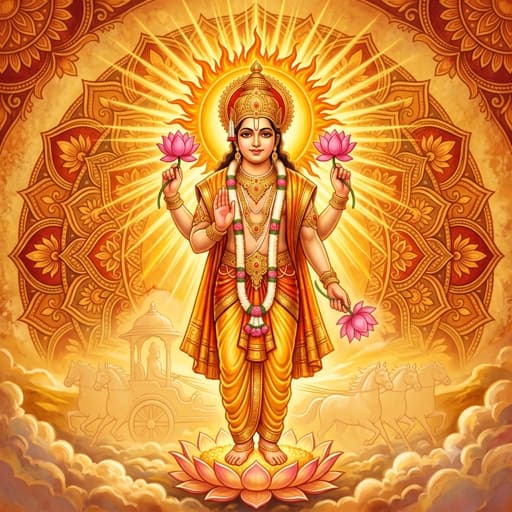
The Surya Chalisa is dedicated to Surya Dev, the radiant Sun God, who occupies a singular position in Hindu cosmology as the most visible and immediate manifestation of the divine. Unlike abstract deities whose forms are conceptual, Surya is directly perceivable every day as the giver of light, warmth, life, and the very rhythm of time. He is referenced in the Vedas as the visible Brahman, the cosmic eye that witnesses all action, and the original Guru of all rishis. The famous Gayatri Mantra itself is an invocation to Savitur — the radiant aspect of the Sun.
The Chalisa narrates Surya's many divine identities: Aditya (son of Aditi), Bhaskar (the maker of light), Martand (the egg of cosmic order), Ravi (the source of all motion), and Divaakara (the maker of day). It celebrates his iconic chariot drawn by seven horses (representing the seven colors of light and the seven days of the week), driven by his charioteer Aruna (the dawn), and his role as the father of Manu (progenitor of mankind), Yama (god of righteousness), Yamuna (sacred river), Karna (Mahabharata hero), and Sugriva (Ramayana ally of Rama). The hymn also recalls Surya's role as the teacher of Lord Hanuman, who is said to have learned all the Vedas and scriptures directly from the Sun.
Devotees recite the Surya Chalisa especially on Sundays — the day named after Surya — during sunrise (Surya Namaskar time), and on major solar festivals like Makar Sankranti, Ratha Saptami (Surya's birthday), and Chhath Puja. The Chalisa is considered uniquely powerful for: healing skin diseases (kushtha) and eye disorders (the Sun governs both), curing infertility and granting healthy progeny, building physical vitality and ojas, restoring family honor and ancestral prestige, granting professional success and fame, and the resolution of difficult planetary positions in one's horoscope. Sunrise is the most auspicious time for recitation, ideally accompanied by arghya (water offering to the Sun) and meditation on the Aditya Hridaya Stotra that Sage Agastya taught to Lord Rama on the battlefield of Lanka.
English Transliteration
|| Doha ||

Kanak Badan Kundal Makar, Mukut Mukti Kanthahaar.
Sohat Charanan Saaras Pad, Vandit Sakal Aapaar.

|| Chaupai ||

Jai Sabhaya Sangee Sukhraasi.
Jai Jagvandya Divaakar Bhaasi.

Vandau Charan Kamal Anuraagi.
Adhama Udhaar Divyadrig Tyaagi.

Hey Rashmindra Hey Aathvasu Naatha.
Dinmani Tum Hi Saumya Pradaata.

Tum Hi Atrisut Karuna Kanda.
Maheen Vihaar Karat Sukh Vrinda.

Lakshmi Brahma Vishnu Tumhari.
Nitya Karaen Tav Aarati Pyaari.

He Aaditya Divaakar Bhaano.
Avyay Vibhu Sahas Naam Jaano.

Maartand Bhaaskar Ravi Praani.
Vishvaroopa Bhaanu Brahma Gyaani.

Kashyap Kasyap Sut Adi Tay Maata.
Tum Anant Akhand Mat Vidhaata.

Loka Lokaakar Tum Pradaata.
Tum Hi Adhipati Triloka Vidhaata.

Bhakt Mein Mukhya Hanumat Bhaaye.
Guru Tumheen Lai Sukh Pad Paaye.

Arun Saarathi Saath Sushobhit.
Sapt Ashvon Se Rath Lasit Hi Tumhre.

Kaal Chakra Rath Tumhra Pyaara.
Nitya Aarambh Karat Hai Bhalaara.

Dharma Karm Pratipaalak Tum Ho.
Vardaan Den Surya Manmoh Tum Ho.

Vishwa Vyaapt Tav Aatma Roopa.
Deen Anaath Pukaarat Bhoopa.

Udayachal Ke Tum Hi Naatha.
Saagar Se Pratham Karat Aatha.

Bhakt Bhayaan Dukh Door Karante.
Karu Karu Naa Aap Hi Saashvat Khante.

Kushth Chram Rog Naashan Haare.
Netra Rog Aur Bandhya Hare.

Jo Nara Tav Sumiran Nit Karahi.
Taake Tum Sab Sankat Haranai.

Ravivaar Vrat Jo Nar Karai.
Tum Charanon Sab Sankat Tarai.

Udya Aarambh Tav Naam Pukaarat.
Tum Bhakto Ka Kasht Niwaarat.

Gudi Padwa Sankraant Manaayat.
Tum Charanon Mein Jagat Bhajaayat.

Tavkripa Te Hi Jeevan Sakshama.
Tavkripa Te Pratham Padma Padma.

Aditya Hriday Stotra Bhi Bhaye.
Lakshman Ko Vishal Sukh Daaye.

Ram Rashmindra Stuti Sumiraare.
Ravan Vadh Mein Saadhya Pichaare.

Kripa Karahu Hey Bhaaskar Dev.
Deenan Ke Tum Param Sukh Lev.

Kalank Kapat Naas Karayi.
Deh Niyog Sumaarg Lagaayi.

Kalpa Kalp Tav Mahima Daani.
Veda Smriti Bahu Stuti Vaani.

Dhanya Dhanya Tum Bhaaskar Naatha.
Sukh Sampada Bhar Sab Maatha.

Jo Yah Path Karai Chaalisa.
Uske Sab Kashta Haran Avineesha.

Ravivaar Praatah Snaan Karaaye.
Ghrut Deepak Tav Dhyaan Lagaaye.

Kripa Karoon Hey Mun Aathvasu.
Deen Heen Hum Sankat Mein Aas.

Dhanyavaad Karein Sab Tav Daatri.
Sukha Aarogya De Jeevan Yaatri.

|| Doha ||

Udayachal Bhaaskar Bhajan, Nityap Hi Karahin Bhakta.
Maa Lakshmi Sang Surya Dev, Pooran Karahin Yukta.
Verse-by-Verse Meaning
Tap “Show meaning” under any line to read its bhāvārth.
Kanak Badan Kundal Makar, Mukut Mukti Kanthahaar. Sohat Charanan Saaras Pad, Vandit Sakal Aapaar.
Show meaningHide meaning
O Surya Dev, your body is radiant like gold; makara-shaped earrings adorn your ears, a crown graces your head, and a garland of pearls shines at your throat. Your graceful, lotus-like feet are worshipped by countless beings without limit.
Jai Sabhaya Sangee Sukhraasi. Jai Jagvandya Divaakar Bhaasi.
Show meaningHide meaning
Victory to you, companion of the virtuous, treasury of all happiness! Victory to you, O radiant maker of the day, revered by the entire world!
Vandau Charan Kamal Anuraagi. Adhama Udhaar Divyadrig Tyaagi.
Show meaningHide meaning
I bow with loving devotion to your lotus feet. You uplift the fallen, possess a divine gaze, and remain ever detached and renunciate by nature.
Hey Rashmindra Hey Aathvasu Naatha. Dinmani Tum Hi Saumya Pradaata.
Show meaningHide meaning
O Lord of the rays, O Lord honored among the eight Vasus! O jewel of the day, you alone are the giver of gentleness and auspiciousness.
Tum Hi Atrisut Karuna Kanda. Maheen Vihaar Karat Sukh Vrinda.
Show meaningHide meaning
You are the very root of compassion (scripture holds that Surya is the son of sage Kashyapa and mother Aditi — the popular text uses "Atrisut," son of Atri, here), and you wander the earth amid joyous multitudes.
Lakshmi Brahma Vishnu Tumhari. Nitya Karaen Tav Aarati Pyaari.
Show meaningHide meaning
Goddess Lakshmi and the deities Brahma and Vishnu belong to your radiance, and they lovingly perform your aarti every single day.
He Aaditya Divaakar Bhaano. Avyay Vibhu Sahas Naam Jaano.
Show meaningHide meaning
O Aditya, O Divakar, O Bhanu! Know that you are imperishable and all-pervading, bearing a thousand sacred names.
Maartand Bhaaskar Ravi Praani. Vishvaroopa Bhaanu Brahma Gyaani.
Show meaningHide meaning
Martand, Bhaskar, and Ravi are your names, O giver of life to every being! You hold the cosmic universal form, radiant as Bhanu, the very embodiment of Brahma-knowledge.
Kashyap Kasyap Sut Adi Tay Maata. Tum Anant Akhand Mat Vidhaata.
Show meaningHide meaning
You are the son of sage Kashyapa, with Aditi as your mother (hence "Aditya"). You are infinite, unbroken, and the ordainer of destiny for all.
Loka Lokaakar Tum Pradaata. Tum Hi Adhipati Triloka Vidhaata.
Show meaningHide meaning
You are the giver to every world and its inhabitants. You alone are the sovereign lord and ordainer of the three worlds.
Bhakt Mein Mukhya Hanumat Bhaaye. Guru Tumheen Lai Sukh Pad Paaye.
Show meaningHide meaning
Among your devotees, Hanuman is held most dear; you accepted him as your disciple and, as his guru, granted him the state of blessedness (Surya Dev is traditionally revered as Hanuman's guru).
Arun Saarathi Saath Sushobhit. Sapt Ashvon Se Rath Lasit Hi Tumhre.
Show meaningHide meaning
You are resplendent with Aruna as your charioteer, your chariot gloriously drawn by seven radiant horses.
Kaal Chakra Rath Tumhra Pyaara. Nitya Aarambh Karat Hai Bhalaara.
Show meaningHide meaning
Your beloved chariot is itself the wheel of time, setting forth anew each day on its auspicious journey.
Dharma Karm Pratipaalak Tum Ho. Vardaan Den Surya Manmoh Tum Ho.
Show meaningHide meaning
You are the upholder of righteousness and virtuous action. O Surya, enchanter of every mind, you are the bestower of boons.
Vishwa Vyaapt Tav Aatma Roopa. Deen Anaath Pukaarat Bhoopa.
Show meaningHide meaning
Your very self pervades the whole universe. The poor, the helpless, and even kings cry out to you for refuge.
Udayachal Ke Tum Hi Naatha. Saagar Se Pratham Karat Aatha.
Show meaningHide meaning
You are the lord of the eastern mountain of sunrise; from beyond the ocean, you are the very first to arise.
Bhakt Bhayaan Dukh Door Karante. Karu Karu Naa Aap Hi Saashvat Khante.
Show meaningHide meaning
You dispel the fear and sorrow of your devotees. Have mercy, have mercy — you alone are the eternal, ever-enduring refuge.
Kushth Chram Rog Naashan Haare. Netra Rog Aur Bandhya Hare.
Show meaningHide meaning
You destroy leprosy and skin ailments, remove diseases of the eyes, and lift the affliction of childlessness.
Jo Nara Tav Sumiran Nit Karahi. Taake Tum Sab Sankat Haranai.
Show meaningHide meaning
Whoever remembers you daily in devotion — you take away all of that person's troubles.
Ravivaar Vrat Jo Nar Karai. Tum Charanon Sab Sankat Tarai.
Show meaningHide meaning
Whoever observes the Sunday fast crosses over every difficulty through the grace of your feet.
Udya Aarambh Tav Naam Pukaarat. Tum Bhakto Ka Kasht Niwaarat.
Show meaningHide meaning
At the start of any new endeavor, people call upon your name, and you remove the suffering of your devotees.
Gudi Padwa Sankraant Manaayat. Tum Charanon Mein Jagat Bhajaayat.
Show meaningHide meaning
Festivals like Gudi Padwa and Makar Sankranti are celebrated in your honor (Makar Sankranti is a solar festival marking the sun's transit into Capricorn; Gudi Padwa is the lunisolar new year, traditionally linked to the creation of the universe or Rama's return to Ayodhya, though popularly grouped here with solar festivities); the whole world offers devotion at your feet.
Tavkripa Te Hi Jeevan Sakshama. Tavkripa Te Pratham Padma Padma.
Show meaningHide meaning
By your grace alone does life become capable and strong; by your grace the lotus is first to bloom at dawn.
Aditya Hriday Stotra Bhi Bhaye. Lakshman Ko Vishal Sukh Daaye.
Show meaningHide meaning
The Aditya Hridaya Stotra came into being (taught by sage Agastya to Lord Rama — the popular text names "Lakshman" here), and it bestowed immense strength and joy.
Ram Rashmindra Stuti Sumiraare. Ravan Vadh Mein Saadhya Pichaare.
Show meaningHide meaning
Lord Rama recalled this hymn to you, Lord of the rays, and through its power he accomplished the slaying of Ravana.
Kripa Karahu Hey Bhaaskar Dev. Deenan Ke Tum Param Sukh Lev.
Show meaningHide meaning
Have mercy, O Lord Bhaskar! You are the supreme joy and refuge of the humble and downtrodden.
Kalank Kapat Naas Karayi. Deh Niyog Sumaarg Lagaayi.
Show meaningHide meaning
You destroy disgrace and deceit, and you guide this body of ours onto the righteous path.
Kalpa Kalp Tav Mahima Daani. Veda Smriti Bahu Stuti Vaani.
Show meaningHide meaning
In every cosmic age, your glory has been proclaimed; the Vedas and the Smritis are filled with countless hymns in your praise.
Dhanya Dhanya Tum Bhaaskar Naatha. Sukh Sampada Bhar Sab Maatha.
Show meaningHide meaning
Blessed, truly blessed are you, O Lord Bhaskar! You fill every forehead — every destiny — with happiness and prosperity.
Jo Yah Path Karai Chaalisa. Uske Sab Kashta Haran Avineesha.
Show meaningHide meaning
Whoever recites this Chalisa — O imperishable one — you remove all of that person's afflictions.
Ravivaar Praatah Snaan Karaaye. Ghrut Deepak Tav Dhyaan Lagaaye.
Show meaningHide meaning
One who bathes on Sunday morning and lights a lamp of ghee while meditating upon you receives your special grace.
Kripa Karoon Hey Mun Aathvasu. Deen Heen Hum Sankat Mein Aas.
Show meaningHide meaning
Have mercy, O sage-like lord honored among the eight Vasus; we, the humble and lowly, place our only hope in you in times of trouble.
Dhanyavaad Karein Sab Tav Daatri. Sukha Aarogya De Jeevan Yaatri.
Show meaningHide meaning
All offer their thanks to you, the great giver; grant happiness and good health to us, the travelers of this life's journey.
Udayachal Bhaaskar Bhajan, Nityap Hi Karahin Bhakta. Maa Lakshmi Sang Surya Dev, Pooran Karahin Yukta.
Show meaningHide meaning
Devotees daily sing devotional hymns to Bhaskar who rises upon the eastern mountain. Together with Mother Lakshmi, Surya Dev fittingly fulfills the wishes of his devotees.
Frequently Asked Questions
When should the Surya Chalisa be recited?
The Surya Chalisa is traditionally recited during the morning or evening worship of Surya Dev, and especially on the deity's sacred days. Reciting it daily — or for forty days — is a common devotional practice.
How many verses are there in a Chalisa?
A chalisa is a devotional hymn of forty (chālīs) chaupai verses, usually framed by opening and closing doha couplets, composed here in praise of Surya Dev.
What are the benefits of reciting the Surya Chalisa?
Reciting the Surya Chalisa with faith is traditionally believed to invoke the grace of Surya Dev, steady the mind, and bring courage and inner peace. It is offered as an act of bhakti (devotion), not as a guarantee of any specific material result.