
Santoshi Maa Chalisa
Significance & Importance
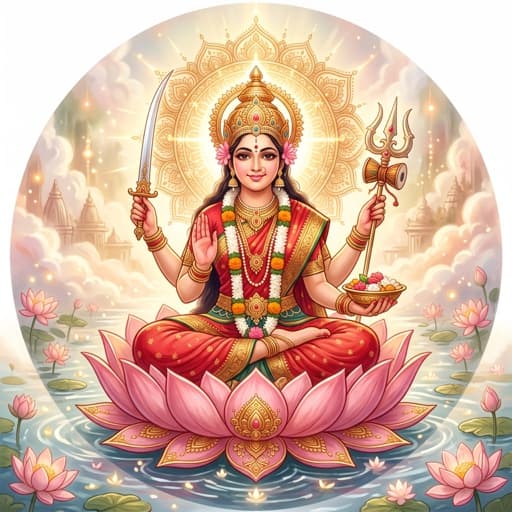
The Santoshi Maa Chalisa honors one of the most beloved and widely worshipped Mother Goddesses in modern Hindu domestic devotion — Maa Santoshi, whose name literally means 'The Mother of Contentment' and whose worship grew into a massive movement following the 1975 Hindi film 'Jai Santoshi Maa'. Believed in popular tradition to be the daughter of Lord Ganesha, born from his joy when his sons Shubh and Labh asked him for a sister, Maa Santoshi embodies the divine feminine principle of patience, satisfaction, and the fulfillment of sincere wishes.
The Santoshi Maa vrat is one of the simplest and most accessible vows in Hindu women's devotional practice. Observed on consecutive Fridays, the vrat involves abstaining from sour foods (citrus, tamarind, pickles), offering jaggery (gud) and roasted chickpeas (chana) to the goddess, reading her sacred katha, and observing chastity of mind and speech. The vrat is concluded with the offering and distribution of gud-chana prasad. The Chalisa is recited as part of this Friday worship and describes Maa Santoshi as a deity who responds with grace to even the simplest, most heartfelt offering.
Millions of women across India, Nepal, and the Indian diaspora observe the Santoshi Maa vrat seeking domestic peace, marital harmony, blessings for children, healing for sick family members, prosperity, and freedom from worry. The Chalisa promises that those who recite it with devotion and complete the vrat with proper discipline will receive Maa Santoshi's specific blessings: a contented mind (santosh), the fulfillment of cherished wishes, and the lifting of worldly difficulties. The very name 'Santoshi' is a teaching — that true happiness comes from contentment with what divine grace provides.
English Transliteration
|| Doha ||

Bandau Santoshi Charan, Riddhi Siddhi Daatri.
Dhyaan Dharu Mahima Likhu, Tum Trijagat Kee Maatri.

Namo Namah Santoshi Mata, Sumiran Karat Sabhi Sukh Bhrata.

|| Chaupai ||

Jai Santoshi Maata Jagat Janani.
Dayaa Karahu Saadar Hum Sharani.

Ganapati Putri Maa Tum Pyaari.
Riddhi Siddhi Sang Tum Aai Avtaari.

Mangalmayi Roop Tihara.
Sarva Sankat Tum Door Bichaara.

Vrat Lai Bhakt Jo Tumhra Karai.
Dhan Dhanya Sampada Vah Bhar Bhar Pawai.

Gud-Chana Bhog Lagaai Pyaara.
Maa Tum Khusi Hot Hriday Saara.

Shukravaar Vrat Param Punita.
Kathaa Sunaiyaa Bhakti Vinita.

Khattaa Chukhaaye Jo Vrat Bhange.
Aise Bhakt Maa Dukh Mein Sange.

Neem Patti Sang Snaan Karai.
Tum Maa Charanan Vandan Karai.

Sheel Subhaav Apar Tum Daani.
Kripa Drishti Dasaa Maa Pahchani.

Deenanaath Anaath Sahaari.
Sarva Sankat Maa Tum Niwaari.

Nithur Sang Ki Sant Banaai.
Kathin Hriday Mein Daya Jagaai.

Lakhi Kotin Bhakt Tumhare Aaye.
Kripa Tumhari Sab Phal Paaye.

Pati Pyaar Tav Vrat Se Paavain.
Kulhin Naari Sumangal Aavain.

Putra Daan Maa Tum Bhakton Ko.
Dhan Sampatti Sukh Bhar Daan Ko.

Kaarya Sakal Mein Siddhi Pradaan.
Vrat Ke Phal Se Maa Daan Mahaan.

Vidya Yash Aru Sundar Naari.
Var Maange Wah Pawai Bhaari.

Rog Door Ho Tan Ke Saare.
Maansik Sukh De Tum Pyaare.

Lagi Maa Charanan Lagi Bandagi.
Tumhri Kripa Hi Maa Sahaaragi.

Rijhi Maa Tum Bhakton Pyaare.
Kripa Drishti Se Sab Mukh Pyaare.

He Maa Santoshi Daya Karau Ab.
Sakal Manorath Pooran Maa Ab.

Vrat Niyam Se Jo Bhakt Karain.
Maa Tumhri Kripa Wah Paavain.

Chumbak Sa Tav Charanan Khinche.
Bhakti Bhaav Ke Saagar Sinche.

Lakhi Bhakti Hriday Ki Sachchi.
Uski Pukaar Maa Sunti Pachchi.

Sindur Akshat Pushp Chadhaai.
Aarti Maa Ki Pyaari Sunaai.

Lakhi Maa Bhakti Hriday Si Sachchi.
Manorath Pooran Karat Acchhi.

Kathaa Sunain Sumangal Naari.
Santoshi Maa Mahima Bhaari.

Satya Vachan Maa Tum Bole.
Vrat Se Bhagaye Sankat Hole.

Guda Chana Khoob Bhog Lagaayo.
Vrat Sukh Sampatti Maa Daayo.

Maa Tum Bhakton Ke Hriday Vaasi.
Tumhare Charan Mein Daasi Daasi.

Kashtin Mein Tum Sambhal Sambhaalo.
Kripa Karahu Maa Tum Pratipaalo.

Jo Yah Path Karai Chaalisa.
Usko Maa Tum Devain Aasees.

Gruh Mein Maa Tum Sukh Bharo Sada.
Sakal Manorath Pooran Sada.

|| Doha ||

Gud-Chana Ka Bhog Le, Santoshi Maa Pyaar.
Vrat Karain Sab Sukh Lahain, Hota Bhav Se Paar.

Shukravaar Vrat Niyam Se, Karain Bhakta Sumann.
Maa Santoshi Kripa Karain, Pooran Hot Kaaman.
Verse-by-Verse Meaning
Tap “Show meaning” under any line to read its bhāvārth.
Bandau Santoshi Charan, Riddhi Siddhi Daatri. Dhyaan Dharu Mahima Likhu, Tum Trijagat Kee Maatri.
Show meaningHide meaning
The poet bows at the feet of Mother Santoshi, giver of Riddhi (prosperity) and Siddhi (accomplishment). Meditating on her, he resolves to record her glory, for the Mother is the mother of all three worlds — heaven, earth, and the netherworld.
Namo Namah Santoshi Mata, Sumiran Karat Sabhi Sukh Bhrata.
Show meaningHide meaning
Salutations again and again to Mother Santoshi; merely remembering her brings every happiness to one's side like a brother — her name itself becomes the truest companion of joy.
Jai Santoshi Maata Jagat Janani. Dayaa Karahu Saadar Hum Sharani.
Show meaningHide meaning
Victory to Mother Santoshi, mother of the universe! We come to your refuge with reverence and pray that you show us your mercy.
Ganapati Putri Maa Tum Pyaari. Riddhi Siddhi Sang Tum Aai Avtaari.
Show meaningHide meaning
According to popular tradition, beloved Mother Santoshi is the daughter of Lord Ganesha, who took incarnate form in the presence of his consorts Riddhi and Siddhi — hence she too is regarded as a bestower of prosperity and accomplishment.
Mangalmayi Roop Tihara. Sarva Sankat Tum Door Bichaara.
Show meaningHide meaning
Your very form is auspicious; you thoughtfully remove every difficulty that troubles your devotees.
Vrat Lai Bhakt Jo Tumhra Karai. Dhan Dhanya Sampada Vah Bhar Bhar Pawai.
Show meaningHide meaning
Whichever devotee undertakes your vrat with faith receives wealth, grain, and prosperity in abundance.
Gud-Chana Bhog Lagaai Pyaara. Maa Tum Khusi Hot Hriday Saara.
Show meaningHide meaning
When a devotee offers the beloved bhog of jaggery and gram, the Mother's whole heart fills with joy — this remains her most cherished offering.
Shukravaar Vrat Param Punita. Kathaa Sunaiyaa Bhakti Vinita.
Show meaningHide meaning
The Friday vrat is supremely sacred; a devotee who listens to its katha (sacred story) with humility finds their devotion fulfilled.
Khattaa Chukhaaye Jo Vrat Bhange. Aise Bhakt Maa Dukh Mein Sange.
Show meaningHide meaning
By the rule of the vrat, tasting anything sour breaks it; a devotee who does so unknowingly invites sorrow to accompany them — hence sour food is avoided through the sixteen Fridays of the vow.
Neem Patti Sang Snaan Karai. Tum Maa Charanan Vandan Karai.
Show meaningHide meaning
A devotee who purifies themselves by bathing with neem leaves and then bows in reverence at the Mother's feet follows the true discipline of the vrat.
Sheel Subhaav Apar Tum Daani. Kripa Drishti Dasaa Maa Pahchani.
Show meaningHide meaning
The Mother is boundless in her gentle nature and generosity; with her gracious glance she herself recognizes the condition and need of every devotee.
Deenanaath Anaath Sahaari. Sarva Sankat Maa Tum Niwaari.
Show meaningHide meaning
The Mother is the support of the poor and the orphaned; she removes every difficulty faced by her devotees.
Nithur Sang Ki Sant Banaai. Kathin Hriday Mein Daya Jagaai.
Show meaningHide meaning
By her grace, even those of a cruel disposition are transformed into saint-like souls; she awakens compassion within the hardest of hearts.
Lakhi Kotin Bhakt Tumhare Aaye. Kripa Tumhari Sab Phal Paaye.
Show meaningHide meaning
Beholding her glory, millions of devotees came into her refuge, and by her grace every one of them received the fruit of their devotion.
Pati Pyaar Tav Vrat Se Paavain. Kulhin Naari Sumangal Aavain.
Show meaningHide meaning
Women who observe this vrat attain the love of their husbands; and even women without a fortunate lineage or family standing come to enjoy an auspicious life by the Mother's grace.
Putra Daan Maa Tum Bhakton Ko. Dhan Sampatti Sukh Bhar Daan Ko.
Show meaningHide meaning
The Mother grants devotees the boon of a son, together with wealth, property, and abundant happiness.
Kaarya Sakal Mein Siddhi Pradaan. Vrat Ke Phal Se Maa Daan Mahaan.
Show meaningHide meaning
The Mother grants success in all undertakings; the fruit of her vrat is so great that it is itself a magnificent gift.
Vidya Yash Aru Sundar Naari. Var Maange Wah Pawai Bhaari.
Show meaningHide meaning
Whoever prays for the boon of learning, renown, or a worthy spouse receives it from her in abundant measure.
Rog Door Ho Tan Ke Saare. Maansik Sukh De Tum Pyaare.
Show meaningHide meaning
By her grace every bodily ailment departs, and she, the beloved Mother, grants peace and happiness of mind as well.
Lagi Maa Charanan Lagi Bandagi. Tumhri Kripa Hi Maa Sahaaragi.
Show meaningHide meaning
For a devotee who becomes devoted at the Mother's feet with true attachment, her grace alone becomes their sole support.
Rijhi Maa Tum Bhakton Pyaare. Kripa Drishti Se Sab Mukh Pyaare.
Show meaningHide meaning
The Mother is pleased with her beloved devotees; the moment her gracious glance falls upon them, their faces light up with joy.
He Maa Santoshi Daya Karau Ab. Sakal Manorath Pooran Maa Ab.
Show meaningHide meaning
O Mother Santoshi, show your mercy now and fulfil every wish of your devotees — this is their humble prayer.
Vrat Niyam Se Jo Bhakt Karain. Maa Tumhri Kripa Wah Paavain.
Show meaningHide meaning
Only the devotee who observes the vrat with proper discipline attains the Mother's grace.
Chumbak Sa Tav Charanan Khinche. Bhakti Bhaav Ke Saagar Sinche.
Show meaningHide meaning
Her feet draw devotees toward her as a magnet draws iron, and by her grace she nourishes the very ocean of devotional feeling.
Lakhi Bhakti Hriday Ki Sachchi. Uski Pukaar Maa Sunti Pachchi.
Show meaningHide meaning
When the Mother beholds the true devotion within a devotee's heart, she surely and certainly hears their call.
Sindur Akshat Pushp Chadhaai. Aarti Maa Ki Pyaari Sunaai.
Show meaningHide meaning
Devotees offer vermilion, unbroken rice, and flowers, and sing the Mother's beloved aarti — this is the manner of her worship.
Lakhi Maa Bhakti Hriday Si Sachchi. Manorath Pooran Karat Acchhi.
Show meaningHide meaning
Beholding the true devotion of the heart, the Mother graciously fulfils the devotee's heartfelt wish.
Kathaa Sunain Sumangal Naari. Santoshi Maa Mahima Bhaari.
Show meaningHide meaning
Auspicious, happily-married women listen to the vrat katha with faith, for the glory of Mother Santoshi is truly immense.
Satya Vachan Maa Tum Bole. Vrat Se Bhagaye Sankat Hole.
Show meaningHide meaning
The Mother's words are ever true and never fail; through the power of this vrat, difficulties gradually take flight of their own accord.
Guda Chana Khoob Bhog Lagaayo. Vrat Sukh Sampatti Maa Daayo.
Show meaningHide meaning
Devotees offer jaggery and gram generously as bhog, and in return for this vrat the Mother bestows happiness and prosperity.
Maa Tum Bhakton Ke Hriday Vaasi. Tumhare Charan Mein Daasi Daasi.
Show meaningHide meaning
The Mother forever dwells within the hearts of her devotees; the devotee, in turn, considers themself but a humble servant at her feet.
Kashtin Mein Tum Sambhal Sambhaalo. Kripa Karahu Maa Tum Pratipaalo.
Show meaningHide meaning
The devotee prays that in times of hardship the Mother will sustain and steady them, extend her grace, and continue to nurture them always.
Jo Yah Path Karai Chaalisa. Usko Maa Tum Devain Aasees.
Show meaningHide meaning
Whoever recites this Chalisa with devotion is granted the Mother's blessing.
Gruh Mein Maa Tum Sukh Bharo Sada. Sakal Manorath Pooran Sada.
Show meaningHide meaning
The devotee prays that the Mother will forever fill their home with happiness and continually fulfil all their heartfelt wishes.
Gud-Chana Ka Bhog Le, Santoshi Maa Pyaar. Vrat Karain Sab Sukh Lahain, Hota Bhav Se Paar.
Show meaningHide meaning
Mother Santoshi, who lovingly accepts the offering of jaggery and gram, blesses her devotees so that through this vrat they attain every happiness and cross beyond the ocean of worldly existence, the cycle of birth and death.
Shukravaar Vrat Niyam Se, Karain Bhakta Sumann. Maa Santoshi Kripa Karain, Pooran Hot Kaaman.
Show meaningHide meaning
Devotees who observe the Friday vrat with discipline and a pure, contented mind receive the grace of Mother Santoshi, and all their desires are fulfilled.
Frequently Asked Questions
When should the Santoshi Maa Chalisa be recited?
The Santoshi Maa Chalisa is traditionally recited during the morning or evening worship of Maa Santoshi, and especially on the deity's sacred days. Reciting it daily — or for forty days — is a common devotional practice.
How many verses are there in a Chalisa?
A chalisa is a devotional hymn of forty (chālīs) chaupai verses, usually framed by opening and closing doha couplets, composed here in praise of Maa Santoshi.
What are the benefits of reciting the Santoshi Maa Chalisa?
Reciting the Santoshi Maa Chalisa with faith is traditionally believed to invoke the grace of Maa Santoshi, steady the mind, and bring courage and inner peace. It is offered as an act of bhakti (devotion), not as a guarantee of any specific material result.