
Radha Chalisa
Significance & Importance
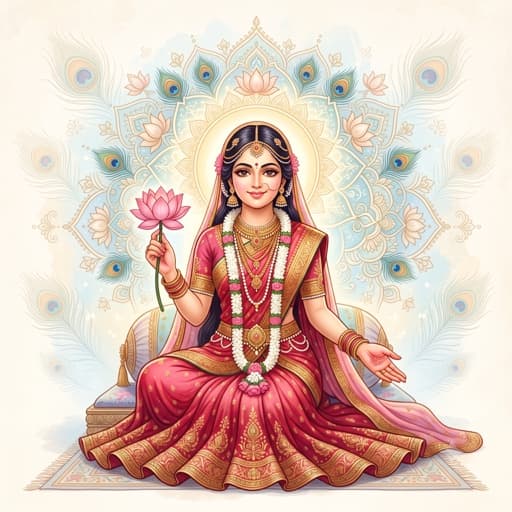
The Radha Chalisa is the devotional poetic expression of love for Shri Radha Rani — the supreme embodiment of pure devotional love (prema-bhakti) in the Krishna devotional tradition. In Vaishnava theology, Radha is not merely Krishna's beloved but the highest expression of his own divine energy (Hladini Shakti, the bliss-giving power). She is the soul of Krishna himself, and their eternal love (Yugal) represents the union of the individual soul (jivatma) with the supreme soul (paramatma). The very name 'Radhe Krishna' is a complete spiritual practice in itself.
The Chalisa narrates Radha's divine birth as the daughter of Vrishabhanu and Kirtida in the village of Raval (or Barsana, in some traditions), her childhood in Barsana, her divine encounters with Krishna in Nandgaon and Vrindavan, the Maha-Raas of full moon nights at the Yamuna's bank, and her eternal companionship with Krishna in the spiritual realm of Goloka. It celebrates her closest companions — the eight principal sakhis (Lalita, Vishakha, Chitra, Indulekha, Champakalata, Rangadevi, Tungavidya, Sudevi) — who eternally serve the divine couple in the kunj-bhavans of Vrindavan.
This Chalisa is recited daily by devotees of the Gaudiya, Pushti Marg, Nimbarka, and Radha Vallabha sampradayas — schools of Hindu devotion that hold Radha as the highest deity, even above Krishna. It is particularly important during Radhashtami (Bhadrapada Shukla Ashtami, marking Radha's appearance day), Janmashtami, Sharad Purnima (the night of the Maha-Raas), and during the Hori-Dol celebrations of Vrindavan. The Chalisa is also recited for marital harmony — since the Radha-Krishna union is considered the ideal of divine love — and for the awakening of devotional sentiment (bhakti-bhava). Pilgrims to Vrindavan, Barsana, Nandgaon, Goverdhan, and Govinda's deities in Jaipur consider this Chalisa essential to their darshan, for it is believed that Krishna's grace flows most readily through Radha's blessing — and the surest way to reach Krishna is through her name and feet.
English Transliteration
|| Doha ||

Shri Radhe Vrishabhanu Suta, Bhaanu Pratap Udaar.
Krishna Charan Mein Vaas Hai, Nityam Brij Aadhaar.

|| Chaupai ||

Jai Jai Radhe Radhe Maa Pyaari.
Vrishabhanu Sutaa Krishn Dulaari.

Kirtidaa Maa Ke Sundar Kanya.
Raaval Mein Pragatin Bhalanya.

Barsaane Ki Pyaari Maa Tum.
Nandgaon Ke Krishna Pyaare Tum.

Yamuna Tat Par Raas Rachaayo.
Radhe Krishna Lagan Lagaayo.

Gopiyaan Sang Tum Raas Rachaai.
Maha-Raas Ki Reet Nibhaai.

Krishna Premamayi Tav Mahima.
Maha Bhakti Ka Bhaav Anokha.

Ladli Lal Hain Saath Sada Hi.
Radha Krishna Yugal Sarwadhaa Hi.

Vrindavan Mein Kunj Sajaaye.
Nitya Bihar Tum Karat Sajaaye.

Mor Mukut Krishn Tav Pyaare.
Tum Charanan Krishna Bhi Vandit Haare.

Prem Roop Tum Tav Maharaani.
Krishna Hriday Mein Tum Vasey Vaani.

Bin Radhe Krishna Bhi Adhure.
Radhe Bin Brij Lok Hi Dhure.

Sakhiyaan Lalita Vishakha Pyaari.
Tum Sang Sada Karat Sevkaari.

Krishn Sang Tum Madhurya Bharte.
Gopi Sang Sab Geet Sunaate.

Nitya Vihaar Krishna Sang Karate.
Vrindaa Devi Sthal Pyaare.

Dham Pavitra Brij Bhoomi Hai.
Radha Krishna Premamayi Hai.

Barsane Ladliji Tum Vaasi.
Bhakt Sab Aate Charanan Daasi.

Kripa Drishti Maa Sab Par Daalo.
Bhakt Maa Hum Charanan Pratipaalo.

Krishn Bhakti Maa Tum Hi Daatri.
Prem Roopa Tum Trijagat Maatri.

Lakhi Karoron Bhakta Tumhaare.
Kripa Tumhri Sab Phal Saare.

Meera Sookara Rasik Mahaane.
Tav Bhakti Mein Sukh Manmaane.

Surdaas Tum Hi Yash Gaaye.
Lakhi Bhakta Tav Charanan Aaye.

Vrindavan Mein Aarti Hote.
Radha Krishna Saath Sukh Hote.

Maa Tumhri Bhakti Bina Sukh Naahi.
Man Sankalp Tav Pad Mein Paahi.

Hey Maa Radhe Daya Karau Ab.
Bhakti Bhaav Hum Mein Bharo Ab.

Gruh Klesh Sab Door Karau Maa.
Pati Pyaar Sahaayak Karau Maa.

Sukhi Daampatya Maa Tum Hi Daatri.
Radhe Naam Lai Sab Sukh Maatri.

Jo Bhakt Tav Charanan Aaye.
Krishna Tabhi Unhe Apnaaye.

Radhe Krishna Yugal Naam Pyaara.
Sakal Manorath Pooran Saara.

Jaap Tav Naam Ka Jo Karai.
Krishna Bhakti Sahaj Pavain Tarai.

Dhanya Dhanya Tum Radhe Hamaari.
Krishna Pyaari Brij Maa Vidhaari.

Jo Yah Path Karai Chaalisa.
Uske Sab Manorath Devain Aasees.

Radhe Krishna Naam Sundar.
Bhakti Bhaav Bharat Hriday Andar.

|| Doha ||

Radhe Krishna Yugal Pyaar, Pavitra Brij Ke Maan.
Bhakt Pukaarai Radhe Maa, Pooran Karahin Sad Daan.

Vrindavan Mein Aarti Karein, Lakhi Karoron Bhakta.
Radhe Krishna Yugal Aap, De Sab Sukh Bhar Yukta.
Verse-by-Verse Meaning
Tap “Show meaning” under any line to read its bhāvārth.
Shri Radhe Vrishabhanu Suta, Bhaanu Pratap Udaar. Krishna Charan Mein Vaas Hai, Nityam Brij Aadhaar.
Show meaningHide meaning
Shri Radha is the daughter of King Vrishabhanu, radiant with a noble, sun-like splendor. She ever dwells at the feet of Shri Krishna and is eternally the very foundation and refuge of Braj.
Jai Jai Radhe Radhe Maa Pyaari. Vrishabhanu Sutaa Krishn Dulaari.
Show meaningHide meaning
Victory, victory to beloved Mother Radhe! Daughter of King Vrishabhanu, she is the most cherished darling of Shri Krishna.
Kirtidaa Maa Ke Sundar Kanya. Raaval Mein Pragatin Bhalanya.
Show meaningHide meaning
The beautiful daughter of Mother Kirtida, she manifested at the village of Raval; by tradition, the word "Bhalanya" here is read to mean an auspicious, blessed child.
Barsaane Ki Pyaari Maa Tum. Nandgaon Ke Krishna Pyaare Tum.
Show meaningHide meaning
You are the beloved presiding Mother of Barsana, and beside you is Krishna, the darling of Nandgaon; these two prominent villages of the Braj-mandal together form the very playground of Radha-Krishna's divine love.
Yamuna Tat Par Raas Rachaayo. Radhe Krishna Lagan Lagaayo.
Show meaningHide meaning
On the banks of the Yamuna the divine Raas Leela was enacted, where the eternal bond of love between Radha and Krishna blossomed.
Gopiyaan Sang Tum Raas Rachaai. Maha-Raas Ki Reet Nibhaai.
Show meaningHide meaning
Together with the gopis you performed the Raas, upholding the sacred tradition of the Maha-Raas.
Krishna Premamayi Tav Mahima. Maha Bhakti Ka Bhaav Anokha.
Show meaningHide meaning
Your glory is suffused with love for Krishna; the spirit of your supreme devotion is utterly unique.
Ladli Lal Hain Saath Sada Hi. Radha Krishna Yugal Sarwadhaa Hi.
Show meaningHide meaning
Ladli (Radha) and Lal (Krishna) are ever together; Radha and Krishna forever remain the eternal divine pair.
Vrindavan Mein Kunj Sajaaye. Nitya Bihar Tum Karat Sajaaye.
Show meaningHide meaning
In Vrindavan the flower-bowers are lovingly adorned, where you perform your eternal, joyous divine sport day after day.
Mor Mukut Krishn Tav Pyaare. Tum Charanan Krishna Bhi Vandit Haare.
Show meaningHide meaning
Krishna, adorned with the peacock-feather crown, is your beloved; even he bows in reverence at your feet, cherishing that honor.
Prem Roop Tum Tav Maharaani. Krishna Hriday Mein Tum Vasey Vaani.
Show meaningHide meaning
You are love itself embodied, the great queen of Braj; you dwell within Krishna's heart as intimately as speech dwells within thought.
Bin Radhe Krishna Bhi Adhure. Radhe Bin Brij Lok Hi Dhure.
Show meaningHide meaning
Without Radha, even Krishna is deemed incomplete; without Radha, all of Braj would be reduced to mere lifeless dust.
Sakhiyaan Lalita Vishakha Pyaari. Tum Sang Sada Karat Sevkaari.
Show meaningHide meaning
Your beloved companions Lalita and Vishakha ever remain devoted, rendering loving service by your side.
Krishn Sang Tum Madhurya Bharte. Gopi Sang Sab Geet Sunaate.
Show meaningHide meaning
With Krishna you fill every moment with sweetness, and together with the gopis, sweet songs of love are sung.
Nitya Vihaar Krishna Sang Karate. Vrindaa Devi Sthal Pyaare.
Show meaningHide meaning
Day after day you sport eternally with Krishna in the beloved sacred realm of Vrindavan, named for Vrinda Devi, the sacred Tulsi.
Dham Pavitra Brij Bhoomi Hai. Radha Krishna Premamayi Hai.
Show meaningHide meaning
The land of Braj is a sacred abode, wholly suffused with the divine love of Radha and Krishna.
Barsane Ladliji Tum Vaasi. Bhakt Sab Aate Charanan Daasi.
Show meaningHide meaning
O Ladliji, you dwell in Barsana; all devotees come to your feet in humble servitude.
Kripa Drishti Maa Sab Par Daalo. Bhakt Maa Hum Charanan Pratipaalo.
Show meaningHide meaning
O Mother, cast your gracious glance upon all; O Mother, nurture and protect us, your devotees, at your feet.
Krishn Bhakti Maa Tum Hi Daatri. Prem Roopa Tum Trijagat Maatri.
Show meaningHide meaning
O Mother, you alone are the giver of devotion to Krishna; embodiment of love, you are the mother of all three worlds.
Lakhi Karoron Bhakta Tumhaare. Kripa Tumhri Sab Phal Saare.
Show meaningHide meaning
Countless millions are seen among your devotees; it is by your grace alone that every fruit of merit is attained.
Meera Sookara Rasik Mahaane. Tav Bhakti Mein Sukh Manmaane.
Show meaningHide meaning
Great rasik devotees like Meerabai and Surdas found the joy their hearts longed for in devotion to you.
Surdaas Tum Hi Yash Gaaye. Lakhi Bhakta Tav Charanan Aaye.
Show meaningHide meaning
Surdas sang of your glory alone; countless devotees have come to your feet.
Vrindavan Mein Aarti Hote. Radha Krishna Saath Sukh Hote.
Show meaningHide meaning
In Vrindavan your aarti is performed, where being in the presence of Radha and Krishna together brings supreme joy.
Maa Tumhri Bhakti Bina Sukh Naahi. Man Sankalp Tav Pad Mein Paahi.
Show meaningHide meaning
O Mother, without devotion to you there is no true joy; may my heart's resolve find its fulfillment at your feet.
Hey Maa Radhe Daya Karau Ab. Bhakti Bhaav Hum Mein Bharo Ab.
Show meaningHide meaning
O Mother Radhe, show your compassion now; fill my heart with devotion this very moment.
Gruh Klesh Sab Door Karau Maa. Pati Pyaar Sahaayak Karau Maa.
Show meaningHide meaning
O Mother, remove every household distress and discord; O Mother, be the helper who nurtures love between husband and wife.
Sukhi Daampatya Maa Tum Hi Daatri. Radhe Naam Lai Sab Sukh Maatri.
Show meaningHide meaning
O Mother, you alone are the giver of a happy married life; by taking the name Radhe alone, every joy is attained.
Jo Bhakt Tav Charanan Aaye. Krishna Tabhi Unhe Apnaaye.
Show meaningHide meaning
Whichever devotee comes to your feet, Krishna at once accepts as his own.
Radhe Krishna Yugal Naam Pyaara. Sakal Manorath Pooran Saara.
Show meaningHide meaning
The paired name Radhe-Krishna is most dear; chanting it fulfills every wholesome desire of the heart.
Jaap Tav Naam Ka Jo Karai. Krishna Bhakti Sahaj Pavain Tarai.
Show meaningHide meaning
Whoever chants your name easily attains devotion to Krishna and crosses over the ocean of worldly existence.
Dhanya Dhanya Tum Radhe Hamaari. Krishna Pyaari Brij Maa Vidhaari.
Show meaningHide meaning
Blessed, thrice blessed are you, our Radhe! Beloved of Krishna, the Mother of Braj who sustains and holds the whole of it within her shelter.
Jo Yah Path Karai Chaalisa. Uske Sab Manorath Devain Aasees.
Show meaningHide meaning
Whoever recites this Chalisa, you bless with your grace and fulfill all their heartfelt wishes.
Radhe Krishna Naam Sundar. Bhakti Bhaav Bharat Hriday Andar.
Show meaningHide meaning
The name Radhe-Krishna is exquisitely beautiful; it fills the heart within with the spirit of devotion.
Radhe Krishna Yugal Pyaar, Pavitra Brij Ke Maan. Bhakt Pukaarai Radhe Maa, Pooran Karahin Sad Daan.
Show meaningHide meaning
The paired love of Radha and Krishna is the sacred honor of Braj; when devotees cry out "Radhe Maa," she graciously grants them the gift of true blessing.
Vrindavan Mein Aarti Karein, Lakhi Karoron Bhakta. Radhe Krishna Yugal Aap, De Sab Sukh Bhar Yukta.
Show meaningHide meaning
In Vrindavan, countless millions of devotees gather to perform the aarti; O divine pair Radha-Krishna, you fill them all abundantly with joy.
Frequently Asked Questions
When should the Radha Chalisa be recited?
The Radha Chalisa is traditionally recited during the morning or evening worship of Radha Rani, and especially on the deity's sacred days. Reciting it daily — or for forty days — is a common devotional practice.
How many verses are there in a Chalisa?
A chalisa is a devotional hymn of forty (chālīs) chaupai verses, usually framed by opening and closing doha couplets, composed here in praise of Radha Rani.
What are the benefits of reciting the Radha Chalisa?
Reciting the Radha Chalisa with faith is traditionally believed to invoke the grace of Radha Rani, steady the mind, and bring courage and inner peace. It is offered as an act of bhakti (devotion), not as a guarantee of any specific material result.