
Khatu Shyam Chalisa
Significance & Importance
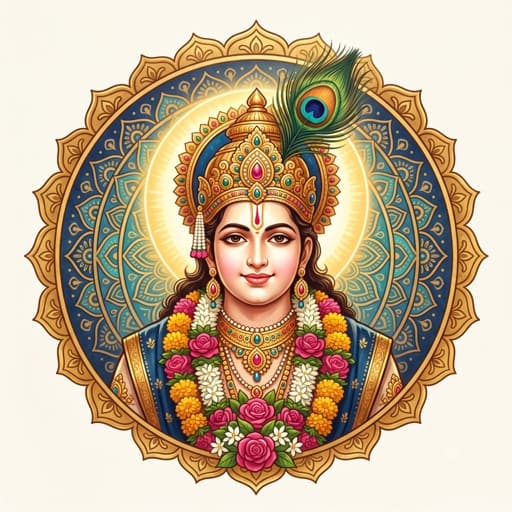
The Khatu Shyam Chalisa is dedicated to one of the most beloved deities of Rajasthan and the wider North Indian devotional landscape — Khatu Shyam Baba, whose origin story comes from the Mahabharata. He was Barbarika, the mighty grandson of Bhima (son of Ghatotkacha) and the strongest warrior of his time, possessing three divine arrows that could destroy any army in moments.
When Lord Krishna learned that Barbarika intended to fight on behalf of the weaker side in the Mahabharata war — meaning whichever army was losing at any moment — Krishna realized this would prolong the war indefinitely. Disguised as a Brahmin, Krishna asked the young warrior for a charitable gift. When Barbarika offered anything, Krishna requested his head. Without hesitation, Barbarika presented his severed head, but requested that he be allowed to witness the great war. Krishna placed the head on a hill from where Barbarika watched the entire 18 days of battle. Pleased by his supreme devotion and selfless sacrifice, Krishna granted him the boon that in the Kaliyuga he would be worshipped under Krishna's own name — Shyam — and would be the saviour of those who have lost hope.
The sacred temple of Khatu Shyam in Sikar district, Rajasthan, draws millions of devotees annually, especially during the Falgun Mela (around February-March) marking the deity's appearance day. The Chalisa is recited by devotees seeking fulfillment of sincere wishes, success when all paths seem closed, family harmony, and victory in just causes. Khatu Shyam is fondly called 'Haare Ka Sahaara' — the refuge of those who have been defeated — making the Chalisa particularly meaningful for those facing despair, financial loss, illness, or life's seemingly insurmountable obstacles.
English Transliteration
|| Doha ||

Shri Guru Charanan Dhyaan Dhar, Sumirau Saainath.
Shyam Charitra Likhan Hetu, Mati Do Hey Shyam Naath.

|| Chaupai ||

Jai Jai Shri Shyam Hamaare.
Kaliyug Mein Tum Sankat Taare.

Naam Anek Tumhare Pyaare.
Barbarik Khaatu Shyam Bichare.

Ghatotkach Aur Bheem Ke Pote.
Morvi Maa Ke Sut Tum Hote.

Ais Vrat Tum Bachpan Mein Theenh.
Treen Baan Vardaan Maa Se Leenh.

In Teen Baanon Mein Apar Shakti.
Jag Mein Phaili Tumhri Bhakti.

Gyaarah Akshauhini Sena Sange.
Maha Bhaarat Ke Jaane Ange.

Socha Yaar Madad Karoon Jaaake.
Haar Rahe Hain Jo Mujh Pyaare.

Maata Aagya Lai Tum Chale.
Shakti Shamshaan Mein Boodh Mile.

Path Mein Mile Krishna Brahman Bani.
Veer Bhakt Ki Pareeksha Thaani.

Maange Sheesh Daan Tum Soonpa.
Gyaani Bhakt Aaj Bhi Tum Roopa.

Krishna Khush Hoye Vardaan Diya.
Kaliyug Mein Shyam Naam Pratyaksh Kiya.

Mere Naam Se Pooja Hoge.
Haare Ka Sahaara Tum Hoge.

Khaatu Naagar Pavitra Bhoomi.
Tumhri Pratima Vahaan Niwooni.

Lakhdaataar Bane Tum Bhakto Ke.
Haare Hue Mann Tum Roop Ke.

Lakhi Karoron Bhakt Tumhaare.
Khaatu Dhaam Mein Aate Pyaare.

Fagun Lakhi Mela Vaha Lagai.
Khaatu Shyam Ki Mahima Gaai.

Neele Ghode Par Suraajait Baithe.
Mor Pankh Mukut Adbhut Saaje.

Shraddha Bhakti Se Jo Aaye.
Unki Sab Manokaamna Phalai.

Nishaan Pataaka Lekar Aate.
Baaba Ke Charanon Mein Naate.

Teen Sava Sou Ki Maala Pehnaai.
Khaatu Naresh Tumhrey Yash Gaai.

Lakhi Roop Tumhre Atisundar.
Nayan Hriday Mein Tav Chhavi Andar.

Kaliyug Mein Tum Tarat Sahaayak.
Kshana Mein Pahunche Bhakt Sahaayak.

Bigde Kaam Banaate Pal Mein.
Dhokha Den Na Bhakto Bhal Mein.

Dhanya Dhanya Tum Shyam Hamaare.
Deenan Ke Tum Param Sahaare.

Jo Bhakt Yahaan Aata Roopa.
Khaali Hath Na Laute Bhoopa.

Mere Bhi Sab Sankat Taaro.
Mujh Anaath Ko Aap Sambhaaro.

Sada Kripa Tumhri Bani Rahe.
Man Mein Tumhri Bhakti Pani Rahe.

Shyam Naam Ka Aaj Sahaara.
Doob Rahi Jeevan Naiya Bechara.

Khaatu Wale Shyam Hamaare.
Ham Sab Bhakton Ke Tum Pyaare.

Kaliyug Mein Avtaar Tumhara.
Lakhi Karoron Ka Sahaara.

Naam Lihi Tumhra Jo Koi.
Uski Bigdi Avashya Hoi.

Maadhav Vinti Karat Tumaari.
Khaatu Shyam Hriday Mein Dhaari.

Jai Jai Khaatu Shyam Hamaare.
Haare Ke Tum Param Sahaare.

|| Doha ||

Khaatu Wale Shyam Ki, Mahima Aprampaar.
Jo Bhi Sumire Aap Ko, Naiya Lagaai Paar.

Fagun Shukla Ekaadashi, Janma Liyo Suchhand.
Bolo Khaatu Shyam Ki, Jai Bole Aanand.
Verse-by-Verse Meaning
Tap “Show meaning” under any line to read its bhāvārth.
Shri Guru Charanan Dhyaan Dhar, Sumirau Saainath. Shyam Charitra Likhan Hetu, Mati Do Hey Shyam Naath.
Show meaningHide meaning
Meditating upon the lotus feet of my Guru, I remember and invoke the divine Master. To compose the sacred life-story of Shyam, O Lord Shyam, grant me the wisdom and clarity of mind.
Jai Jai Shri Shyam Hamaare. Kaliyug Mein Tum Sankat Taare.
Show meaningHide meaning
Victory, victory to our beloved Shri Shyam! In this age of Kali Yuga, you remove every trouble and affliction of your devotees.
Naam Anek Tumhare Pyaare. Barbarik Khaatu Shyam Bichare.
Show meaningHide meaning
You bear many beloved names — Barbarik is one of your own names, and you are lovingly known as the compassionate Khatu Shyam.
Ghatotkach Aur Bheem Ke Pote. Morvi Maa Ke Sut Tum Hote.
Show meaningHide meaning
You are the son of Ghatotkacha and thus the grandson of Bhima; you were born to mother Morvi, the Naga princess.
Ais Vrat Tum Bachpan Mein Theenh. Treen Baan Vardaan Maa Se Leenh.
Show meaningHide meaning
Even in childhood you kept such a rigorous vow of discipline and valor; by your mother's blessing and your own penance you obtained the boon of three infallible arrows.
In Teen Baanon Mein Apar Shakti. Jag Mein Phaili Tumhri Bhakti.
Show meaningHide meaning
Boundless power resided within those three arrows; because of this, devotion to you spread throughout the world.
Gyaarah Akshauhini Sena Sange. Maha Bhaarat Ke Jaane Ange.
Show meaningHide meaning
Eleven Akshauhini (vast divisions) of armies had gathered for the great war; you too set out to become part of that Mahabharata battle.
Socha Yaar Madad Karoon Jaaake. Haar Rahe Hain Jo Mujh Pyaare.
Show meaningHide meaning
You resolved in your heart to go and help whichever side was losing, for the weaker, defeated side was the one dearest to you.
Maata Aagya Lai Tum Chale. Shakti Shamshaan Mein Boodh Mile.
Show meaningHide meaning
Taking your mother's permission you set out for the battlefield; on the way, the Divine Mother (your family Goddess) met you in a cremation ground, disguised as an old woman.
Path Mein Mile Krishna Brahman Bani. Veer Bhakt Ki Pareeksha Thaani.
Show meaningHide meaning
On the way Lord Krishna himself met you, disguised as a Brahmin; he resolved to test the courage and devotion of this brave warrior.
Maange Sheesh Daan Tum Soonpa. Gyaani Bhakt Aaj Bhi Tum Roopa.
Show meaningHide meaning
When the Brahmin (Krishna in disguise) asked for the gift of your very head, you offered it without hesitation; because of this, even today you are revered as the wise and ideal devotee.
Krishna Khush Hoye Vardaan Diya. Kaliyug Mein Shyam Naam Pratyaksh Kiya.
Show meaningHide meaning
Pleased by this supreme sacrifice, Krishna granted you a boon: that in Kali Yuga you would be manifest and worshipped under his own name, "Shyam."
Mere Naam Se Pooja Hoge. Haare Ka Sahaara Tum Hoge.
Show meaningHide meaning
Krishna declared: you shall be worshipped under my own name, and you shall become the refuge and support of the defeated and the hopeless.
Khaatu Naagar Pavitra Bhoomi. Tumhri Pratima Vahaan Niwooni.
Show meaningHide meaning
Khatu town is a sacred land; your divine image (the sanctified head) was established there, making it your revered abode.
Lakhdaataar Bane Tum Bhakto Ke. Haare Hue Mann Tum Roop Ke.
Show meaningHide meaning
You became "Lakhdatar," the one who grants blessings a hundred-thousandfold to devotees; for the broken and despairing hearts, you yourself are the form of solace.
Lakhi Karoron Bhakt Tumhaare. Khaatu Dhaam Mein Aate Pyaare.
Show meaningHide meaning
Hundreds of thousands, even millions, are your devotees; they lovingly come to Khatu Dham for your sacred darshan.
Fagun Lakhi Mela Vaha Lagai. Khaatu Shyam Ki Mahima Gaai.
Show meaningHide meaning
In the month of Phalgun a great fair, thronged by countless devotees, is held there, where all sing the glories of Khatu Shyam.
Neele Ghode Par Suraajait Baithe. Mor Pankh Mukut Adbhut Saaje.
Show meaningHide meaning
You sit majestically mounted upon a dark-blue steed, adorned with a wondrous crown decked with peacock feathers.
Shraddha Bhakti Se Jo Aaye. Unki Sab Manokaamna Phalai.
Show meaningHide meaning
Whoever comes to you with faith and devotion — you fulfill each and every one of their heartfelt wishes.
Nishaan Pataaka Lekar Aate. Baaba Ke Charanon Mein Naate.
Show meaningHide meaning
Devotees arrive carrying the sacred decorated flag (nishaan) and bind themselves in a loving relationship at Baba's feet.
Teen Sava Sou Ki Maala Pehnaai. Khaatu Naresh Tumhrey Yash Gaai.
Show meaningHide meaning
Devotees offer you a great ceremonial garland as a mark of devotion, and, O King of Khatu, they sing of your glory.
Lakhi Roop Tumhre Atisundar. Nayan Hriday Mein Tav Chhavi Andar.
Show meaningHide meaning
Your form appears exceedingly beautiful to behold; your radiant image stays forever enshrined in the eyes and hearts of your devotees.
Kaliyug Mein Tum Tarat Sahaayak. Kshana Mein Pahunche Bhakt Sahaayak.
Show meaningHide meaning
In this Kali Yuga you are the swiftest helper; the moment a devotee calls out, you reach their side to aid them in an instant.
Bigde Kaam Banaate Pal Mein. Dhokha Den Na Bhakto Bhal Mein.
Show meaningHide meaning
You set right the most ruined of tasks in an instant; you never let your good and true devotees down.
Dhanya Dhanya Tum Shyam Hamaare. Deenan Ke Tum Param Sahaare.
Show meaningHide meaning
Blessed, truly blessed are you, our beloved Shyam! You are the supreme refuge of the humble and the afflicted.
Jo Bhakt Yahaan Aata Roopa. Khaali Hath Na Laute Bhoopa.
Show meaningHide meaning
Whichever devotee comes here for your darshan, O King, never returns empty-handed.
Mere Bhi Sab Sankat Taaro. Mujh Anaath Ko Aap Sambhaaro.
Show meaningHide meaning
O Baba, remove all my troubles too; take this helpless, orphaned soul under your own care.
Sada Kripa Tumhri Bani Rahe. Man Mein Tumhri Bhakti Pani Rahe.
Show meaningHide meaning
May your grace remain upon me forever, and may devotion to you continue to deepen and flourish within my heart.
Shyam Naam Ka Aaj Sahaara. Doob Rahi Jeevan Naiya Bechara.
Show meaningHide meaning
Today the very name "Shyam" is my only support; my poor boat of life is sinking, and you alone can ferry it to safety.
Khaatu Wale Shyam Hamaare. Ham Sab Bhakton Ke Tum Pyaare.
Show meaningHide meaning
O our Shyam who resides in Khatu! You are deeply beloved to all of us, your devotees.
Kaliyug Mein Avtaar Tumhara. Lakhi Karoron Ka Sahaara.
Show meaningHide meaning
In this Kali Yuga you have taken manifest form; you are the refuge and support of countless millions of devotees.
Naam Lihi Tumhra Jo Koi. Uski Bigdi Avashya Hoi.
Show meaningHide meaning
Whoever takes your name with devotion — their troubled, ruined affairs are certainly set right.
Maadhav Vinti Karat Tumaari. Khaatu Shyam Hriday Mein Dhaari.
Show meaningHide meaning
This devotee "Madhav" (the composer of this Chalisa) offers his humble prayer to you, holding Khatu Shyam ever enshrined within his heart.
Jai Jai Khaatu Shyam Hamaare. Haare Ke Tum Param Sahaare.
Show meaningHide meaning
Victory, victory to our Khatu Shyam! You alone are the supreme refuge of the defeated and the despairing.
Khaatu Wale Shyam Ki, Mahima Aprampaar. Jo Bhi Sumire Aap Ko, Naiya Lagaai Paar.
Show meaningHide meaning
The glory of Shyam who resides in Khatu is boundless and immeasurable; whoever remembers you with devotion, you ferry their boat of life safely across.
Fagun Shukla Ekaadashi, Janma Liyo Suchhand. Bolo Khaatu Shyam Ki, Jai Bole Aanand.
Show meaningHide meaning
On the eleventh day (Ekadashi) of the bright fortnight of Phalgun, your sacred manifestation (prakatya) took place at Khatu, of your own divine will; devotees joyfully proclaim, "Victory to Khatu Shyam!"
Frequently Asked Questions
When should the Khatu Shyam Chalisa be recited?
The Khatu Shyam Chalisa is traditionally recited during the morning or evening worship of Khatu Shyam Baba, and especially on the deity's sacred days. Reciting it daily — or for forty days — is a common devotional practice.
How many verses are there in a Chalisa?
A chalisa is a devotional hymn of forty (chālīs) chaupai verses, usually framed by opening and closing doha couplets, composed here in praise of Khatu Shyam Baba.
What are the benefits of reciting the Khatu Shyam Chalisa?
Reciting the Khatu Shyam Chalisa with faith is traditionally believed to invoke the grace of Khatu Shyam Baba, steady the mind, and bring courage and inner peace. It is offered as an act of bhakti (devotion), not as a guarantee of any specific material result.