🙏 Shani Chalisa + Aarti — Saturday Evening Service
Last updated: 14 June 2026
Aarti: distinct from Chalisa — this is Shani's evening praise.
5-Step Saturday Evening Temple Service
1
Shani Abhishek
Mustard oil pour — "Om Sham Shanaischaraya Namah" 108 times.
2
Garland Offering
Black flower garland or violet flowers.
3
Lamp
Mustard oil — 5-wick lamp. Facing west.
4
Shani Chalisa
40 Chaupais — read slowly. Then Doha.
5
Shani Aarti
"Jai Jai Shri Shanidev" — 3 rounds of Aarti.
Shani Aarti
Jai Jai Shri Shanidev Bhaktan Hitkari.
Surya Putra Prabhu Chhaya Mahtari.

Shyam Ang Vakra Drishti Chaturbhuj Dhari.
Nilambara Dhari Gridhra Vahan Asavari.

Krishna Vahan Dhanush Baan Sajaye Sain.
Vishvanath Dhanuradhari Yahi Sab Jan Bhai.

Jai Jai Shri Shanidev Bhaktan Hitkari.
Aarti Meaning
"Jai Jai Shri Shanidev Bhaktan Hitkari"
Glory to Shani Dev — who is the benefactor of devotees.
"Surya Putra Prabhu Chhaya Mahtari"
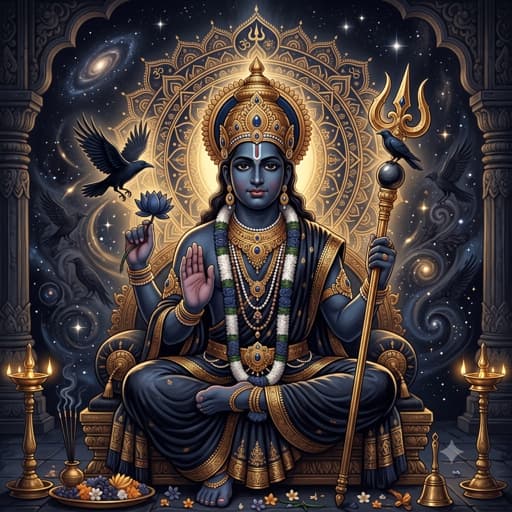
Son of Surya and lord born of Chhaya (Shadow).
"Shyam Ang Vakra Drishti Chaturbhuj Dhari"
Dark-complexioned, oblique gaze, four-armed.
"Nilambara Dhari Gridhra Vahan Asavari"
Clad in blue, riding a vulture.