Dussehra (Vijayadashami) — Victory of Dharma Over Adharma
20 October 2026 · Tuesday
Tithi
Ashwin Shukla Dashami
Auspicious Muhurat · IST
Vijaya muhurat: 20 Oct, 2:08 PM–2:55 PM IST (best for new starts). Aparahna kaal: 1:21 PM–3:42 PM
Tithi Duration…
Abhijit Muhurat…
Sunrise / Sunset…
Source: Vedic Panchang, IST
All timings shown for:…
Festival dates follow the India (IST) Vedic calendar.
Quick Info
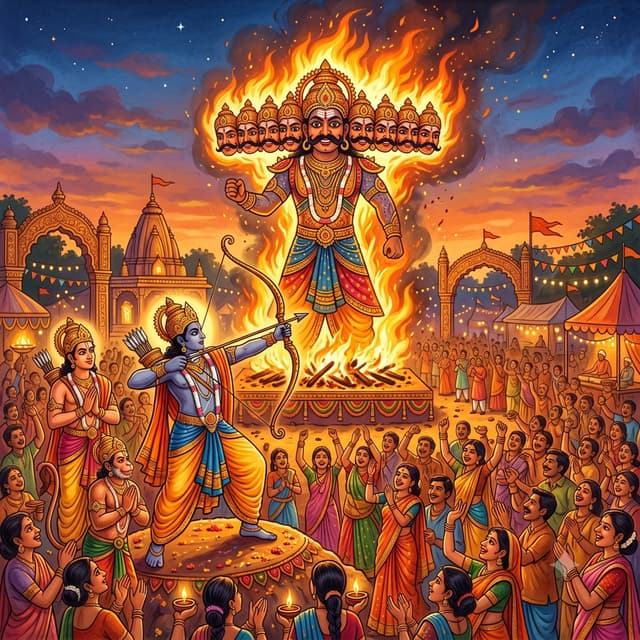
Dussehra — victory of Lord Rama over Ravana. Ravana effigy burning, celebrating triumph of good over evil.
दशहरा — भगवान राम की रावण पर विजय। रावण दहन, बुराई पर अच्छाई की जीत का उत्सव।
About this festival
Dussehra (20 Oct 2026, Ashwin Shukla Dashami) celebrates two foundational victories: Lord Rama killed the ten-headed Ravana on this day, and Goddess Durga slew the buffalo-demon Mahishasura at the end of nine days of cosmic battle. Tall effigies of Ravana, Meghnad, and Kumbhakaran are burnt at sunset; Durga idols are immersed; new ventures, weapons, vehicles and instruments are worshipped (Shastra Puja, Ayudha Puja).
दशहरा (20 अक्टूबर 2026, आश्विन शुक्ल दशमी) दो आधारभूत विजयों का उत्सव है: इसी दिन भगवान राम ने दशमुख रावण का वध किया, और देवी दुर्गा ने नौ दिनों के ब्रह्मांडीय युद्ध के अंत में महिषासुर का संहार किया। सूर्यास्त पर रावण, मेघनाद, कुम्भकर्ण के विशाल पुतले जलाए जाते हैं; दुर्गा-प्रतिमाएँ विसर्जित; नए कार्य, शस्त्र, वाहन, और यन्त्रों की पूजा (शस्त्र पूजा, आयुध पूजा)।
Dussehra (Vijayadashami) 2026 outside India — local timings for USA, UK, Canada, Australia, Singapore & UAEदशहरा (विजयदशमी) 2026 भारत के बाहर — अमेरिका, ब्रिटेन, कनाडा, ऑस्ट्रेलिया, सिंगापुर और यूएई में स्थानीय समय
A tithi begins and ends at the same instant everywhere on Earth — only your local clock reading differs. That is why the same tithi can fall on the previous or the next calendar day where you live, even though the festival date on this page follows the Vedic Panchang, IST.
Classical observance windows — sunrise, midday, afternoon, evening and midnight — are defined by your own sunrise and sunset, not by India's. The table below gives those local values for the major diaspora cities.
तिथि पृथ्वी पर हर स्थान पर एक ही क्षण आरम्भ और समाप्त होती है — केवल आपकी स्थानीय घड़ी का समय भिन्न होता है। इसीलिए वही तिथि आपके यहाँ पिछले या अगले कैलेंडर दिन पड़ सकती है, जबकि इस पृष्ठ की तिथि वैदिक पंचांग (IST) के अनुसार है।
सूर्योदय, मध्याह्न, अपराह्न, प्रदोष और निशीथ जैसे शास्त्रीय काल आपके अपने सूर्योदय-सूर्यास्त से निर्धारित होते हैं, भारत के नहीं। नीचे प्रमुख प्रवासी नगरों के स्थानीय मान दिए गए हैं।
| City | Sunrise | Sunset | Shukla Dashami (local time) |
|---|---|---|---|
| Ujjain, India | 6:25 AM | 5:57 PM | Oct 20, 12:51 PM → Oct 21, 2:13 PM |
| New York, USA | 7:12 AM | 6:08 PM | Oct 20, 3:21 AM → Oct 21, 4:43 AM |
| Chicago, USA | 7:08 AM | 6:01 PM | Oct 20, 2:21 AM → Oct 21, 3:43 AM |
| San Jose (Bay Area), USA | 7:20 AM | 6:23 PM | Oct 20, 12:21 AM → Oct 21, 1:43 AM |
| Toronto, Canada | 7:38 AM | 6:25 PM | Oct 20, 3:21 AM → Oct 21, 4:43 AM |
| London, UK | 7:32 AM | 5:56 PM | Oct 20, 8:21 AM → Oct 21, 9:43 AM |
| Dubai, UAE | 6:19 AM | 5:47 PM | Oct 20, 11:21 AM → Oct 21, 12:43 PM |
| Singapore | 6:47 AM | 6:51 PM | Oct 20, 3:21 PM → Oct 21, 4:43 PM |
| Sydney, Australia | 6:08 AM | 7:12 PM | Oct 20, 6:21 PM → Oct 21, 7:43 PM |
Overseas communities differ: some follow the India Panchang date, others observe on the local day the tithi prevails. Confirm the observance day with your local temple or community.
विदेश में समुदायों की परम्परा भिन्न है: कुछ भारत के पंचांग की तिथि मानते हैं, कुछ उस स्थानीय दिन पर व्रत रखते हैं जब तिथि व्याप्त हो। अपने स्थानीय मन्दिर या समुदाय से व्रत का दिन अवश्य सुनिश्चित करें।
Quick Facts
- Date 2026: 20 Oct (Ashwin Shukla Dashami) — Tuesday
- Patron deities: Lord Rama, Devi Durga, Devi Aparajita
- Day 10 of Sharad Navratri (Navratri ends; Vijaya = victory celebrations begin)
- Sacred tree: Shami / Aapta — leaves exchanged as 'gold' between elders
- Auspicious for: new business launch, vehicle purchase, weapon-respecting professions
Dussehra Puja & Ravana Dahan Vidhiदशहरा पूजा एवं रावण दहन विधि
- Morning bath; wear new or freshly washed clothes (red/gold for women, white/saffron for men)
- Aparajita Puja: clean the puja altar; install Devi Aparajita (Durga's victorious form) image
- Shastra/Ayudha Puja: clean and worship all tools, weapons, instruments, vehicles with kumkum tilak + flowers
- Recite Aparajita Stotram and chapters from Devi Mahatmya (especially Adhyaya 13 — phala-shruti)
- Shami/Aapta tree worship: visit a Shami tree, offer water + akshat, pluck a few leaves
- Exchange Shami leaves with elders saying 'Sone-Pana' (gold-coins) — symbolic of prosperity
- Vijaya muhurat: begin any deferred new venture, sign documents, start lessons (especially music/martial arts)
- Sunset ravan-dahan: gather at the maidan; effigy burning of Ravana, Meghnad, Kumbhakaran
- Durga visarjan: if Navratri kalash + Durga pratima at home, immerse with kirtan
- Evening: distribute jalebi, fafda, pedha; visit elders for blessings
- प्रातः स्नान; नए या पवित्र वस्त्र (स्त्रियाँ लाल/स्वर्ण; पुरुष श्वेत/केसरिया)
- अपराजिता पूजा: पूजा-पीठ शुद्ध करें; देवी अपराजिता (दुर्गा का विजय-स्वरूप) स्थापित
- शस्त्र/आयुध पूजा: समस्त औजार, शस्त्र, यन्त्र, वाहन को कुमकुम-तिलक + पुष्प-अर्पण
- अपराजिता स्तोत्र एवं देवी माहात्म्य के अध्याय (विशेषतः अध्याय 13 — फल-श्रुति) का पाठ
- शमी/आपटा वृक्ष पूजा: शमी वृक्ष पर जल + अक्षत; कुछ पत्तियाँ तोड़ें
- शमी-पत्र बड़ों से 'सोने-पाना' कह कर आदान-प्रदान — समृद्धि-प्रतीक
- विजय मुहूर्त: कोई स्थगित नया कार्य आरम्भ करें, दस्तावेज हस्ताक्षर, पाठ-शिक्षा प्रारम्भ (विशेषतः संगीत/मार्शल आर्ट)
- सूर्यास्त रावण-दहन: मैदान में रावण, मेघनाद, कुम्भकर्ण के पुतलों का दहन
- दुर्गा विसर्जन: यदि घर पर नवरात्रि कलश + दुर्गा प्रतिमा हो, कीर्तन सहित विसर्जन
- सायं: जलेबी, फाफड़ा, पेड़ा का वितरण; बड़ों के आशीर्वाद हेतु भ्रमण
Mantrasमंत्र
अपराजिते जये पुण्ये दुर्गे शक्तिप्रदायिनि । रामेण प्रार्थिते शुद्धे यथा देवि तथा भव ॥
Aparājite jaye puṇye Durge śakti-pradāyini, Rāmeṇa prārthite śuddhe yathā devi tathā bhava.
O Aparajita, ever-victorious, holy power-giver Durga — as Rama prayed to thee before the war, manifest in the same form for me. (Aparajita Stotram opening; chanted before any new beginning on Dussehra)
हे अपराजिता, सदा-विजयिनी, पवित्र शक्ति-दात्री दुर्गा — युद्ध से पूर्व राम ने जिस रूप में प्रार्थना की, मुझ हेतु भी वही रूप प्रकट करो। (अपराजिता स्तोत्र प्रारम्भ; दशहरा पर किसी भी नए आरम्भ से पूर्व जप)
↻ Once at sankalp
ॐ ह्रीं श्रीं दुं दुर्गायै नमः ॥
Om Hrīṁ Śrīṁ Duṁ Durgāyai Namaḥ
Durga's 6-syllable victory mantra. Recite 108 times before sunset to invoke courage, confidence, and Devi's victorious blessing for all year ahead.
दुर्गा का 6-अक्षरी विजय-मंत्र। सूर्यास्त से पूर्व 108 जप — आगामी वर्ष हेतु साहस, आत्म-विश्वास, एवं देवी का विजय-आशीर्वाद।
↻ 108 times
Two Victories on the Same Dayएक ही दिन — दो विजयें
**Rama's victory:** Per the Valmiki Ramayana, Lord Rama crossed the ocean to Lanka, fought Ravana for ten days, and on the tenth day (Vijayadashami) loosed the Brahmastra that pierced Ravana's chest. The arrow had been chanted with Aparajita Devi's protection — won the night before from Rama's worship of the Shami tree (where his weapons were kept).
**Durga's victory:** Per the Devi Mahatmya, the buffalo-demon Mahishasura fought Devi for nine days and nine nights. On the tenth day Durga (riding her lion) decapitated him with her trishul. The Vedic earth was freed from asuric dominion.
Both stories converge on a single principle: Dharma may be threatened, even appear defeated, for nine days — but on the tenth day, when courage and devotion are sustained without break, victory is inevitable. The Vijaya Muhurat (~2 PM) is the exact transit moment when both victories were sealed — and is therefore considered the most auspicious window of the year for new beginnings.
**राम की विजय:** वाल्मीकि रामायण के अनुसार भगवान राम ने सागर पार कर लंका पहुँचकर रावण से दस दिन युद्ध किया। दसवें दिन (विजयादशमी) ब्रह्मास्त्र छोड़ा जो रावण के वक्ष को बेधकर निकल गया। यह बाण अपराजिता देवी की रक्षा से मन्त्रित था — एक रात पहले शमी-वृक्ष (जहाँ राम के शस्त्र रखे थे) की पूजा से प्राप्त।
**दुर्गा की विजय:** देवी माहात्म्य के अनुसार महिषासुर ने देवी से नौ दिन-रात युद्ध किया। दसवें दिन दुर्गा (सिंहारूढ़) ने त्रिशूल से उसका मस्तक काटा। वैदिक पृथ्वी आसुरी अधिकार से मुक्त हुई।
दोनों कथाएँ एक सिद्धान्त पर मिलती हैं: धर्म नौ दिन तक संकट में, यहाँ तक कि पराजित दिख सकता है — किंतु दसवें दिन, यदि साहस-भक्ति अखंड रहे, विजय अनिवार्य है। विजय मुहूर्त (लगभग 2:00 PM) ठीक वह संक्रमण-क्षण है जब दोनों विजयें मुहर लगीं — इसीलिए वर्ष का सर्वोच्च शुभ-मुहूर्त नए आरम्भों हेतु।
Frequently Asked Questionsअक्सर पूछे जाने वाले प्रश्न
What tithi does Dussehra fall on, and what are the two victories it celebrates?
Dussehra falls on Ashwin Shukla Dashami — the tenth day of Sharad Navratri. It celebrates two simultaneous victories: Lord Rama's killing of the ten-headed Ravana on this day, and Goddess Durga's slaying of the buffalo-demon Mahishasura after nine days of cosmic battle.
दशहरा किस तिथि को पड़ता है और यह किन दो विजयों का उत्सव मनाता है?
दशहरा आश्विन शुक्ल दशमी — शरद नवरात्रि के दसवें दिन — को पड़ता है। यह दो एक साथ हुई विजयों का उत्सव है: इसी दिन भगवान राम ने दशमुख रावण का वध किया और देवी दुर्गा ने नौ दिनों के युद्ध के बाद महिषासुर का संहार किया।
What is Vijaya Muhurat and why is it considered the year's best time to start something new?
Vijaya Muhurat falls in the Aparahna kaal — around 2 PM on Dussehra. Tradition holds that both Rama's Brahmastra and Durga's trishul struck their decisive blows at this exact transit moment. Beginning a new venture, signing agreements, or starting a course during this window is considered supremely auspicious.
विजय मुहूर्त क्या है और इसे नए आरम्भ के लिए वर्ष का सर्वश्रेष्ठ समय क्यों माना जाता है?
विजय मुहूर्त दशहरा के अपराह्न काल — लगभग दोपहर 2:00 PM — में पड़ता है। परम्परा मानती है कि राम का ब्रह्मास्त्र और दुर्गा का त्रिशूल ठीक इसी संक्रमण-क्षण पर निर्णायक रहे। इस काल में नया कार्य, दस्तावेज़ हस्ताक्षर या पाठ आरम्भ करना सर्वोच्च शुभ माना जाता है।
What is Shastra Puja and Ayudha Puja — who observes it and what items are worshipped?
Shastra Puja (North India) and Ayudha Puja (South India) are the ritual worship of tools, weapons, vehicles, and instruments on Dussehra. Soldiers, farmers, artisans, doctors, and musicians all clean and apply kumkum tilak to their implements — honouring the instrument as an extension of dharmic work.
शस्त्र पूजा और आयुध पूजा क्या है — इसे कौन करता है और किन वस्तुओं की पूजा होती है?
शस्त्र पूजा (उत्तर भारत) और आयुध पूजा (दक्षिण भारत) दशहरा पर औज़ारों, शस्त्रों, वाहनों और यंत्रों की अनुष्ठानिक पूजा है। सैनिक, किसान, कारीगर, चिकित्सक और संगीतकार सभी अपने उपकरणों को स्वच्छ कर कुमकुम-तिलक लगाते हैं — उपकरण को धर्म-कार्य का अंग मानकर पूजते हैं।
Why is the Shami tree exchanged as 'gold' on Dussehra?
Per the Mahabharata, the Pandavas concealed their weapons in a Shami tree during their year of incognito exile and reclaimed them on Vijayadashami before battle. The tree is therefore revered as Aparajita Devi's vessel of protection. Exchanging its leaves with elders while saying 'Sone-Pana' symbolises shared prosperity and victory.
दशहरा पर शमी वृक्ष की पत्तियाँ 'सोना' के रूप में क्यों आदान-प्रदान की जाती हैं?
महाभारत के अनुसार पांडवों ने अज्ञातवास के दौरान अपने शस्त्र शमी वृक्ष में छुपाए और विजयदशमी पर युद्ध से पहले उन्हें निकाला। इसीलिए शमी को अपराजिता देवी की रक्षा का पात्र माना जाता है। बड़ों के साथ 'सोने-पाना' कहकर पत्तियाँ देना समृद्धि और विजय का प्रतीकात्मक संकेत है।
Is Dussehra only about Ravana dahan, or does Durga visarjan also happen on the same day?
Both occur together. Ravana, Meghnad, and Kumbhakaran effigies are burnt at sunset, marking Rama's victory. Simultaneously, Durga idols installed during the nine-day Navratri are taken in procession for immersion (visarjan). The day is therefore the culmination of both the Shakti tradition and the Ram-bhakti tradition.
क्या दशहरा केवल रावण दहन तक सीमित है, या दुर्गा विसर्जन भी उसी दिन होता है?
दोनों एक साथ होते हैं। सूर्यास्त पर रावण, मेघनाद और कुम्भकर्ण के पुतले जलाए जाते हैं — राम की विजय का प्रतीक। साथ-साथ नौ-दिवसीय नवरात्रि में स्थापित दुर्गा प्रतिमाएँ विसर्जन जुलूस में ले जाई जाती हैं। इस प्रकार यह दिन शक्ति-परम्परा और राम-भक्ति दोनों का समापन है।