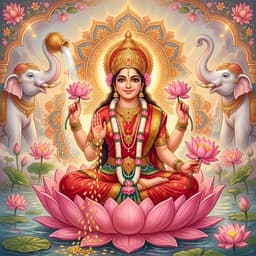
Lakshmi Mantra
लक्ष्मी मंत्र
Deity: Goddess Lakshmi
Source: Traditional Sri Vidya
Sanskrit (Devanagari)
ॐ श्रीं महालक्ष्म्यै नमः
Transliteration
Om Śrīṃ Mahālakṣmyai Namaḥ
Meaning
Salutations to Goddess Mahalakshmi
Significance
The mantra "Om Śrīṃ Mahālakṣmyai Namaḥ" salutes Mahālakṣmī, the goddess of abundance, auspiciousness, and well-being, and the eternal consort of Viṣṇu. "Śrīṃ" is her bīja (seed) syllable, carrying the energy of Śrī — grace, prosperity, and inner richness. Drawn from the Śrī-Vidyā tradition and beloved in the worship of the Divine Mother, it is chanted, by long-standing custom, to invite prosperity, harmony, and the goddess's gracious blessings into one's home and life.
Benefits
- Traditionally chanted to invite prosperity, abundance, and auspiciousness
- Believed to draw the gracious blessings of Goddess Mahālakṣmī into the home
- Cultivates gratitude, contentment, and an inner sense of richness
- Fosters harmony, well-being, and a sāttvic, dharmic use of wealth
- Anchors a devotional daily remembrance of the Divine Mother
How to Chant
- Bathe and sit on a clean āsana before an image of Mahālakṣmī, spine upright
- Settle the breath; light a lamp and, if you wish, offer a lotus or red flowers
- Chant "Om Śrīṃ Mahālakṣmyai Namaḥ" 108 times on a kamalgaṭṭā (lotus-seed) or tulsī mālā
- Hold a feeling of gratitude and devotion rather than mere desire for gain
- Close with a minute of stillness, resolving to share and use prosperity righteously
Questions and Answers
What is the meaning of Om Shreem Mahalakshmyai Namaha?
It means "I bow to Goddess Mahālakṣmī." "Śrīṃ" is her seed syllable, embodying grace and prosperity, and the mantra is an offering of reverence to the goddess of abundance and auspiciousness.
How many times should the Lakshmi mantra be chanted?
A traditional round is 108 times on a mālā, often kept up daily. If time is short, 11 or 21 attentive repetitions are valued — devotion and gratitude matter more than the count.
What is the best time and day to chant the Lakshmi mantra?
Fridays are traditionally dedicated to Lakshmī, and Dīpāvalī is especially auspicious. The pre-dawn or early-evening hours suit her worship, though it may be chanted any time with a settled, grateful mind.
Who can chant the Lakshmi mantra?
Anyone may chant it. The mantra of Mahālakṣmī is open to all — of any age, gender, or background — who approach the Divine Mother with reverence and a grateful heart. Sincere devotion is the only qualification.
Does chanting the Lakshmi mantra guarantee wealth?
No. In the tradition the mantra is a devotional practice that invites the goddess's grace, gratitude, and auspiciousness — it is not a guarantee of money. True prosperity is held to grow alongside honest effort, contentment, and dharmic living.