

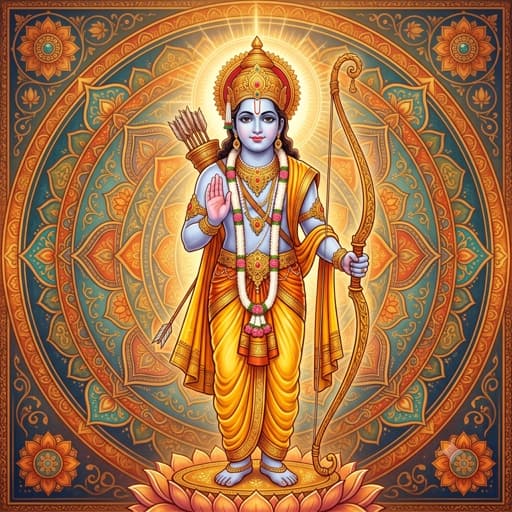
Raghupati Raghav Raja Ram
Significance & Importance
'Raghupati Raghav Raja Ram' is arguably the most historically significant bhajan in Indian culture, forever associated with Mahatma Gandhi and the Indian independence movement. Originally composed by the 17th-century Vaishnavite poet Sri Lakshmanacharya, the bhajan gained worldwide recognition when Gandhi adopted it as the closing prayer of his daily prayer meetings during the freedom struggle.
During the Salt March of 1930, the Quit India movement, and countless peaceful protests, this bhajan rang out as marchers faced colonial oppression with spiritual resolve rather than violence.
The bhajan itself is deceptively simple. It addresses Rama as 'Raghupati' (Lord of the Raghu dynasty) and 'Patit Pavan' (uplifter of the fallen) — emphasizing that the divine purpose is not to reward the powerful but to uplift the downtrodden. The phrase 'Patit Pavan Sita Ram' carries the revolutionary idea that God's primary role is to redeem and purify those whom society has cast aside.
Beyond its association with Gandhi, this bhajan holds deep spiritual significance in the Rama Bhakti tradition. It describes Rama's beautiful dark-complexioned form (Meghashyam — cloud-colored), connects him to sacred symbols like the Ganga, Tulsi plant, and Shaligrama stone, and affirms his bond with devotees (Bhagat-janpriya — beloved of devotees). The repetitive structure creates a meditative rhythm that calms the mind and deepens concentration — a quality that made it ideal for Gandhi's walking meditations.
Today this bhajan is sung in schools, ashrams, temples, and national commemorations across India, serving as a living bridge between devotional practice and the values of dignity, non-violence, and service to all.
English Transliteration
Raghupati Raghav Raja Ram
Patit Pavan Sita Ram

Sundar Vigrah Meghashyam
Ganga Tulsi Shaligram

Raghupati Raghav Raja Ram
Patit Pavan Sita Ram

Bhadragirishwar Sita Ram
Bhagat Jan Priya Sita Ram

Raghupati Raghav Raja Ram
Patit Pavan Sita Ram

Janaki Ramana Sita Ram
Jai Jai Raghav Sita Ram

Raghupati Raghav Raja Ram
Patit Pavan Sita Ram