
Ganesha Aarti (गणेश जी की आरती)
Typically performed at the beginning of any ceremony or new task to remove obstacles
About this Aarti
Devotional prayer to Lord Ganesha, the remover of obstacles and lord of wisdom, performed at the start of rituals and ceremonies.
Typically performed at the beginning of any ceremony or new task to remove obstacles
One of the most widely performed aartis in Hinduism. Ganesha is worshipped as the remover of obstacles and the lord of beginnings.
Significance & Importance
The Ganesha Aarti holds a place of paramount importance in Hindu worship. Lord Ganesha, known as Vighnaharta (remover of obstacles), is the first deity invoked before any sacred ritual, ceremony, or new endeavor in the Hindu tradition. This aarti, beginning with the iconic words 'Jai Ganesh Jai Ganesh Deva,' is one of the most universally recognized devotional hymns across India and the Hindu diaspora worldwide.
The tradition of performing Ganesha Aarti dates back centuries and is rooted in the Puranic narrative where Lord Brahma, Vishnu, and Shiva collectively blessed Ganesha with the honor of being worshipped first among all deities. This is why every Hindu puja, wedding, housewarming, or business inauguration begins with a prayer to Ganesha.
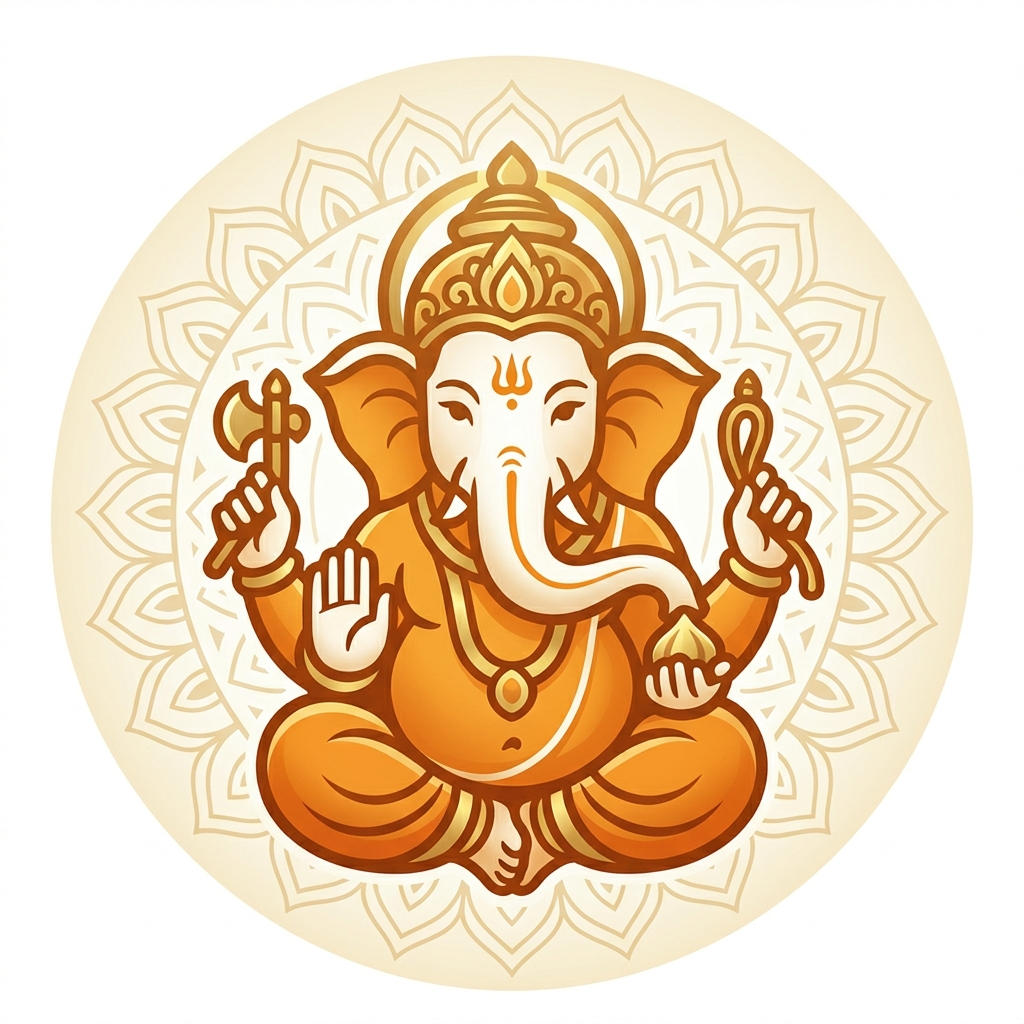
The aarti describes Ganesha's divine attributes — his single tusk symbolizing sacrifice and focus, his four arms representing the four aspects of the subtle body (mind, intellect, ego, and consciousness), the sindoor on his forehead signifying auspiciousness, and his mount, the mouse, representing controlled desires. Each verse is not merely praise but a meditation on the deeper philosophical significance of the deity's form.
Reciting this aarti with devotion is believed to bring clarity of thought, remove obstacles from one's spiritual and worldly path, and invite prosperity and wisdom into the household. It is especially significant during Ganesh Chaturthi, the ten-day festival celebrating Ganesha's birth, when millions of devotees across India sing this aarti in homes, temples, and public pandals.
English Transliteration
Jai Ganesh Jai Ganesh, Jai Ganesh Deva,
  Mata Jaaki Parvati, Pita Mahadeva.
  Ek Dant Dayavant, Chaar Bhuja Dhaari,
  Maathe Sindoor Sohe, Moose Ki Savaari.

  Jai Ganesh Jai Ganesh, Jai Ganesh Deva.
  Mata Jaaki Parvati, Pita Mahadeva.

  Paan Chadhe Phool Chadhe, Aur Chadhe Meva,
  Ladduwan Ka Bhog Lage, Sant Karein Seva.

  Jai Ganesh Jai Ganesh, Jai Ganesh Deva,
  Mata Jaaki Parvati, Pita Mahadeva.

  Andhan Ko Aankh Det, Kodhin Ko Kaaya,
  Baanjhan Ko Putra Det, Nirdhan Ko Maya.

  Jai Ganesh Jai Ganesh, Jai Ganesh Deva,
  Mata Jaaki Parvati, Pita Mahadeva.

  'Soor' Shyam Sharan Aaye, Safal Keeje Seva,
  Mata Jaaki Parvati, Pita Mahadeva.

  Jai Ganesh Jai Ganesh, Jai Ganesh Deva,
  Mata Jaaki Parvati, Pita Mahadeva.

  Deenan Ki Laaj Rakho, Shambhu Sutkari,
  Kamna Ko Pooran Karo, Jaoon Balihari.

  Jai Ganesh Jai Ganesh, Jai Ganesh Deva,
  Mata Jaaki Parvati, Pita Mahadeva.

  Bhagwan Ganesh Ki Jai, Parvati Ke Lalla Ki Jai, Om Gam Ganapataye Namah

  Ganeshji Ki Aarti Ke Baad Karein Ganesh Vandana

  Varnaanaam Arthasanghaanaam Rasaanaam Chhandasaam Api,
  Mangalaanaam Cha Karttaarau Vande Vaani Vinaayakau.

  Gajaananam Bhoota Ganaadi Sevitam,
  Kapittha Jambu Phala Chaaru Bhakshanam.

  Umaasutam Shoka Vinaasha Kaarakam,
  Namaami Vighneshwara Paada Pankajam.
Verse-by-Verse Meaning
Tap “Show meaning” under any line to read its bhāvārth.
Jai Ganesh Jai Ganesh, Jai Ganesh Deva, / Mata Jaaki Parvati, Pita Mahadeva.
Show meaningHide meaning
Victory, victory, victory to Lord Ganesha! His mother is Parvati and his father is Mahadeva (Lord Shiva). (This is the refrain/teka, repeated throughout the aarti.)
Ek Dant Dayavant, Chaar Bhuja Dhaari, / Maathe Sindoor Sohe, Moose Ki Savaari.
Show meaningHide meaning
You are the single-tusked (Ekadanta) and compassionate one, bearer of four arms. Vermilion (sindoor) graces your forehead, and the mouse is your mount.
Jai Ganesh Jai Ganesh, Jai Ganesh Deva. / Mata Jaaki Parvati, Pita Mahadeva.
Show meaningHide meaning
(Refrain — repeated.)
Paan Chadhe Phool Chadhe, Aur Chadhe Meva, / Ladduwan Ka Bhog Lage, Sant Karein Seva.
Show meaningHide meaning
Betel leaves are offered to you, flowers are offered, and dry fruits too; laddus are offered as bhog (sacred food), and the saints render service to you.
Jai Ganesh Jai Ganesh, Jai Ganesh Deva, / Mata Jaaki Parvati, Pita Mahadeva.
Show meaningHide meaning
(Refrain — repeated.)
Andhon Ko Aankh Det, Kodhrin Ko Kaaya, / Baanjhan Ko Putra Det, Nirdhan Ko Maya.
Show meaningHide meaning
You grant sight to the blind and a healthy body to those afflicted with leprosy; you give children to the childless and wealth to the poor. (That is, in your compassion you remove the sufferings of devotees.)
Jai Ganesh Jai Ganesh, Jai Ganesh Deva, / Mata Jaaki Parvati, Pita Mahadeva.
Show meaningHide meaning
(Refrain — repeated.)
'Soor' Shyam Sharan Aaye, Safal Keeje Seva, / Mata Jaaki Parvati, Pita Mahadeva.
Show meaningHide meaning
The poet Surdas says: O Lord (Shyam/Master), I have come to take refuge in you; make this service (devotion) of mine fruitful. His mother is Parvati and his father is Mahadeva.
Jai Ganesh Jai Ganesh, Jai Ganesh Deva, / Mata Jaaki Parvati, Pita Mahadeva.
Show meaningHide meaning
(Refrain — repeated.)
Deenan Ki Laaj Rakho, Shambhu Sutkari, / Kamna Ko Pooran Karo, Jaoon Balihari.
Show meaningHide meaning
O son of Shambhu (Shiva), protect the honour of the lowly and distressed; fulfil my desires — I offer myself wholly to you (balihari).
Jai Ganesh Jai Ganesh, Jai Ganesh Deva, / Mata Jaaki Parvati, Pita Mahadeva.
Show meaningHide meaning
(Refrain — repeated.)
Bhagavan Ganesh Ki Jai, Parvati Ke Lalla Ki Jai, Om Gam Ganapataye Namah
Show meaningHide meaning
Victory to Lord Ganesha, victory to the beloved son (lalla) of Parvati! "Om Gam Ganapataye Namah" is the seed-mantra (bija mantra) of Ganapati, by which one salutes Lord Ganesha. (Present in lyricsHi; rendered here for English.)
Ganeshji Ki Aarti Ke Baad Karein Ganesh Vandana
Show meaningHide meaning
(An instruction line: after the aarti, recite the Ganesha Vandana given below.)
Varnaanaam Artha-sanghaanaam Rasaanaam Chhandasaam Api, / Mangalaanaam Cha Karttaarau Vande Vaani-Vinaayakau.
Show meaningHide meaning
I bow to Vaani (Goddess Saraswati) and Vinayaka (Ganesha), who together are the creators of letters, of clusters of meanings, of poetic flavours (rasas), of metres (chhandas), and of all that is auspicious.
Gajaananam Bhuta-ganaadi Sevitam, / Kapittha Jambu Phala Chaaru Bhakshanam.
Show meaningHide meaning
To the elephant-faced one, served by the hosts of beings (Shiva's ganas), who delightfully partakes of beautiful fruits like the wood-apple (kapittha) and the jamun (jambu) —
Umaasutam Shoka Vinaasha-kaarakam, / Namaami Vighneshvara Paada Pankajam.
Show meaningHide meaning
The son of Uma (Parvati), the destroyer of sorrow, the Lord of obstacles (Vighneshvara) — I bow to the lotus feet of that Ganesha.
More aartis you may love
Find an aarti by occasion
Frequently Asked Questions
When should the Ganesha Aarti be recited?
Typically performed at the beginning of any ceremony or new task to remove obstacles
What are the benefits of reciting the Ganesha Aarti?
Reciting the Ganesha Aarti with devotion is traditionally believed to invoke the grace of Ganesha, steady the mind, dispel negativity, and create an auspicious, sattvic atmosphere at home. It is offered as an act of bhakti (loving devotion) rather than for any guaranteed material result.
Where can I read the complete Ganesha Aarti lyrics?
VedKosh provides the complete Ganesha Aarti lyrics dedicated to Ganesha (गणेश) in both Hindi and English (with transliteration for regional readers), along with its meaning and a printable/downloadable version.