
Batu Caves — Sri Subramaniar Murugan Temple, Malaysia
Location
Limestone hill, Gombak District, 13 km north of Kuala Lumpur
City
Selangor, Malaysia
Deity
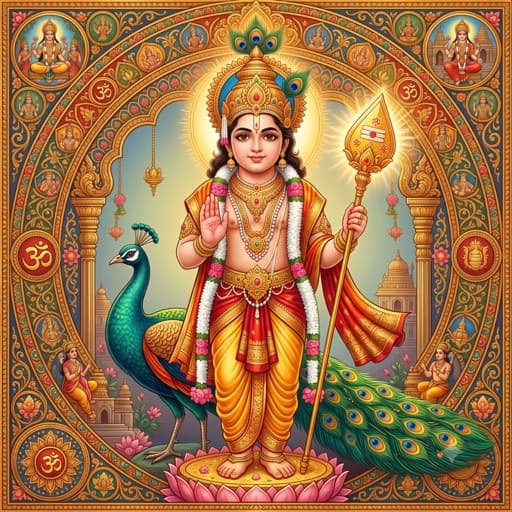
Lord Murugan (Subramanya / Kartikeya), six-faced son of Shiva
Temple Type
Cave Shrine Complex — Murugan / Tamil-Hindu Pilgrimage Centre — Malaysia's Largest Hindu Temple
42.7 m golden Murugan statue (world's 2nd tallest); 272 rainbow steps; 400-million-year-old limestone caves; Temple Cave (Cathedral Cave) principal sanctuary; Thaipusam festival (1.5 million devotees annually); Vel-shaped natural cave entrance; Malaysia's largest Hindu temple; founded 1891 by K. Thamboosamy Pillai; honorary Arupadai Veedu Murugan abode in diaspora
Significance
Batu Caves is the foremost Hindu pilgrimage site in Malaysia and one of the most important Murugan temples outside India. The complex centres on a series of natural limestone caves — over 400 million years old — with the largest, the Temple Cave (Cathedral Cave), housing the principal Murugan shrine. The site is presided over by a colossal 42.7-metre golden statue of Lord Murugan at the base of the 272 rainbow-coloured steps leading up to the cave entrance — the second-tallest Murugan statue in the world. Founded as a temple in 1891 by K. Thamboosamy Pillai, a Tamil trader inspired by the Vel-shaped cave entrance resembling Murugan's spear, Batu Caves became the spiritual heart of Malaysia's Tamil-Hindu community, who form approximately 85% of Malaysian Hindus. The temple is most famous worldwide for hosting the annual Thaipusam festival, when over 1.5 million devotees ascend the steps carrying kavadi (devotional burdens) in honour of Lord Murugan — the largest Thaipusam celebration outside India.
Legend & History
K. Thamboosamy Pillai consecrated the principal Murugan idol inside the main cave in 1891 after observing that the cave's vel-shaped entrance perfectly mirrored Lord Murugan's divine spear, the Vel — the weapon given to him by his mother Goddess Parvati to vanquish the asura Soorapadman. According to Tamil-Hindu tradition, Murugan resides in six sacred abodes (Arupadai Veedu) across Tamil Nadu, and Batu Caves is honoured as a seventh abode of devotion in the Malaysian diaspora. During Thaipusam (Tamil month of Thai, full moon day), devotees fulfil vows by piercing their bodies with vel skewers and carrying ornate kavadi structures up the 272 steps in trance-like devotion — a practice rooted in the Skanda Purana's account of Idumban, Murugan's first kavadi-bearer. The festival's emotional intensity, combined with the dramatic limestone cathedral setting, makes Batu Caves Thaipusam one of the most photographed Hindu rituals in the world.
Thaipusam (January/February — Tamil month of Thai, full moon day) is the spiritual peak; otherwise November to February (dry, cooler season); early morning to avoid crowds and heat; macaque monkeys at the steps — secure belongings
From Kuala Lumpur city centre: 13 km north / 25 minutes by car or Grab. KTM Komuter train (Batu Caves Line) runs directly to Batu Caves station, located at the temple base. From KLIA airport: approximately 75 km / 1 hour by taxi. Modest dress required for cave entry (no shorts, shoulders covered); free sarong rental available at the entrance.
Frequently Asked Questionsअक्सर पूछे जाने वाले प्रश्न
Where is Batu Caves — Sri Subramaniar Murugan Temple, Malaysia located?
Batu Caves — Sri Subramaniar Murugan Temple, Malaysia (बातू केव्स — श्री सुब्रमण्यर मुरुगन मंदिर, मलेशिया) is located at Limestone hill, Gombak District, 13 km north of Kuala Lumpur, in Malaysia, India. It is a revered Hindu temple.
बातू केव्स — श्री सुब्रमण्यर मुरुगन मंदिर, मलेशिया कहाँ स्थित है?
बातू केव्स — श्री सुब्रमण्यर मुरुगन मंदिर, मलेशिया Limestone hill, Gombak District, 13 km north of Kuala Lumpur, मलेशिया (भारत) में स्थित है। यह एक पूजनीय हिंदू मंदिर है।
Which deity is worshipped at Batu Caves — Sri Subramaniar Murugan Temple, Malaysia?
The principal deity worshipped at Batu Caves — Sri Subramaniar Murugan Temple, Malaysia is Lord Murugan (Subramanya / Kartikeya), six-faced son of Shiva.
बातू केव्स — श्री सुब्रमण्यर मुरुगन मंदिर, मलेशिया में किस देवता की पूजा होती है?
बातू केव्स — श्री सुब्रमण्यर मुरुगन मंदिर, मलेशिया में मुख्य रूप से भगवान मुरुगन (सुब्रमण्य / कार्तिकेय), भगवान शिव के षट्मुख पुत्र की पूजा होती है।
What is the significance of Batu Caves — Sri Subramaniar Murugan Temple, Malaysia?
Batu Caves is the foremost Hindu pilgrimage site in Malaysia and one of the most important Murugan temples outside India. The complex centres on a series of natural limestone caves — over 400 million years old — with the largest, the Temple Cave (Cathedral Cave), housing the principal Murugan shrine. The site is presided over by a colossal 42.7-metre golden statue of Lord Murugan at the base of the 272 rainbow-coloured steps leading up to the cave entrance — the second-tallest Murugan statue in the world. Founded as a temple in 1891 by K. Thamboosamy Pillai, a Tamil trader inspired by the Vel-shaped cave entrance resembling Murugan's spear, Batu Caves became the spiritual heart of Malaysia's Tamil-Hindu community, who form approximately 85% of Malaysian Hindus. The temple is most famous worldwide for hosting the annual Thaipusam festival, when over 1.5 million devotees ascend the steps carrying kavadi (devotional burdens) in honour of Lord Murugan — the largest Thaipusam celebration outside India.
बातू केव्स — श्री सुब्रमण्यर मुरुगन मंदिर, मलेशिया का क्या महत्व है?
बातू केव्स मलेशिया का सबसे महत्वपूर्ण हिंदू तीर्थ स्थल है और भारत के बाहर सबसे महत्वपूर्ण मुरुगन मंदिरों में से एक है। यह परिसर 40 करोड़ वर्ष से अधिक पुरानी प्राकृतिक चूना पत्थर की गुफाओं की श्रृंखला पर केंद्रित है — सबसे बड़ी, मंदिर गुफा (कैथेड्रल केव), मुख्य मुरुगन गर्भगृह को धारण करती है। यहाँ 272 इंद्रधनुषी रंगों की सीढ़ियों के आधार पर भगवान मुरुगन की 42.7 मीटर ऊँची विशाल सुनहरी प्रतिमा स्थापित है — विश्व की दूसरी सबसे ऊँची मुरुगन प्रतिमा। 1891 में तमिल व्यापारी के. थंबूसामी पिल्लै द्वारा मंदिर के रूप में स्थापित — जो मुरुगन के वेल (भाला) से मिलती-जुलती गुफा प्रवेश आकृति से प्रेरित थे — बातू केव्स मलेशिया के तमिल-हिंदू समुदाय का आध्यात्मिक हृदय बना। मंदिर वार्षिक थैपूसम महोत्सव के लिए विश्व प्रसिद्ध है, जब 15 लाख से अधिक भक्त कावड़ी लेकर सीढ़ियाँ चढ़ते हैं — भारत के बाहर सबसे बड़ा थैपूसम उत्सव।
What is the best time to visit Batu Caves — Sri Subramaniar Murugan Temple, Malaysia?
The best time to visit Batu Caves — Sri Subramaniar Murugan Temple, Malaysia is Thaipusam (January/February — Tamil month of Thai, full moon day) is the spiritual peak; otherwise November to February (dry, cooler season); early morning to avoid crowds and heat; macaque monkeys at the steps — secure belongings.
बातू केव्स — श्री सुब्रमण्यर मुरुगन मंदिर, मलेशिया जाने का सबसे अच्छा समय कौन-सा है?
बातू केव्स — श्री सुब्रमण्यर मुरुगन मंदिर, मलेशिया जाने का सबसे अच्छा समय Thaipusam (January/February — Tamil month of Thai, full moon day) is the spiritual peak; otherwise November to February (dry, cooler season); early morning to avoid crowds and heat; macaque monkeys at the steps — secure belongings है।
How do I reach Batu Caves — Sri Subramaniar Murugan Temple, Malaysia?
From Kuala Lumpur city centre: 13 km north / 25 minutes by car or Grab. KTM Komuter train (Batu Caves Line) runs directly to Batu Caves station, located at the temple base. From KLIA airport: approximately 75 km / 1 hour by taxi. Modest dress required for cave entry (no shorts, shoulders covered); free sarong rental available at the entrance.
बातू केव्स — श्री सुब्रमण्यर मुरुगन मंदिर, मलेशिया कैसे पहुँचें?
From Kuala Lumpur city centre: 13 km north / 25 minutes by car or Grab. KTM Komuter train (Batu Caves Line) runs directly to Batu Caves station, located at the temple base. From KLIA airport: approximately 75 km / 1 hour by taxi. Modest dress required for cave entry (no shorts, shoulders covered); free sarong rental available at the entrance.
Batu Caves — Sri Subramaniar Murugan Temple, Malaysia
Location
Limestone hill, Gombak District, 13 km north of Kuala Lumpur
City
Selangor, Malaysia (मलेशिया)
Deity
Lord Murugan (Subramanya / Kartikeya), six-faced son of Shiva (भगवान मुरुगन (सुब्रमण्य / कार्तिकेय), भगवान शिव के षट्मुख पुत्र)
Temple Type
Cave Shrine Complex — Murugan / Tamil-Hindu Pilgrimage Centre — Malaysia's Largest Hindu Temple (गुफा मंदिर परिसर — मुरुगन / तमिल-हिंदू तीर्थ केंद्र — मलेशिया का सबसे बड़ा हिंदू मंदिर)
42.7 m golden Murugan statue (world's 2nd tallest); 272 rainbow steps; 400-million-year-old limestone caves; Temple Cave (Cathedral Cave) principal sanctuary; Thaipusam festival (1.5 million devotees annually); Vel-shaped natural cave entrance; Malaysia's largest Hindu temple; founded 1891 by K. Thamboosamy Pillai; honorary Arupadai Veedu Murugan abode in diaspora
42.7 मीटर सुनहरी मुरुगन प्रतिमा (विश्व की दूसरी सबसे ऊँची); 272 इंद्रधनुषी सीढ़ियाँ; 40 करोड़ वर्ष पुरानी चूना पत्थर गुफाएँ; मंदिर गुफा (कैथेड्रल केव) मुख्य गर्भगृह; थैपूसम महोत्सव (वार्षिक 15 लाख भक्त); वेल-आकार प्राकृतिक गुफा प्रवेश; मलेशिया का सबसे बड़ा हिंदू मंदिर; 1891 में के. थंबूसामी पिल्लै द्वारा स्थापित; प्रवासी समुदाय में सम्मानित आरुपडै वीडु मुरुगन धाम
Significance
Batu Caves is the foremost Hindu pilgrimage site in Malaysia and one of the most important Murugan temples outside India. The complex centres on a series of natural limestone caves — over 400 million years old — with the largest, the Temple Cave (Cathedral Cave), housing the principal Murugan shrine. The site is presided over by a colossal 42.7-metre golden statue of Lord Murugan at the base of the 272 rainbow-coloured steps leading up to the cave entrance — the second-tallest Murugan statue in the world. Founded as a temple in 1891 by K. Thamboosamy Pillai, a Tamil trader inspired by the Vel-shaped cave entrance resembling Murugan's spear, Batu Caves became the spiritual heart of Malaysia's Tamil-Hindu community, who form approximately 85% of Malaysian Hindus. The temple is most famous worldwide for hosting the annual Thaipusam festival, when over 1.5 million devotees ascend the steps carrying kavadi (devotional burdens) in honour of Lord Murugan — the largest Thaipusam celebration outside India.
बातू केव्स मलेशिया का सबसे महत्वपूर्ण हिंदू तीर्थ स्थल है और भारत के बाहर सबसे महत्वपूर्ण मुरुगन मंदिरों में से एक है। यह परिसर 40 करोड़ वर्ष से अधिक पुरानी प्राकृतिक चूना पत्थर की गुफाओं की श्रृंखला पर केंद्रित है — सबसे बड़ी, मंदिर गुफा (कैथेड्रल केव), मुख्य मुरुगन गर्भगृह को धारण करती है। यहाँ 272 इंद्रधनुषी रंगों की सीढ़ियों के आधार पर भगवान मुरुगन की 42.7 मीटर ऊँची विशाल सुनहरी प्रतिमा स्थापित है — विश्व की दूसरी सबसे ऊँची मुरुगन प्रतिमा। 1891 में तमिल व्यापारी के. थंबूसामी पिल्लै द्वारा मंदिर के रूप में स्थापित — जो मुरुगन के वेल (भाला) से मिलती-जुलती गुफा प्रवेश आकृति से प्रेरित थे — बातू केव्स मलेशिया के तमिल-हिंदू समुदाय का आध्यात्मिक हृदय बना। मंदिर वार्षिक थैपूसम महोत्सव के लिए विश्व प्रसिद्ध है, जब 15 लाख से अधिक भक्त कावड़ी लेकर सीढ़ियाँ चढ़ते हैं — भारत के बाहर सबसे बड़ा थैपूसम उत्सव।
Legend & History
K. Thamboosamy Pillai consecrated the principal Murugan idol inside the main cave in 1891 after observing that the cave's vel-shaped entrance perfectly mirrored Lord Murugan's divine spear, the Vel — the weapon given to him by his mother Goddess Parvati to vanquish the asura Soorapadman. According to Tamil-Hindu tradition, Murugan resides in six sacred abodes (Arupadai Veedu) across Tamil Nadu, and Batu Caves is honoured as a seventh abode of devotion in the Malaysian diaspora. During Thaipusam (Tamil month of Thai, full moon day), devotees fulfil vows by piercing their bodies with vel skewers and carrying ornate kavadi structures up the 272 steps in trance-like devotion — a practice rooted in the Skanda Purana's account of Idumban, Murugan's first kavadi-bearer. The festival's emotional intensity, combined with the dramatic limestone cathedral setting, makes Batu Caves Thaipusam one of the most photographed Hindu rituals in the world.
के. थंबूसामी पिल्लै ने 1891 में मुख्य गुफा के अंदर प्रमुख मुरुगन मूर्ति की प्रतिष्ठा की — यह देखकर कि गुफा का वेल-आकार प्रवेश भगवान मुरुगन के दिव्य भाला 'वेल' से ठीक मेल खाता है — वही अस्त्र जो उन्हें माता पार्वती ने असुर सूरपद्मन के वध के लिए प्रदान किया था। तमिल-हिंदू परंपरा के अनुसार मुरुगन तमिलनाडु के छह पवित्र धामों (आरुपडै वीडु) में निवास करते हैं, और बातू केव्स को मलेशियाई प्रवासी समुदाय में सातवाँ भक्ति-धाम माना जाता है। थैपूसम (तमिल माह थै, पूर्णिमा) पर भक्त वेल शूलों से शरीर में छेद करके और अलंकृत कावड़ियाँ लेकर 272 सीढ़ियाँ चढ़कर अपनी मनौतियाँ पूर्ण करते हैं — यह प्रथा स्कन्द पुराण के इदुम्बन, मुरुगन के प्रथम कावड़ी-वाहक की कथा से उत्पन्न है।
Thaipusam (January/February — Tamil month of Thai, full moon day) is the spiritual peak; otherwise November to February (dry, cooler season); early morning to avoid crowds and heat; macaque monkeys at the steps — secure belongings
From Kuala Lumpur city centre: 13 km north / 25 minutes by car or Grab. KTM Komuter train (Batu Caves Line) runs directly to Batu Caves station, located at the temple base. From KLIA airport: approximately 75 km / 1 hour by taxi. Modest dress required for cave entry (no shorts, shoulders covered); free sarong rental available at the entrance.
Frequently Asked Questionsअक्सर पूछे जाने वाले प्रश्न
Where is Batu Caves — Sri Subramaniar Murugan Temple, Malaysia located?
Batu Caves — Sri Subramaniar Murugan Temple, Malaysia (बातू केव्स — श्री सुब्रमण्यर मुरुगन मंदिर, मलेशिया) is located at Limestone hill, Gombak District, 13 km north of Kuala Lumpur, in Malaysia, India. It is a revered Hindu temple.
बातू केव्स — श्री सुब्रमण्यर मुरुगन मंदिर, मलेशिया कहाँ स्थित है?
बातू केव्स — श्री सुब्रमण्यर मुरुगन मंदिर, मलेशिया Limestone hill, Gombak District, 13 km north of Kuala Lumpur, मलेशिया (भारत) में स्थित है। यह एक पूजनीय हिंदू मंदिर है।
Which deity is worshipped at Batu Caves — Sri Subramaniar Murugan Temple, Malaysia?
The principal deity worshipped at Batu Caves — Sri Subramaniar Murugan Temple, Malaysia is Lord Murugan (Subramanya / Kartikeya), six-faced son of Shiva.
बातू केव्स — श्री सुब्रमण्यर मुरुगन मंदिर, मलेशिया में किस देवता की पूजा होती है?
बातू केव्स — श्री सुब्रमण्यर मुरुगन मंदिर, मलेशिया में मुख्य रूप से भगवान मुरुगन (सुब्रमण्य / कार्तिकेय), भगवान शिव के षट्मुख पुत्र की पूजा होती है।
What is the significance of Batu Caves — Sri Subramaniar Murugan Temple, Malaysia?
Batu Caves is the foremost Hindu pilgrimage site in Malaysia and one of the most important Murugan temples outside India. The complex centres on a series of natural limestone caves — over 400 million years old — with the largest, the Temple Cave (Cathedral Cave), housing the principal Murugan shrine. The site is presided over by a colossal 42.7-metre golden statue of Lord Murugan at the base of the 272 rainbow-coloured steps leading up to the cave entrance — the second-tallest Murugan statue in the world. Founded as a temple in 1891 by K. Thamboosamy Pillai, a Tamil trader inspired by the Vel-shaped cave entrance resembling Murugan's spear, Batu Caves became the spiritual heart of Malaysia's Tamil-Hindu community, who form approximately 85% of Malaysian Hindus. The temple is most famous worldwide for hosting the annual Thaipusam festival, when over 1.5 million devotees ascend the steps carrying kavadi (devotional burdens) in honour of Lord Murugan — the largest Thaipusam celebration outside India.
बातू केव्स — श्री सुब्रमण्यर मुरुगन मंदिर, मलेशिया का क्या महत्व है?
बातू केव्स मलेशिया का सबसे महत्वपूर्ण हिंदू तीर्थ स्थल है और भारत के बाहर सबसे महत्वपूर्ण मुरुगन मंदिरों में से एक है। यह परिसर 40 करोड़ वर्ष से अधिक पुरानी प्राकृतिक चूना पत्थर की गुफाओं की श्रृंखला पर केंद्रित है — सबसे बड़ी, मंदिर गुफा (कैथेड्रल केव), मुख्य मुरुगन गर्भगृह को धारण करती है। यहाँ 272 इंद्रधनुषी रंगों की सीढ़ियों के आधार पर भगवान मुरुगन की 42.7 मीटर ऊँची विशाल सुनहरी प्रतिमा स्थापित है — विश्व की दूसरी सबसे ऊँची मुरुगन प्रतिमा। 1891 में तमिल व्यापारी के. थंबूसामी पिल्लै द्वारा मंदिर के रूप में स्थापित — जो मुरुगन के वेल (भाला) से मिलती-जुलती गुफा प्रवेश आकृति से प्रेरित थे — बातू केव्स मलेशिया के तमिल-हिंदू समुदाय का आध्यात्मिक हृदय बना। मंदिर वार्षिक थैपूसम महोत्सव के लिए विश्व प्रसिद्ध है, जब 15 लाख से अधिक भक्त कावड़ी लेकर सीढ़ियाँ चढ़ते हैं — भारत के बाहर सबसे बड़ा थैपूसम उत्सव।
What is the best time to visit Batu Caves — Sri Subramaniar Murugan Temple, Malaysia?
The best time to visit Batu Caves — Sri Subramaniar Murugan Temple, Malaysia is Thaipusam (January/February — Tamil month of Thai, full moon day) is the spiritual peak; otherwise November to February (dry, cooler season); early morning to avoid crowds and heat; macaque monkeys at the steps — secure belongings.
बातू केव्स — श्री सुब्रमण्यर मुरुगन मंदिर, मलेशिया जाने का सबसे अच्छा समय कौन-सा है?
बातू केव्स — श्री सुब्रमण्यर मुरुगन मंदिर, मलेशिया जाने का सबसे अच्छा समय Thaipusam (January/February — Tamil month of Thai, full moon day) is the spiritual peak; otherwise November to February (dry, cooler season); early morning to avoid crowds and heat; macaque monkeys at the steps — secure belongings है।
How do I reach Batu Caves — Sri Subramaniar Murugan Temple, Malaysia?
From Kuala Lumpur city centre: 13 km north / 25 minutes by car or Grab. KTM Komuter train (Batu Caves Line) runs directly to Batu Caves station, located at the temple base. From KLIA airport: approximately 75 km / 1 hour by taxi. Modest dress required for cave entry (no shorts, shoulders covered); free sarong rental available at the entrance.
बातू केव्स — श्री सुब्रमण्यर मुरुगन मंदिर, मलेशिया कैसे पहुँचें?
From Kuala Lumpur city centre: 13 km north / 25 minutes by car or Grab. KTM Komuter train (Batu Caves Line) runs directly to Batu Caves station, located at the temple base. From KLIA airport: approximately 75 km / 1 hour by taxi. Modest dress required for cave entry (no shorts, shoulders covered); free sarong rental available at the entrance.