VedKosh.com
Composed by Ravana — Shaiva Stotram
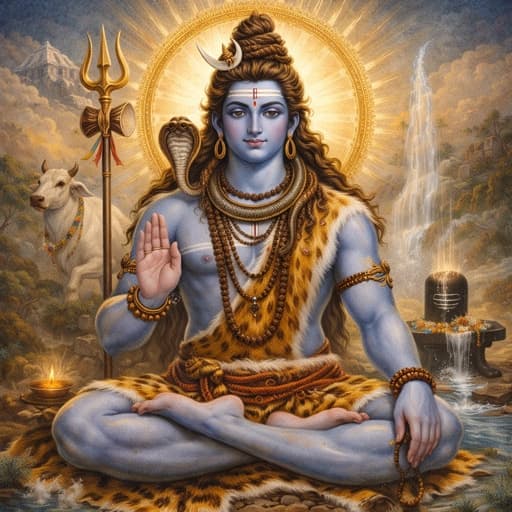
जटाटवीगलज्जल प्रवाहपावितस्थले
Jatā-ṭavī-galaj-jala-pravāha-pāvita-sthale
"In the place purified by the flow of water cascading from the forest of his matted locks..." — Verse 1
15
Verses
Ravana
Composer
Tandava
Theme
Uttara Ramayana
Source
The Shiva Tandava Stotram is an extraordinary 15-verse hymn composed by Ravana, king of Lanka, describing Shiva's great Tandava dance. Each verse is a cascade of long Sanskrit compound words (samasas) that recreates the very rhythm of the Tandava in sound. It is one of the most powerful and beloved hymns in the Shaiva tradition — and one of the most linguistically sophisticated poems in classical Sanskrit.
Composer
Ravana (King of Lanka)
Verses
15 (incl. 2 phalashruti)
Deity
Lord Shiva (Mahadeva)
Best recited
Monday, Mahashivratri, dawn
Ravana, the Tandava, and Shaiva philosophy
Most know Ravana as the villain of the Ramayana who abducted Sita. But the full story is more complex: Ravana was also a supreme scholar, master of the Vedas, a gifted musician (he played the veena made from his own arm), and Shiva's most passionate devotee. The Shiva Tandava Stotram, according to the Uttara Ramayana tradition, was composed by Ravana after he tried to uproot Mount Kailash to bring it to Lanka — his impatience to see Shiva at any time. Shiva pressed down with his toe, trapping Ravana. Ravana sang the Tandava Stotram in praise, Shiva relented, and gave him the Chandrahas sword. The stotram is a reminder that devotion, not morality, is Shiva's primary criterion.
The Tandava is not just dance — it is the rhythm of the cosmos. In Hindu cosmology, Shiva performs two dances: the destructive Tandava (performed in graveyards, with fire, associated with Bhairava) and the graceful Lasya (performed with Parvati). The universe itself is thought to be in constant motion — atoms vibrating, galaxies spinning — and this eternal motion is described as Shiva's Tandava. The Nataraja icon (Shiva dancing in the ring of fire) depicts this: the flame of destruction in one hand, the drum of creation in another, one foot on the demon of ignorance (Apasmara), one foot raised in liberation.
Embedded within the Shiva Tandava Stotram is repeated reference to Om Namah Shivaya — the Panchakshara mantra (five sacred syllables: Na-Ma-Shi-Va-Ya). The final verse explicitly names this as the mantra for liberation. Each syllable corresponds to one of the five elements: Na = Earth, Ma = Water, Shi = Fire, Va = Air, Ya = Ether. Together they represent the complete universe — and its dissolution back into Shiva.
It is theologically significant that the greatest stotram to Shiva was composed not by Brahma, Vishnu, or a sage — but by a demon king. This reflects a core Shaiva principle: Shiva accepts devotion from anyone, regardless of their position in the moral hierarchy. Ravana's knowledge of the Vedas, his mastery of Sanskrit, and his passionate devotion make the stotram one of the most sophisticated Sanskrit compositions ever written — each verse a complex chain of compound words (samasas) that creates a rushing, percussive rhythm that mimics the Tandava itself.
Toggle Sanskrit ⇄ transliteration above · reveal the meaning of each verse
jaṭāṭavīgalajjalapravāhapāvitasthale gale'valambya lambitāṃ bhujaṅgatuṅgamālikām | ḍamaḍḍamaḍḍamaḍḍamanninādavaḍḍamarvayaṃ cakāra caṇḍatāṇḍavaṃ tanotu naḥ śivaḥ śivam ||1||
jaṭākaṭāhasambhramabhramannilimpanirjharī vilolavīcivallarīvirājamānamūrdhani | dhagaddhagaddhagajjvalallalāṭapaṭṭapāvake kiśoracandraśekhare ratiḥ pratikṣaṇaṃ mama ||2||
dharādharendranandinīvilāsabandhubandhura sphuraddigantasantatipramodamānamānase | kṛpākaṭākṣadhoraṇīniruddhadurdharāpadi kvaciddigambare mano vinodametu vastuni ||3||
jaṭābhujaṅgapiṅgalasphuratphaṇāmaṇiprabhā kadambakuṅkumadravapraliptadigvadhūmukhe | madāndhasindhurasphurattvaguttarīyamedure mano vinodamadbhutaṃ bibhartu bhūtabhartari ||4||
sahasralocanaprabhṛtyaśeṣalekhaśekhara prasūnadhūlidhoraṇī vidhūsarāṅghripīṭhabhūḥ | bhujaṅgarājamālayā nibaddhajāṭajūṭakaḥ śriyai cirāya jāyatāṃ cakorabandhuśekharaḥ ||5||
lalāṭacatvarajvaladdhanañjayasphuliṅgabhā nipītapañcasāyakaṃ namannilimpanāyakam | sudhāmayūkhalekhayā virājamānaśekharaṃ mahākapālisampadeśirojaṭālamastu naḥ ||6||
karālabhālapaṭṭikādhagaddhagaddhagajjvalad dhanañjayāhutīkṛtapracaṇḍapañcasāyake | dharādharendranandinīkucāgracitrapatraka prakalpanaikaśilpini trilocane ratirmama ||7||
navīnameghamaṇḍalī niruddhadurdharasphurat kuhūniśīthinītamaḥ prabandhabaddhakandharaḥ | nilimpanirjharīdharastanotu kṛttisindhuraḥ kalānidhānabandhuraḥ śriyaṃ jagaddhuraṃdharaḥ ||8||
praphullanīlapaṅkajaprapañcakālimaprabhā valambikaṇṭhakandalīruciprabaddhakandharam | smaracchidaṃ puracchidaṃ bhavacchidaṃ makhacchidaṃ gajacchidāndhakacchidaṃ tamantakacchidaṃ bhaje ||9||
akharvasarvamaṅgalākalākadambamañjarī rasapravāhamādhurīvijṛmbhaṇāmadhuvratam | smarāntakaṃ purāntakaṃ bhavāntakaṃ makhāntakaṃ gajāntakāndhakāntakaṃ tamantakāntakaṃ bhaje ||10||
jayatvadabhravibhramabhramadbhujaṅgamaśvasad vinirgamatkramasphuratkarālabhālahavyavāṭ | dhimiddhimiddhimidhvananmṛdaṅgatuṅgamaṅgala dhvanikramapravartitapracaṇḍatāṇḍavaḥ śivaḥ ||11||
dṛṣadvicitratalpayorbhujaṅgamauktikasrajor gariṣṭharatnaloṣṭhayoḥ suhṛdvipakṣapakṣayoḥ | tṛṇāravindacakṣuṣoḥ prajāmahīmahendrayoḥ samapravṛttikaḥ kadā sadāśivaṃ bhajāmyaham ||12||
kadā nilimpanirjharīnikuñjakoṭare vasan vimuktadurmatiḥ sadā śiraḥsthamañjaliṃ vahan | vimuktalolalocano lalāmabhālalagnakaḥ śiveti mantramuccarankadā sukhī bhavāmyaham ||13||
imaṃ hi nityamevamuktamuttamottamaṃ stavaṃ paṭhansmaranbruvannaro viśuddhimetisaṃtatam | hare gurau subhaktimāśu yāti nānyathā gatiṃ vimohanaṃ hi dehināṃ suśaṅkarasya cintanam ||14||
pūjāvasānasamaye daśavaktragītaṃ yaḥ śambhupūjanaparaṃ paṭhati pradoṣe | tasya sthirāṃ rathagajendraturaṅgayuktāṃ lakṣmīṃ sadaiva sumukhīṃ pradadāti śambhuḥ ||15||
This is the most widely recited 15-verse recension (13 descriptive verses + 2 phalashruti). A fuller 17-verse recension also exists, inserting two optional stanzas after verse 13 — “Nilimpanāthanāgarī…” and “Pracaṇḍavāḍavānala…”; both forms are traditionally attributed to Ravana and close with the same phalashruti verses.
When
Monday mornings, Mahashivratri, daily during Shravan month
Repetitions
1x, 3x, or 11x recitations as per devotion
Key benefits
Removal of fear, confidence, protection from enemies, Shiva's grace
Note
Some Vaishnavas avoid it (Ravana's authorship); fully accepted in Shaiva tradition
Explore more Shiva stotrams & mantras
The Shiva Tandava Stotram is a sacred Hindu devotional hymn (stotram) dedicated to Shiva. VedKosh provides its complete text in Hindi and English with transliteration for regional readers.
Reciting the Shiva Tandava Stotram with devotion is traditionally believed to invoke the grace of Shiva, calm and focus the mind, and create an auspicious, sattvic atmosphere. It is practised as an act of bhakti (devotion) rather than for any guaranteed material outcome.
The Shiva Tandava Stotram can be recited during daily morning or evening worship of Shiva, and especially on the deity's sacred days and festivals. A clean, quiet space and a steady, devotional mind are the main requirements.
शिव तांडव स्तोत्रं शिव को समर्पित एक पवित्र हिन्दू भक्ति स्तोत्र है। वेदकोश पर इसका पूर्ण पाठ हिंदी और अंग्रेज़ी में (क्षेत्रीय पाठकों हेतु लिप्यंतरण सहित) उपलब्ध है।
शिव तांडव स्तोत्रं का श्रद्धापूर्वक पाठ शिव की कृपा का आह्वान करता है, मन को शांत व एकाग्र करता है और शुभ, सात्विक वातावरण बनाता है। इसे किसी निश्चित भौतिक फल की गारंटी के रूप में नहीं, बल्कि भक्ति-भाव से किया जाता है।
शिव तांडव स्तोत्रं का पाठ शिव की प्रातः या संध्या पूजा में, तथा विशेषकर देवता के पवित्र दिनों व पर्वों पर किया जा सकता है। स्वच्छ, शांत स्थान और स्थिर भक्ति-भाव ही मुख्य आवश्यकता है।
Updated for 2026
2026 के लिए अद्यतन
Recently Accessed
Premium Tools
View All →Trending Topics
Explore related Hindu wisdom, daily guidance, and AI-powered answers on VedKosh.
Independently reviewed for authenticity. Please verify meanings and rituals yourself before following. Not medical, legal or financial advice.