
Mahamrityunjaya Mantra
महामृत्युंजय मंत्र
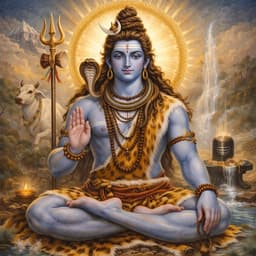
Deity: Lord Shiva
Source: Rigveda 7.59.12
Sanskrit (Devanagari)
ॐ त्र्यम्बकं यजामहे सुगन्धिं पुष्टिवर्धनम् उर्वारुकमिव बन्धनान्मृत्योर्मुक्षीय माऽमृतात्
Transliteration
Om Tryambakaṃ Yajāmahe Sugandhiṃ Puṣṭi-Vardhanam Urvārukam-Iva Bandhanān Mṛtyor-Mukṣīya Māmṛtāt
Meaning
We worship the three-eyed Lord Shiva who nourishes all beings; may He liberate us from death for the sake of immortality, just as the ripe cucumber is severed from its bondage to the vine
Significance
The Mahamrityunjaya Mantra (Rigveda 7.59.12), revered through the Shiva Purana, is addressed to Tryambaka — the three-eyed Lord Shiva who nourishes all life. As a ripe cucumber slips free of its vine, it prays for release from death into immortality. It is traditionally chanted for health, longevity, and freedom from fear.
Benefits
- Traditionally chanted for health, healing, and recovery from illness
- Believed to bestow longevity and protection from untimely danger
- Dissolves the fear of death and steadies the mind in adversity
- Invokes Lord Shiva's protective grace over the chanter and their family
- Cultivates inner courage, calm, and surrender to the divine will
How to Chant
- Bathe, sit on a clean āsana facing east or north with the spine upright
- Light a lamp before a Shiva-linga or image of Lord Shiva and settle the breath
- Chant 108 times on a rudrākṣa mālā, pronouncing each word slowly and clearly
- Hold the meaning in mind — a heartfelt prayer for health, protection, and freedom from fear
- Close by offering water or bilva leaves and sitting quietly for a minute in stillness
Related Deities
Lord Shiva, Supreme Healing Power
Questions and Answers
What is the meaning of the Mahamrityunjaya Mantra?
It means: "We worship the three-eyed Lord Shiva, the fragrant one who nourishes all beings; may He free us from the bondage of death for the sake of immortality, as a ripe cucumber is severed from its vine." It is a prayer for healing, protection, and release from fear.
How many times should the Mahamrityunjaya Mantra be chanted?
A traditional round is 108 times daily on a rudrākṣa mālā. During illness or for special sankalpa it is often chanted in larger counts; when time is short, 11 or 27 attentive repetitions are also valued. Consistency matters more than count.
What is the best time and day to chant the Mahamrityunjaya Mantra?
Early morning after bathing, with a settled mind, is ideal. Monday (the day of Lord Shiva) and the Pradosh and Shivaratri tithis are especially auspicious, but it may be chanted any time of need with reverence.
Can the Mahamrityunjaya Mantra be chanted for someone who is unwell?
Yes. It is traditionally chanted for the health and recovery of oneself or a loved one, offering the prayer on their behalf. It is regarded as a spiritual support for well-being and courage — not a substitute for medical care.
Which deity is the Mahamrityunjaya Mantra dedicated to?
It is dedicated to Lord Shiva in His form as Tryambaka, the three-eyed conqueror of death (Mrityunjaya). Shiva here is the supreme healer and protector who grants freedom from fear and the boon of long, healthy life.