

Bala Kand
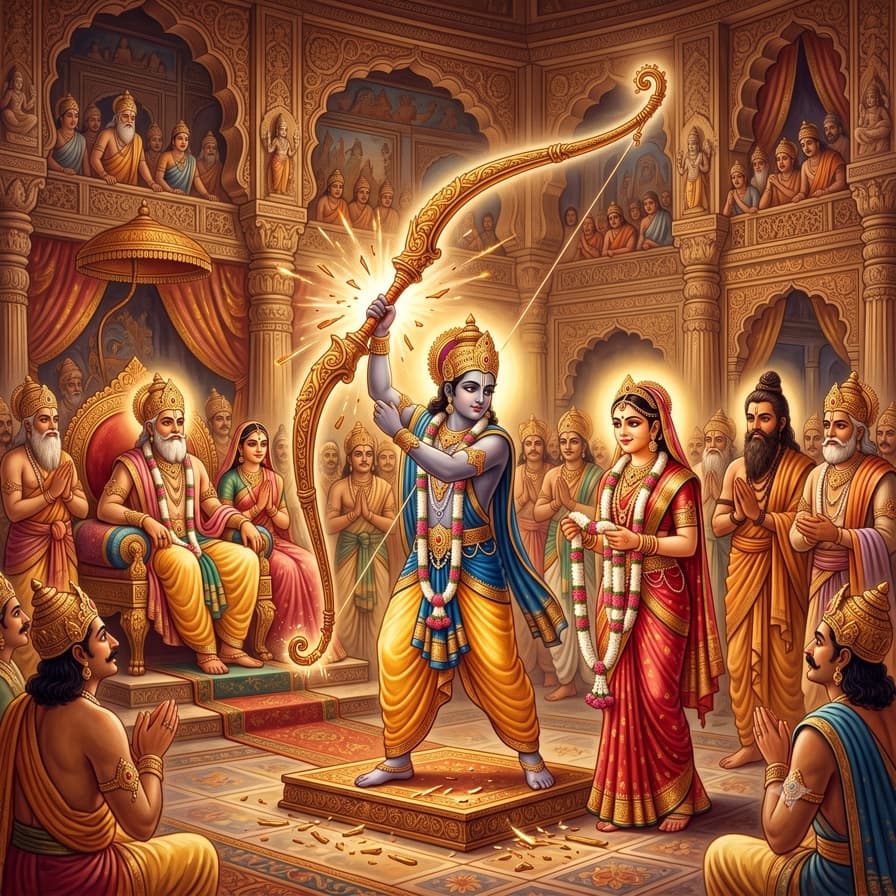
The divine birth and childhood of Lord Rama at Ayodhya, protection of Sage Vishwamitra’s yajna, breaking of Lord Shiva’s bow, and His sacred marriage with Sita at Janakpur
Frequently Asked Questions
What major events (kathas) are narrated in the Bala Kand of Shri Ramcharitmanas?
The Bala Kand (बालकाण्ड) of Goswami Tulsidas’s Ramcharitmanas narrates the divine birth and childhood of Lord Rama — Nama-Mahima, Shiva–Parvati Vivah, Shri Rama Janma in Ayodhya, education with Maharshi Vishwamitra, Tadaka-vadha, Ahalya-uddhara, the breaking of Shiva’s Pinaka bow in Janakpur, and the marriage of Sita and Rama.
What does the opening Sanskrit Mangalacharan of Bala Kand invoke?
Bala Kand opens with seven Sanskrit Mangalacharan shlokas beginning with "Varnanamarthasanghanam..." (invoking Goddess Saraswati and Lord Ganesha) and "Bhavanishankarau vande..." (bowing to Parvati and Shiva as Shraddha and Vishvasa).
Which are the most celebrated dialogues and turning points in Bala Kand?
Major episodes include the glory of Ram-Naam (Dohas 18–27), Sati-Charitra and Shiva-Parvati Vivah, the birth of the four brothers ("Bhaye pragata kripala deenadayala"), Pushpavatika first darshan of Rama and Sita, and the Parashurama–Lakshmana Samvad.
What is the central spiritual teaching and parayan significance of Bala Kand?
Bala Kand is the largest Sopan (361 Dohas) and teaches that without Shraddha (Parvati) and Vishvasa (Shiva), one cannot behold the indwelling Lord Rama; its parayan is performed for family harmony, auspicious marriage, and firm faith.