

Ayodhya Kand
Kaikeyi’s two boons, Lord Rama’s 14-year forest exile with Sita and Lakshmana, King Dasharatha’s grief, and Bharata’s selfless devotion at Chitrakoot
Frequently Asked Questions
What major events (kathas) are narrated in the Ayodhya Kand of Shri Ramcharitmanas?
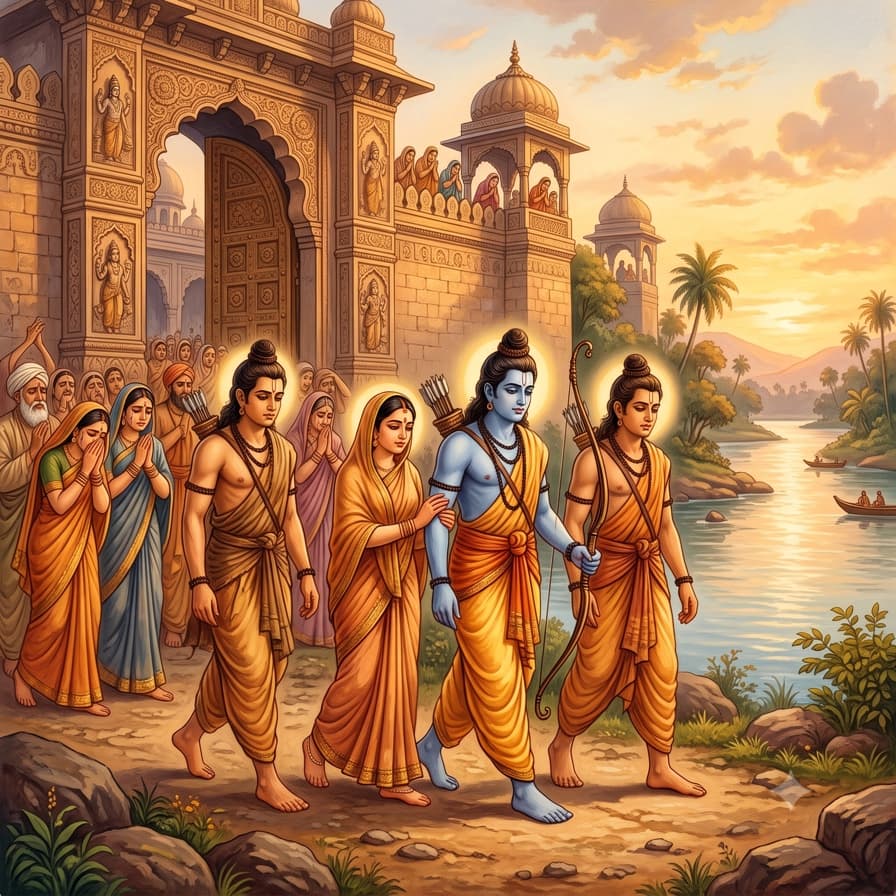
The Ayodhya Kand (अयोध्याकाण्ड) of Goswami Tulsidas’s Ramcharitmanas narrates Rama's 14-year forest exile — Manthara-Kaikeyi samvad, King Dasharatha's सत्य-पालन and grief, Rama's serene departure with Sita and Lakshmana, Nishadraj & Kevat bhakti, Maharshi Valmiki’s Chitrakoot guidance, and Bharata’s selfless Paduka installation at Nandigram.
What does the opening Sanskrit Mangalacharan of Ayodhya Kand invoke?
Ayodhya Kand opens with the Sanskrit shloka "Yasyanke cha vibhati bhudharasuta devapaga mastake..." bowing to Lord Shiva (who bears Parvati on His flank, Ganga on His crown, and the crescent Moon on His brow) and then to Lord Rama whose face remained equally radiant upon hearing of both coronation and exile.
Which are the most celebrated dialogues and turning points in Ayodhya Kand?
Celebrated episodes include the Kevat Prasang (washing the Lord’s lotus feet before crossing the Ganga), Maharshi Valmiki describing the 14 abodes where Rama resides in a devotee’s heart (Doha 127–131), and the Bharat–Rama Chitrakoot Sabha.
What is the central spiritual teaching and parayan significance of Ayodhya Kand?
Containing 326 Dohas, Ayodhya Kand is revered as the pinnacle of Tyaga (renunciation), filial duty, and fraternal love — embodied in Bharata ruling Ayodhya as a tapasvi servant of Lord Rama’s Padukas.